Get Full Government Meeting Transcripts, Videos, & Alerts Forever!
Get email alerts on the Auto Insurance Reform topic
No spam. Unsubscribe anytime.
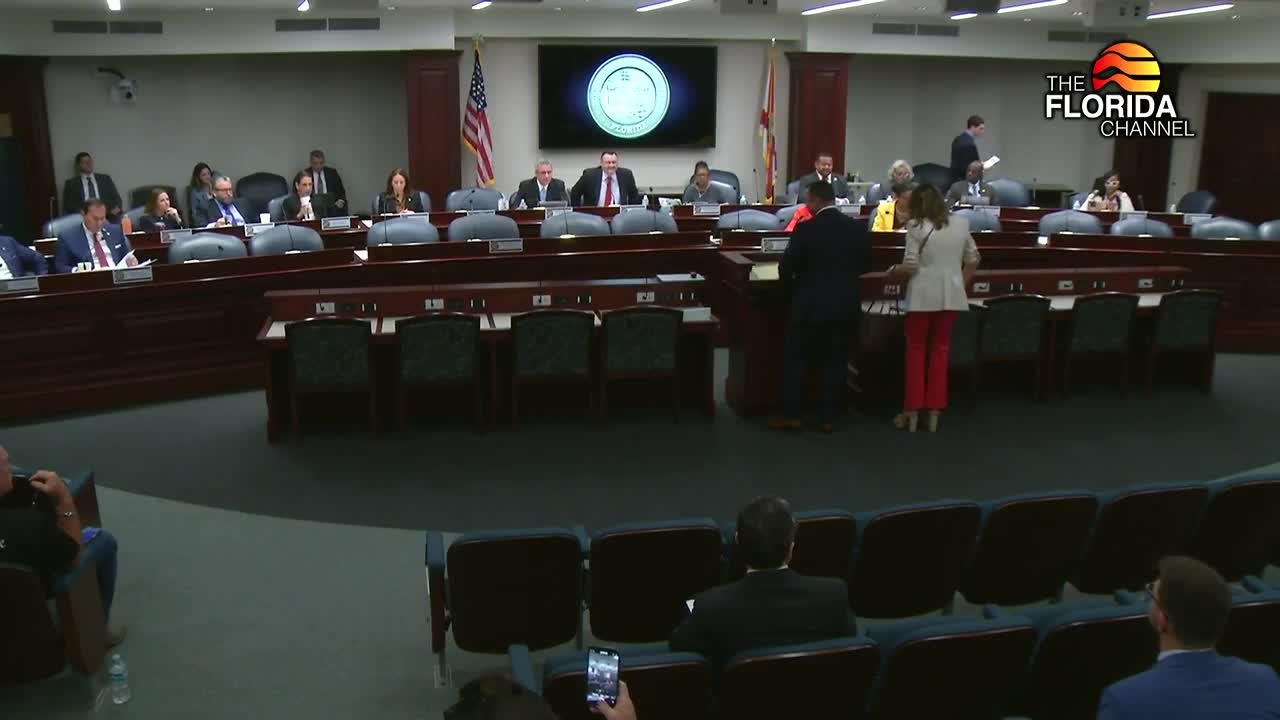
Panel advances bill to repeal PIP and require bodily injury coverage after hours of testimony and split debate
Summary
House Bill 1181, proposed by Representative Alvarez, passed the Insurance & Banking Subcommittee after extended debate and more than two hours of public testimony on repealing PIP and requiring mandatory bodily‑injury liability limits.
House Bill 1181, proposed by Representative Alvarez (with Representative Weinberger named in the bill caption), passed the Insurance & Banking Subcommittee after extended debate and more than two hours of public testimony from insurers, medical providers, injured‑party advocates, motorcycle groups and legal and insurance trade associations.
In his explanation, Representative Alvarez told members the bill would repeal Florida’s PIP (personal injury protection) no‑fault requirement, mandate 25/50 bodily injury (BI) minimum liability coverage and eliminate the redundant PIP health benefit. "We're gonna mandate 25/50 coverage. We're gonna get rid of the PIP," Alvarez said. He said the change would hold negligent drivers accountable for injuries they cause and reduce fraud tied to the PIP system.
Nut graf: The hearing gathered sharply divided testimony. Proponents — including motorcycle advocacy groups, personal injury attorneys and injured‑party advocates — said PIP is outdated, redundant with existing health insurance, and a driver of fraud and very high premiums in Florida. Opponents — a large array of insurers, the Florida Chamber, medical provider associations, hospitals, chiropractors and others — warned repeal would raise premiums for minimum‑limit drivers, increase litigation and shift costs to health insurers and providers.
Public testimony sampled the range of views: George Feijou of the Florida Insurance Council and Katie Webb of GEICO/ APCIA testified in opposition, saying repeal would likely raise rates and destabilize the market. Laurie Muldoon (injury case manager) and attorneys who handle catastrophic cases described clients who had no BI coverage and no recovery under current law; they urged mandatory BI to ensure people harmed by negligent drivers can be made whole. Trade groups including State Farm, NAMIC and the Florida Chamber described rate decreases tied to 2023 tort reforms and warned repeal could reverse gains. Several motorcycle advocacy groups and injured‑person attorneys urged repeal, saying PIP’s $10,000 benefit is inadequate to meet modern medical costs and that BI would restore accountability.
Committee debate highlighted conflicting data and models. Alvarez acknowledged uncertainty about precise premium impacts: "If anyone comes to you today and says they know the answer to this, I want you to tell them that you don't believe them," he said, calling premium estimates "mathematical theoreticals." Representative Caruso and others warned repeal risks greater litigation, more uninsured drivers and higher costs for the least able to pay. Representative Pittman and others pressed for targeted changes to enforcement of uninsured motorist requirements and possible criminal penalties for persistent non‑compliance.
The subcommittee called the roll and reported HB 1181 favorably by a vote of 17 yeas and 1 nay (Representative Caruso cast the lone recorded "no"). The committee record shows extensive follow‑up: members asked for further actuarial analysis and raised questions about impacts for hospitals, Medicaid recipients and drivers with high health deductibles. Sponsor Alvarez said an implementation window of at least one year and required consumer notices would be part of the transition plan.
Ending note: HB 1181 will move forward with the subcommittee’s favorable report; members and stakeholders said additional technical amendments and actuarial work are likely in later stages of the process.