Get Full Government Meeting Transcripts, Videos, & Alerts Forever!
Get email alerts on the Health Insurance Prior Authorization topic
No spam. Unsubscribe anytime.
Committee adopts committee substitute for prior‑authorization reform bill after stakeholder negotiation
Summary
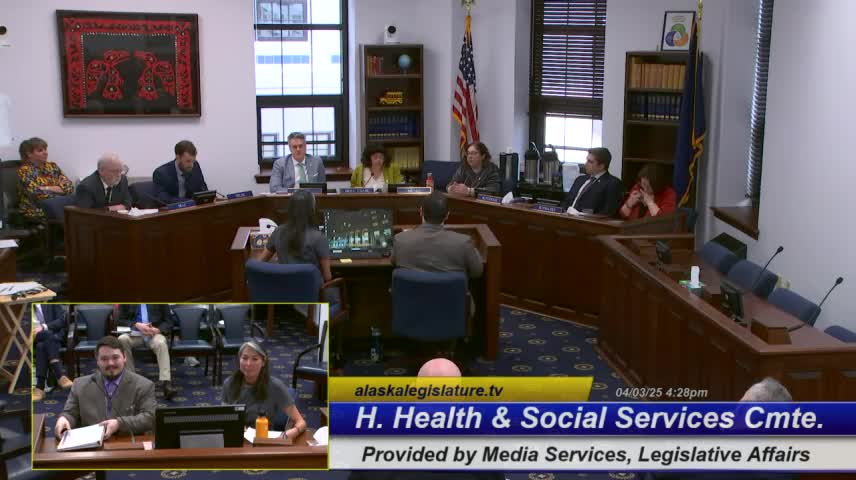
The House Health and Social Services Committee adopted a committee substitute for House Bill 144 on April 3, 2025, advancing a negotiated measure to shorten prior‑authorization turnaround times, set minimum approvals for chronic conditions, require transparency and allow Division of Insurance oversight and enforcement.
The House Health and Social Services Committee on April 3 adopted a committee substitute for House Bill 144, a stakeholder‑driven measure aimed at reforming prior authorization procedures for health insurers in Alaska.
Sponsor Representative Justin Ruffridge said the bill standardizes timelines and procedures that he and stakeholders view as responsible for care delays. The committee adopted the substitute as a working document after a motion from Representative Mears; the chair noted an initial objection was withdrawn and the committee adopted the substitute by voice.
Key provisions: The substitute sets shorter decision timelines: 72 hours for standard prior authorization requests and 24 hours for expedited requests, allows automatic renewals of prior authorizations for chronic conditions for 12‑month periods (and, as the sponsor and stakeholders stated, renewals may be extended year‑to‑year while conditions remain unchanged), requires insurers to post prior‑authorization standards and processes on websites and portals, and establishes peer‑review and credentialing requirements for reviewers. The bill also creates an examination and enforcement mechanism within the Division of Insurance, including civil penalties for persistent or severe violations, and directs the division to examine insurers’ prior‑authorization processes at least every two years.
Support and rationale: Jared Kosen, president and CEO of the Alaska Hospital and Healthcare Association, told the committee the bill “will have an immediate positive impact for patients,” highlighting faster turnaround times and long‑term approvals for chronic care. The Alaska State Medical Association and major carriers including Premera Blue Cross supported the bill; Premera’s testimony said the measure balances the need for cost controls with improved timeliness and modernization, and that automation will reduce fax‑driven delays.
Notable details and discussion: Committee members asked about specifics: whether automatic renewals for chronic conditions could continue beyond a single 12‑month renewal (stakeholders and drafters said the language was intended to permit renewals year‑to‑year); how the bill treats step therapy for advanced cancer patients (the bill carves out stage‑4 metastatic cancer as a situation where exceptions are warranted and includes mechanisms for exceptions and clinical documentation); and whether appeal contact language should require a live human responder (sponsor said the bill emphasizes electronic and efficient processes but members raised concerns about provider access to a phone‑answered escalation point).
Committee action: Representative Mears moved to adopt the draft committee substitute (work order 34‑LS0780) as a working document; after discussion and withdrawal of an initial objection, the chair announced the committee substitute had been adopted. The committee later set HB 144 aside for further consideration and scheduling of a future hearing.
Next steps: The Division of Insurance and stakeholders will continue implementation planning and the committee will receive further drafts and technical clarifications before subsequent hearings.