Get Full Government Meeting Transcripts, Videos, & Alerts Forever!
Get email alerts on the Immigration topic
No spam. Unsubscribe anytime.
Sunshine Caucus lawmakers describe mixed outcomes on immigration-related bills; SB90 advanced a tougher approach to repeat illegal entry
Summary
Lawmakers discussed several immigration-related bills: an E-Verify expansion attempt failed in committee, a proposal to remove state-funded coverage for some noncitizen residents did not advance, and SB90 — aimed at reducing the 'revolving door' for repeat illegal-entry arrests — passed.
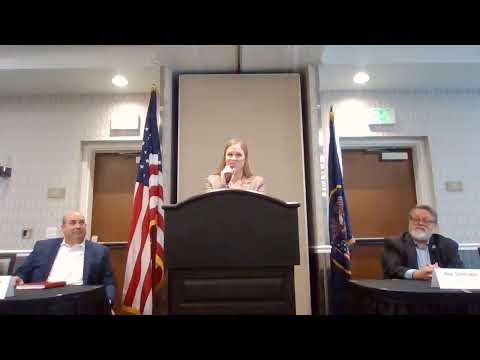
Sunshine Caucus members at the Washington County Republican Women luncheon described multiple immigration-related bills from the legislative session and the mixed fate of each.
Representative Neil Walter summarized two failed measures: his effort to broaden Utah’s E-Verify employer requirement (which would have lowered the employee-threshold back toward 15 or 5 employees) did not clear the House committee after lengthy debate, and a separate proposal to remove state-funded health insurance coverage for people in the state without legal status also failed to advance.
By contrast, Walter and other attendees described SB90 as a bill that passed and that sought to close a perceived "revolving door" in which individuals apprehended for misdemeanors while undocumented were repeatedly released without serving sentences. Walter said SB90 requires that, for certain repeat arrests of undocumented individuals, the person serve the full sentence so that ICE can identify and locate them later.
Speakers emphasized that immigration enforcement is governed primarily by federal authority, and they described the state bills as limited tools to address local public-safety consequences. The panel also cited other related measures that passed on topics such as firearm possession restrictions for people with pending asylum or temporary protected status and enhancements for fentanyl distribution and gang-related offenses.
Why this matters: Legislators said local public-safety concerns and state interactions with federal immigration enforcement motivated the bills. The luncheon remarks described the session’s approach as a mixture of bills that failed and those that passed; where bills failed, speakers said they plan further work in interim sessions.
Follow-up: Walter urged attendees to monitor committee records and future interim work on the E-Verify and public-safety proposals.