
Board denies septic special exception and density variances for Eagles Rest expansion
Get AI-powered insights, summaries, and transcripts
Sign Up Free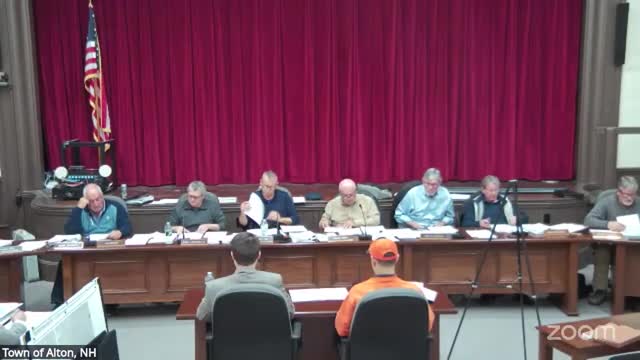
Summary
The Zoning Board denied a special exception to place an individual septic system within the Aquifer Protection Overlay District and refused variances to increase density at the Eagles Rest manufactured housing community. The applicant had sought permission to add two units to a 57‑acre park currently cited as having 55 dwellings.
The Alton Zoning Board of Adjustment voted to deny a special exception and related variances for application Z25‑15, a proposal by the Borowski Trust to add two manufactured‑home units to the Eagles Rest community at 30 Eagles Way.
Attorney Sean Dunphy, representing trustees Walter and Janice Borowski, told the board the proposal would increase the park from 55 units to 57 on a 57‑acre parcel. He said the owners hoped to replace a long‑standing RV occupancy with a HUD‑approved manufactured home and that both new units would be similar to existing homes in the community. Dunphy said roughly 36 units connect to a state‑approved community septic system and 19 units (phase 2) use individual systems; he proposed two additional individual septic systems, one of which would be located within the town's Aquifer Protection Overlay District.
Town staff and the Conservation Commission raised concerns about locating an individual leach field in the aquifer overlay and asked for more engineering and hydrologic review. Board members focused heavily on density: under current zoning the rural district density standard limits the number of dwellings per acreage and the board found the park already exceeded the intended density for the zone. Board members also weighed public comments and letters submitted by neighbors expressing worry about permits, unpermitted work already done on the site, and impacts to wetlands and private rights‑of‑way.
On a vote on the special exception for an individual sewage disposal system within the Aquifer Protection Overlay District, the board denied the request 3–2. The board majority said the criteria for a special exception were not satisfied, citing concerns about appropriateness of the siting and absence of conclusive hydrologic evidence; two members dissented, saying the planned septic system could be engineered to state standards and would serve an existing community need.
Following that vote, the board considered a variance to permit 57 units in the manufactured‑housing park where the rural zone density would allow fewer units. The board denied the density variance; board members repeatedly said the park already exceeded the zone density and that granting an increase would conflict with the spirit of the ordinance and the master plan. A second variance, specific to the manufactured‑home provisions, was rendered moot by the density denial.
The board recorded a number of public comments and several written communications from neighbors; some letters alleged prior unpermitted construction on the site and urged closer enforcement. Town staff said the applicant will need any required state septic approvals and planning board site review for changes to the park layout regardless of the ZBA outcome.
What happens next: the denials leave the Eagles Rest community at its current permitted density; the applicant may revise plans, pursue additional engineering (hydrologic) studies, or appeal the decision. Any new septic designs or lot changes within the aquifer overlay will require state DES approvals and town planning review.