Get Full Government Meeting Transcripts, Videos, & Alerts Forever!
Get email alerts on the Nato Defense Spending Ukraine Support topic
No spam. Unsubscribe anytime.
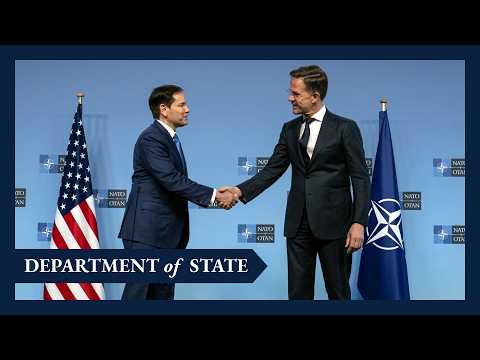
NATO ministers open meeting with condolences for four U.S. soldiers, calls for higher allied defence spending and continued support for Ukraine
Summary
At a NATO ministers meeting, speakers offered condolences for four U.S. soldiers killed in a training exercise in Lithuania, highlighted roughly $20 billion in early allied support to Ukraine and urged European and Canadian partners to increase defence spending and industrial cooperation.
Speaker 1 (meeting official) opened the NATO ministers meeting by expressing condolences for “the 4 US soldiers who died, during exercise in Lithuania,” and thanked U.S. counterparts for their diplomatic work ahead of the talks.
The comment came as the meeting framed Ukraine and allied defence posture as top priorities. Speaker 1 said allied support has surged, noting “in the first 3 months, over $20,000,000,000 in support to Ukraine” and characterizing recent European and Canadian defence spending as “probably the biggest surge in defense spending we have seen in Canada and Europe since the cold war.”
Speaker 2 (meeting official) thanked Speaker 1 for the condolences and emphasized the United States’ continuing role in NATO: “We honor them, and it also reminds us that The United States is in NATO. We are as active as we speak right now, The United States is as active in NATO as it has ever been.” Speaker 2 said the U.S. president supports the alliance and that the U.S. seeks a stronger, more capable NATO.
Both speakers identified several security threats that will shape the talks, citing Russia, China, North Korea and Iran and noting growing connections between European and Indo‑Pacific security concerns. Speaker 1 also said ministers expect to discuss defence industrial production and cooperation with partners from Japan, South Korea, Australia and New Zealand.
The meeting included repeated calls for allies to increase defence capabilities and spending. Speaker 1 said the expectation is that “the European allies and Canada need to spend more,” and described the need for a “realistic pathway” toward agreed spending commitments.
Neither speaker announced a formal decision or vote during these opening remarks. The statements were framed as priorities for discussion over the coming two days of meetings, including further conversations with Indo‑Pacific partners.
The session combined an opening ceremonial exchange and policy framing: condolences and diplomatic thanks were followed by outlining the agenda topics — Ukraine support, allied burden‑sharing and defence industrial production. Further specifics on concrete pledges, spending timelines, or industrial arrangements were not provided in these remarks.