Get Full Government Meeting Transcripts, Videos, & Alerts Forever!
Get email alerts on the Mayor Selection Process topic
No spam. Unsubscribe anytime.
Council sets special meeting April 14 to appoint interim mayor; city attorney says charter restriction does not bar former elected officials from appointment
Summary
After legal clarification about Charter Section 25, the Riviera Beach City Council scheduled a special meeting for April 14 to select an interim mayor from applicants, set applicant and public comment times, and clarified deadlines for the appointment process.
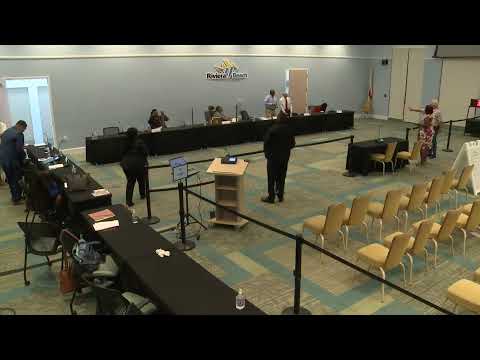
The Riviera Beach City Council on Wednesday set a special meeting for April 14 at 6 p.m. to appoint a resident to fill the vacant mayor’s seat and adopted rules for the selection process after receiving legal guidance on a charter restriction that some residents cited as disqualifying recent former elected officials.
The clerk reviewed the timetable posted for the vacancy: the city accepted letters of interest, resumes and proof of residency beginning Wednesday, March 26 and will accept submissions through Friday, April 4 at 5 p.m.; the clerk will hand‑deliver the compiled applications to council on Tuesday, April 8; and the council must appoint a mayor by April 30 under the charter timeline for filling vacancies.
A number of residents asked whether Charter Section 25 — a provision that says “no former elected city official shall hold any compensated appointed city office or employment” — disqualifies recent former elected officials from being appointed to the mayor’s seat. David Wolf, who served as special counsel to the 2018 charter review process and joined the council by phone, told council the charter language was written to prohibit former elected officials from using elected service to obtain compensated appointed positions (for example, contracted work or staff employment). “The office of mayor is not an appointive office. It is an elected office,” Wolf said, and he explained the charter language was not intended to bar the temporary appointment of a resident to fill an elected office vacancy.
After the legal clarification, councilmembers debated procedure. Council agreed the clerk would deliver the application packets on April 8, and the council scheduled a special meeting to consider the submissions and to act on the appointment. The board also set the selection format for the special meeting: each applicant will be allotted up to five minutes to address council, the public‑comment period on the item will follow applicants with three minutes per speaker (the board reserved discretion to shorten public comment if the crowd is large), and council will use the same nomination and vote method it uses when selecting its chair and vice‑chair (nomination followed by a vote) rather than holding extended interviews.
Councilmembers said they preferred a discrete special meeting to keep the process from delaying other regular‑agenda business; the council voted unanimously to set the meeting for Monday, April 14 at 6 p.m. (the motion had been amended several times on the floor before the final date was set).
Why it matters: the seat is a ceremonial but legally important elected post; filling it promptly restores a full council and clarifies who presides at meetings and represents the city. Residents who urged the council to enforce the charter’s language received legal clarification that the charter limitation targets appointed compensated offices, not temporary appointments to fill elected vacancies.
What’s next: applicants who submitted materials by April 4 will be delivered to council on April 8; the council will consider and vote at the April 14 special meeting and must appoint someone by April 30 if a decision is not reached earlier.