Get Full Government Meeting Transcripts, Videos, & Alerts Forever!
Get email alerts on the Behavioral Health Budget topic
No spam. Unsubscribe anytime.
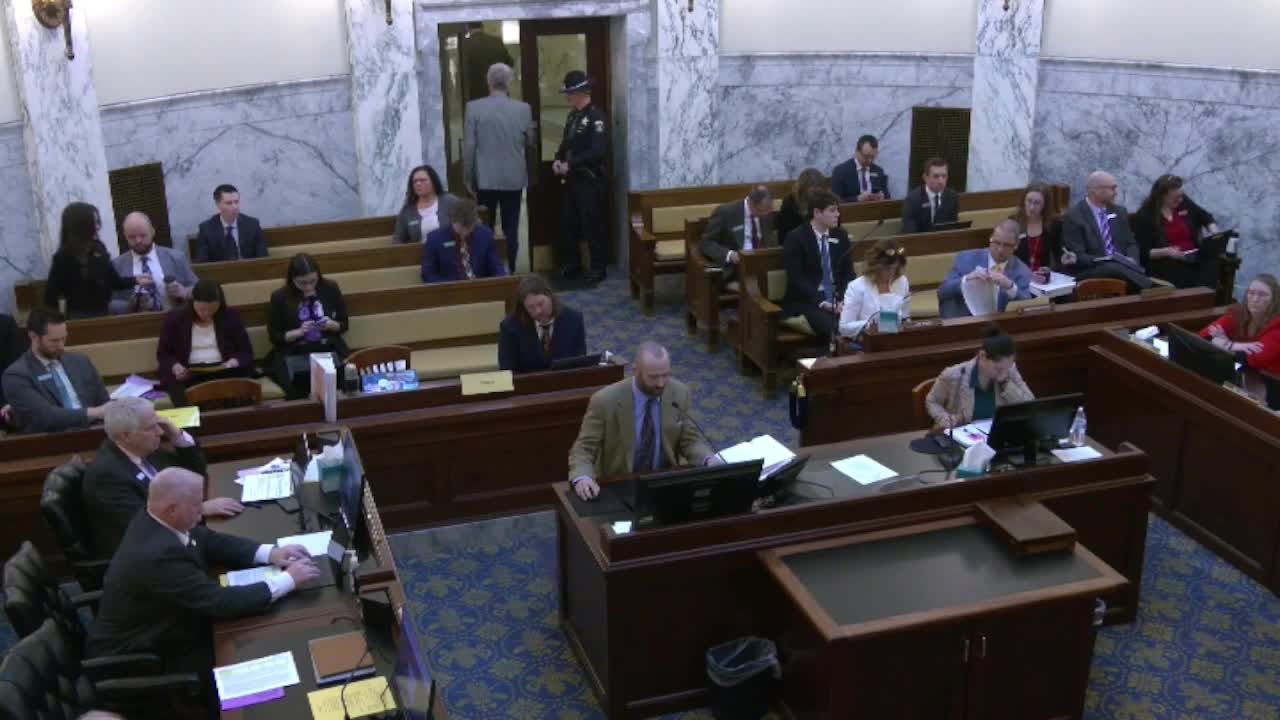
JFAC approves Behavioral Health and Health & Welfare budget adjustments; orders CANS review and limits on certain program uses
Summary
JFAC approved a set of budget adjustments and language for the Department of Health and Welfare covering IT replacements, mental‑health services, psychiatric hospitalization and substance‑use treatment and prevention.
JFAC approved a set of budget adjustments and language for the Department of Health and Welfare covering information‑technology replacement requests, mental‑health services, psychiatric hospitalization and substance‑use treatment and prevention.
Alex Williamson of the Legislative Services Office summarized several items for the committee, including an indirect support services request that sought funding for SQL server replacement and Office of Information Technology hardware. Representative Mitchell moved the reconsidered supplemental for indirect support services that included $851,600 for SQL Server replacement and $1,834,300 for OIT hardware; the committee adopted the motion after removing vehicle replacement items and adding language requiring a Department report on fleet counts and allocation.
In behavioral health, the committee approved FY2025 supplemental appropriations and FY2026 adjustments tied to the rollout of the Idaho Behavioral Health Plan. Items approved included a one‑time federal grant reappropriation of $6,743,800 for Idaho Behavioral Health Plan contract implementation, a $2,663,500 one‑time general‑fund addition for civil commitment and community hospitalization costs, and fund‑shifts to reclassify certain MCO‑related receipts from federal to dedicated funds for State Hospital West and South. Committee members also moved the Center of Excellence program from ongoing to one‑time funding and reduced nine FTEs as part of that realignment; sponsors said the change allows the committee to review the program in the coming year.
A substance‑use fund shift was approved to align personnel and trustee/benefit payments across dedicated and federal funding streams. The committee also adopted language that requires the Department to report on administrative burdens associated with applying for, implementing and administering federal grants.
In addition to budgetary changes, the committee adopted new language directing the Department to study alternatives to the CANS (Child and Adolescent Needs and Strengths) assessment and to return to JFAC with options. Representative Tanner framed that directive as an exploratory step: “This just shall provide a report exploring alternatives,” he said, adding the motion does not commit the department to replace the CANS assessment but asks for information about potential alternatives and opt‑out options.
Why it matters: The approved fiscal adjustments fund immediate operational needs tied to the state’s behavioral‑health plan implementation and civil commitment costs, reorganize accounting for MCO receipts, and pause or make one‑time prior commitments so the committee can review program design. The CANS review directive creates a path for additional scrutiny of a widely used assessment tool that affects eligibility and services for children and families.