Get Full Government Meeting Transcripts, Videos, & Alerts Forever!
Get email alerts on the Health Medicaid topic
No spam. Unsubscribe anytime.
Idaho House approves $674 million Medicaid enhancement after extended debate
Summary
After several hours of debate about costs, provider rates and federal dependence, the Idaho House passed Senate Bill 12‑01 — a Medicaid enhancement appropriation — by a 40‑30 vote. Sponsors and opponents clashed over the size of the increase, how forecasts are calculated and options for controlling long‑term costs.
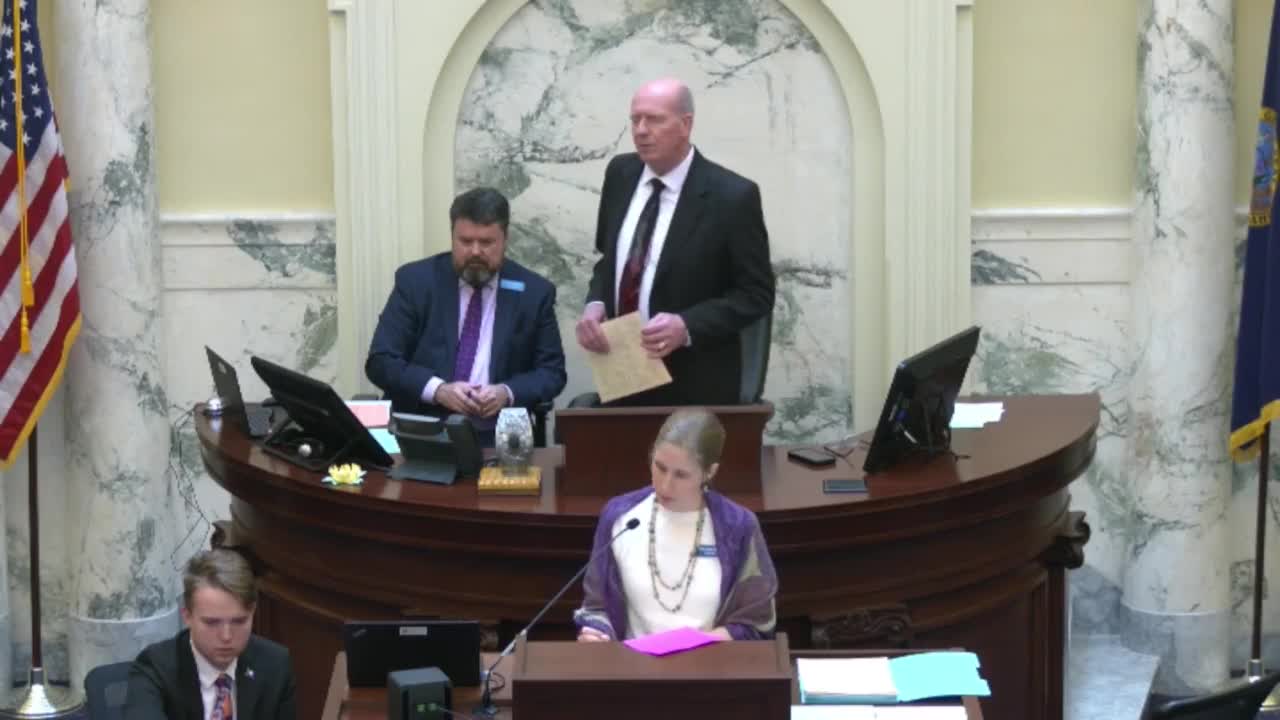
The Idaho House passed Senate Bill 12‑01 on April 2, 2025, voting 40 ayes to 30 nays to approve an enhancement appropriation for the Department of Health and Welfare’s Medicaid program.
The bill, described on the floor as an enhancement appropriation for the Division of Medicaid, was presented by the sponsor as covering a range of forecast adjustments, utilization increases and federally required items. During floor debate members repeatedly cited the bill’s scale: one speaker described a $674,000,000 enhancement on top of an already appropriated $4,575,000,000, producing a combined total the speaker said was roughly $5,250,000,000 for Medicaid programs (transcript comments during debate).
Supporters said the package funds federally required contracts and address rising utilization and medical cost trends. The presenting representative said the bill includes items such as a population forecast adjustment, hospital assessment changes, an external quality review contract, MMIS procurement activities and federal matching fund shifts. “This is as close to a maintenance budget as we could actually get in federal code,” the sponsor said, noting that some items respond to federal requirements and existing invoices for services already rendered.
Opponents said the enhancement was too large and raised persistent policy concerns: rates paid to providers, growth in enrollment and the state’s growing reliance on federal dollars were cited repeatedly. Multiple members urged the Legislature to scrutinize provider rate increases and consider policy changes to reduce growth in utilization. “I cannot in good conscience vote for that,” one member said during debate about the $674 million increase, calling it “way out of hand.” Another lawmaker called for moving more decisions back to JFAC and for re‑examining provider rate increases enacted previously.
Supporters responded that the department must maintain services and that forecasting errs both ways; they urged lawmakers to trust the department’s management and the oversight steps built into the MMIS (Medicaid Management Information System) procurement and other controls. “We have an MMIS project that’s on schedule,” a member of the committee said, adding that funding releases are tied to performance milestones.
The final vote count recorded on the floor was 40 ayes and 30 nays; the bill was approved and will be transmitted to the Senate. The House journal records the vote and a correction to the title was not requested.
Ending: With the vote, lawmakers approved a major, contested Medicaid funding package that proponents said is necessary to meet federal obligations and rising costs and that opponents said will accelerate long‑term budgetary dependence on federal funds. The bill now moves to the Senate for final action.