Get Full Government Meeting Transcripts, Videos, & Alerts Forever!
Get email alerts on the Cte Perkins topic
No spam. Unsubscribe anytime.
Norfolk presents Perkins V CTE annual plan focused on industry credentials and apprenticeships
Summary
Norfolk Public Schools’ CTE presenter outlined the district’s Perkins V plan for 2025–26, emphasizing expansion of industry credentials, registered apprenticeships, aviation/aerospace pathways, dual enrollment and efforts to align credentials to postsecondary programs and employer needs.
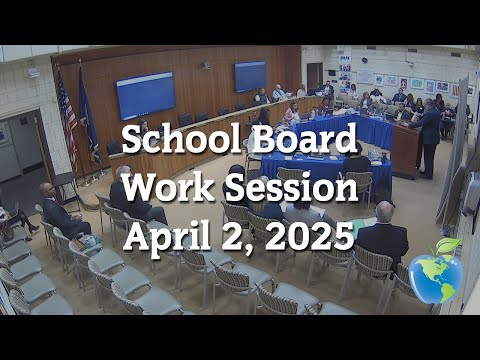
Miss Goshen presented the Career and Technical Education (CTE) annual Perkins V plan for school year 2025–26 at the work session, giving board members an overview of program priorities and asking for questions ahead of a planned business‑meeting vote.
Goshen said the Perkins plan aims to provide rigorous technical and academic instruction, work‑based learning, sequence pathways and industry credentials aligned with high‑demand, high‑skill fields. She told the board the district is moving from lower‑level student assessments toward offering higher‑level industry credentials (for example, American Welding Institute certifications and FAA aviation credentials), and noted the division has retrained teachers and retooled resources to support that shift.
The presentation listed CTE elements: career clusters offered (grades 5–12 under Perkins rules), CTSOs (career and technical student organizations), work‑based learning (job shadowing to paid internships), registered apprenticeships in trades and STEM, and dual‑enrollment expansion with local community college partnerships. Goshen highlighted a “grow‑your‑own” teacher/paraprofessional pathway for early‑childhood education and “teachers for tomorrow” initiatives to prepare students for educator careers and a separate teacher apprenticeship option.
Goshen reviewed performance indicators required under Perkins and explained lower credential counts in recent years can reflect changes to testing populations after COVID, the timing of credential windows (most credentials occur in junior/senior year), and increases in higher‑level license testing that may produce lower percentage pass rates in the short term. The plan’s preliminary budget projects Perkins funds will primarily finance capital, equipment and technology, plus stipends for staff working outside regular contracts for CTE activities.
Board members asked about credentials that require students to be 18 (for example, pharmacy‑tech certification) and how the division supports post‑graduation testing; Goshen said the district provides post‑graduate remediation opportunities (a Credentials Academy/summer academy) and pays testing costs for graduates who return to complete credentials.
Goshen said work‑based learning participation is roughly 77% and dual‑enrollment participation has grown (the presentation cited over 100 CTE students and more than 300 non‑CTE students in dual enrollment at one point). She closed by describing upcoming grants and investments — aviation/aerospace pathway expansion, K–12 computer‑science grants and requests for national CTE program accreditation — and said a formal vote to approve the Perkins plan will be sought at the next business meeting.
Board members did not vote on the plan at the work session; the district will return with the full written plan and a request for approval.