Get Full Government Meeting Transcripts, Videos, & Alerts Forever!
Get email alerts on the Literacy Goal 3 topic
No spam. Unsubscribe anytime.
Norfolk reports gains for Black students on interim reading measures, officials say
Summary
Norfolk Public Schools officials reported gains this year on two interim measures tied to Board Goal 3, saying students in the Black subgroup showed improved proficiency and fewer students in the ‘urgent intervention’ band, while officials noted remaining gaps and implementation work ahead.
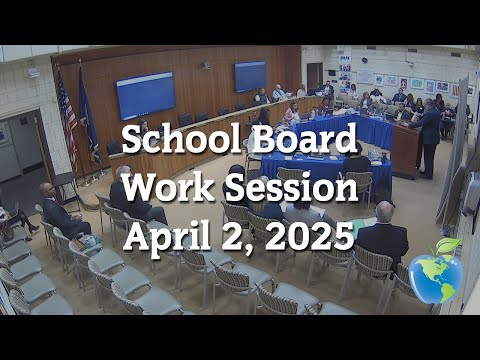
Dr. Pool, a representative of the division’s English office, told the school board during a work session that Norfolk Public Schools has seen measurable gains for students in the Black subgroup on two interim measures tied to board Goal 3.
The presentation said the Black subgroup’s STAR reading assessment winter data point for 2024–25 was 1.9 points above the winter target and “16.8 points above the initial data point” when the goal was first measured. Officials said reading plans and intervention work led to a 10% reduction in students in the high-risk band and that 2,891 individual student reading plans have been developed and monitored.
The report, which tracked Measure 3.1 (percentage scoring proficient/on watch) and Measure 3.2 (percentage in urgent intervention), showed the Black subgroup rising from 41.6% to about 57% on a winter proficiency indicator and a drop in urgent-intervention students to levels below board targets. “We’ve grown 16.8 points,” Dr. Pool said when summarizing the division’s progress.
Board members pressed for details about where growth was concentrated and what strategies drove it. Dr. Pool and English-office staff identified several district practices they credited with gains: expansion of student reading plans beyond grade 3 to some grade‑6 and grade‑4/5 classrooms; increased use of a data warehouse and monthly data reviews; more intensive involvement by reading specialists; coaching (the English office reported more than 143 coaching sessions); and professional development on evidence‑based literacy interventions and high-quality instructional materials, including training tied to Benchmark Advance and SIPs intervention curriculum.
Board members asked specifically about middle‑grade progress and students with Individualized Education Programs (IEPs). Dr. Pool said middle grades (6–8) are improving but not at the same rate as elementary grades and that students in the Black subgroup with IEPs are “progressing but not as fast as others.” Board members also asked about parent engagement: principals keep attendance counts for literacy nights, but Dr. Pool said the central office does not collect a divisionwide parent‑engagement metric and that formal tracking of how materials sent home are used is not in place.
Officials listed next steps: ongoing monitoring of reading plans with progress data, expanded professional development and coaching, intervention walk‑throughs to check implementation fidelity, use of the Virginia ELA Walkthrough Protocol in partnership with the Virginia Department of Education’s Comprehensive Literacy Network, and continued participation with the VDOE pilot instrument designed to align with the science of reading.
Officials emphasized the need to maintain fidelity across schools and to support teachers who are newer or serving as long‑term substitutes. Board members requested future updates that more directly link specific strategies (for example, Lexia usage or other interventions) to measurable growth.
School staff framed the results as promising but incomplete: the Black subgroup has narrowed some gaps on these interim measures but remains behind the all‑students group by several percentage points on selected indicators. The division will bring additional monitoring reports to future board meetings.