Get Full Government Meeting Transcripts, Videos, & Alerts Forever!
Get email alerts on the Evidence Authentication Gun Laws topic
No spam. Unsubscribe anytime.
Appeals argument in gun-possession appeal centers on certified records and whether defendant must know licensing rule
Summary
At oral argument the Appeals Court weighed whether a district-court docket admitted at trial met attestation requirements and whether the word "knowingly" in the firearm-possession statute extends to the licensing element, potentially requiring proof a defendant knew a license was required.
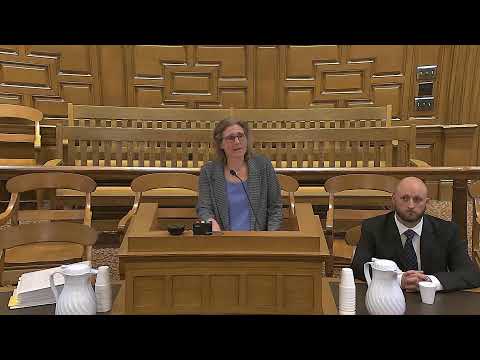
The Massachusetts Appeals Court on April 3 heard argument in the appeal of Jose Shawraising two separate but related questions: whether a district-court docket copy admitted at trial was properly attested, and whether the statutory mens rea word "knowingly" applies to the licensing element of the firearm-possession statute, G.L. c. 140, (10A).
Defense counsel Haley Jacobson argued the documentary record should not have been admitted because the copy lacked the required attestation: "Neither the seal nor the signature certify that the signer compared the copy with the original," Jacobson told the panel, citing Duramo/Dorama and Blacks Law for the proposition that an "attestation" requires a signed certification that a copy is true and correct.
The Commonwealthargued through Arne Hansen and other counsel that a raised court seal and the clerk-magistrate signature satisfied authentication rules and that, in any event, the defence had not shown prejudice from the asserted error. "If the court were to adopt the defendant's proposition ... we're essentially decriminalizing illegal possession of firearm," Hansen warned, arguing that requiring proof that a defendant knew about the licensing requirement would effectively prevent prosecutions.
On the mens rea issue, Jacobson pressed that the insertion of the word "knowingly" into the statutory text after earlier decisions counseled a reading that it should apply to the licensing element. She invoked statutory-presumption principles and Supreme Court decisions addressing when ignorance of law may be excused, including citations to Lindem cases such as Ruan and Liberato analogies. Hansen and the Commonwealth replied that Marrero and later decisions limit the reach of a general mens rea term and that the state's licensing and possession framework is better read to require knowledge only as to possession.
Why it matters: The courts decision could affect whether prosecutors must prove a defendant knew of the licensing requirement before a conviction under the firearms statute and will also resolve whether routine clerk-court records admitted at sentencing or enhancement proceedings require a stricter attestation practice to be used as proof of prior convictions.
The panel questioned whether an objection at trial would have allowed a district judge to cure an attestation defect mid-trial; defense counsel said the record did not show stipulation. The court also discussed practical consequences if "knowingly" were read broadly: counsel argued it would make convictions harder to obtain, while the Commonwealth argued the proposal was inconsistent with statutory structure and relevant precedent. The case was submitted after argument.