Get Full Government Meeting Transcripts, Videos, & Alerts Forever!
Get email alerts on the Criminal Liability topic
No spam. Unsubscribe anytime.
Appeals court weighs whether blinding sunlight can be intervening cause in motor-vehicle homicide
Summary
In Commonwealth v. Todd J. Maderos the court heard dispute over whether a sudden blinding of the driver by sunlight after the driver began a turn can constitute an intervening and superseding cause that negates criminal liability for a resulting death; advocates and justices debated foreseeability and jury allocation of the issue.
The Appeals Court heard argument April 3 in Commonwealth v. Todd J. Maderos (2024-P0431) over whether blinding sunlight that suddenly impaired the defendant after he began to turn can be an intervening and superseding cause that negates criminal liability for a motor-vehicle homicide.
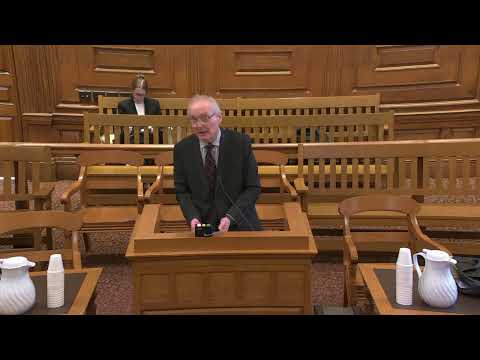
Defense counsel Devon Hincapie framed the central legal question succinctly: “whether, as a matter of law, blinding sunlight can never be an intervening and superseding cause in a motor vehicle homicide case” or whether it may be a jury question. Hincapie pointed to Massachusetts precedent allowing juries to decide whether exceptional circumstances negate ordinary negligence rules and cited Wilner v. Perry as an example of a case in which atmospheric conditions affected responsibility.
Why this matters: If the court treats sudden blinding by natural conditions as a possible superseding cause, that fact pattern can shift whether a motorist’s conduct is treated as negligent or excused, with ramifications for criminal culpability in vehicle-death cases.
The Commonwealth’s prosecutor, Christopher Emeril, argued the intervening-cause doctrine requires an event that “acts upon the victim” or is a “new and independent force,” and that ordinary environmental and road conditions (lighting, weather) are foreseeable circumstances a driver must account for. Emeril stressed foreseeability and the availability of mitigation (for example, visor or sunglasses) and cited cases holding that foreseeable conditions do not operate as superseding causes.
The panel pressed both sides on whether the defendant’s testimony that he adjusted visors multiple times, and that he was able to see a truck before initiating his left turn, made the sunlight event foreseeable. Justice Marguerite Grant asked whether the sunlight in this case functioned like a lightning strike or a sudden medical event; Hincapie responded that the record supports an inference the sun “blinded him after he begins to make the turn,” which he argued could be a jury question.
No ruling was announced. The court took the matter under advisement after extended questioning about foreseeability, jury instructions, and whether the judge’s instructions allowed the jury to consider the sunlight as a superseding cause.
Ending: The panel reserved decision. Both sides said they would rest on their briefs and oral argument.