Get Full Government Meeting Transcripts, Videos, & Alerts Forever!
Get email alerts on the Criminal Law Affray topic
No spam. Unsubscribe anytime.
Appeals court questions whether public "affray" requires bystander fear beyond victim's alarm
Summary
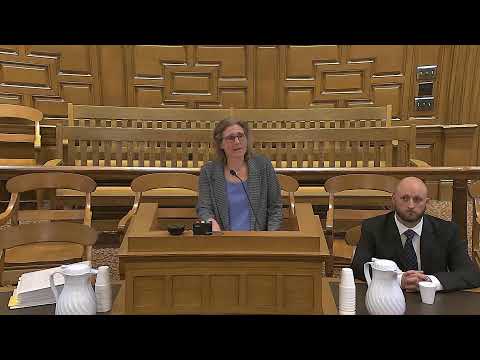
Panel justices at the Massachusetts Appeals Court on April 3 debated in Commonwealth v. Dobson whether the Commonwealth must prove that a member of the publicnot merely a direct victimwas placed in fear to sustain an affray conviction.
Panel justices at the Massachusetts Appeals Court on April 3 debated the scope of the criminal charge of affray in Commonwealth v. Dobson, focusing on whether the Commonwealth had to prove that someone other than the direct victim was actually placed in fear.
The defendantrepresented by Tim St. Lawrenceargued the evidence was legally insufficient. "I don't think that would be a reasonable inference enough to carry the weight of proof beyond a reasonable doubt," St. Lawrence told the panel when asked whether the mere presence of bystanders could support an inference they were placed in fear. He said the recorded video and witness behavior could reflect inconvenience or other innocent explanations rather than fear.
The Commonwealthrepresented by Charles Marshall and joined at argument by trial prosecutor Max Robidouxcountered that the video of a daytime attack at a busy bus station and testimony about bystanders justified a jury inference that a member of the public was put in fear. "The video is the clearest and most helpful part of that evidence," Marshall said, urging the court that a person shown to pause or divert their path during a violent assault could reasonably be inferred to have been alarmed.
Why it matters: The court wrestled with whether longstanding precedents and model jury instructions require proof that a nonparticipant member of the public was placed in fear. Defense counsel pressed the panel to read cases such as Nee narrowly; prosecutors cited case law and the factual record to justify submitting the charge to a jury under the standard for sufficiency of the evidence.
Supporters and critics of broader readings of the affray statute warned the panel of slippery slopes. The justices repeatedly probed hypotheticals two teens fighting in a parking lot or an officer intervening to refine where the line is drawn between ordinary public disturbance and the public-crime element of affray.
During argument, counsel and panelists discussed whether words used across precedents"alarm," "fear," and "terror"have different legal weight and whether the Legislature or the courts should narrow the doctrine. Counsel acknowledged divergent solutions across jurisdictions and the potential impact of the courts ruling on future prosecutions of public disturbances.
The court did not rule from the bench; the case was submitted after argument.