Get Full Government Meeting Transcripts, Videos, & Alerts Forever!
Get email alerts on the Search And Seizure topic
No spam. Unsubscribe anytime.
Appeals court hears challenge to warrantless truck search after officers spotted small plastic bag
Summary
At the April 3 sitting the Commonwealth and defense disputed whether officers had probable cause to search a truck after seeing a small plastic bag described by officers as a "corner baggie," with counsel debating the reach of Commonwealth v. Garcia and the significance of field sobriety tests and the defendant’s movements.
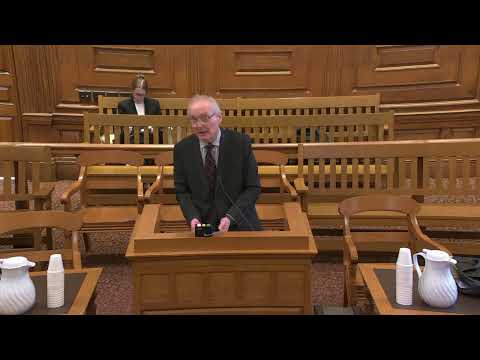
The Massachusetts Appeals Court heard oral argument April 3 in Commonwealth v. Morris Clemens (2024-P1004) over whether a trial court properly suppressed evidence recovered during a warrantless search of the defendant’s pickup truck.
The question presented, Jesse Crane told the three-justice panel, is “whether Commonwealth v. Garcia applies given the motion judge’s factual findings on the motion to suppress.” Crane, arguing for the Commonwealth, described the judge’s earlier factual findings — that the defendant displayed “indicia of impairment,” reached toward a bag on the driver’s-side floor, and that officers “recognized a corner baggie” inside the vehicle.
Why this matters: Garcia governs when an officer’s observation of a small bag in a vehicle can, together with surrounding circumstances, supply probable cause to search. Defense counsel Sarah Varney argued the record here contains less detail than Garcia and stressed that the defendant completed field sobriety tests and that a small clear plastic bag is a common, benign object.
Crane told the court that although the officer who testified did not explicitly state he had formed an opinion the defendant was impaired after field sobriety testing, the officer observed furtive motions: closing legs, shielding with arms, and reaching toward the floor where a canvas bag and a small plastic bag lay. Crane urged the court to view the bag description “in the context of all of the officers’ observations.”
Varney countered that the record lacks a detailed description of the bag and of any residue and that Garcia controls because that case required more specific facts than the Commonwealth has offered here. She noted that the motion judge later reconsidered his first endorsement and ultimately suppressed the evidence, and she argued the judge’s subsequent ruling is consistent with Garcia and Torres.
The justices questioned both sides about how to reconcile the motion judge’s initial finding that the defendant showed signs of impairment with his later endorsement that “there was nothing in the motor vehicle in conjunction with the corner baggie” to justify a search. Justice Chauncey Wood pressed whether a driver’s difficulty finding license and registration while also being asked to put hands where the officer could see could reasonably be considered furtive conduct.
No decision was announced from the bench. Justice Catherine Hand and the rest of the panel took the matter under advisement.
Ending: Counsel told the court they would rest on the briefs and argument. The case remains under advisement for a written decision.