Get Full Government Meeting Transcripts, Videos, & Alerts Forever!
Get email alerts on the State Budget topic
No spam. Unsubscribe anytime.
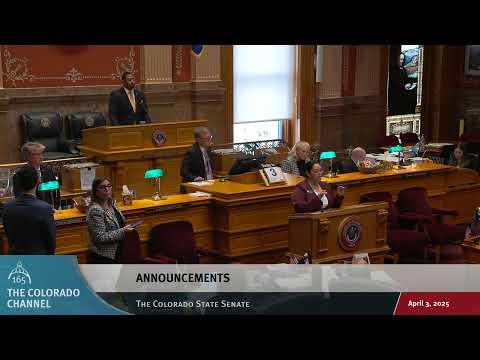
Colorado Senate approves $FY2026 budget, clears large consent calendar; nursing facility fee bill passes after debate
Summary
The Colorado Senate on April 3 passed the Joint Budget Committee’s FY2025–26 spending plan and cleared a long consent calendar, while also approving a contested measure authorizing nursing‑facility fees.
The Colorado Senate on April 3 passed the Joint Budget Committee’s spending plan for the fiscal year beginning July 1, 2025, and adopted dozens of bills on the consent calendar after a full floor session that included extended speeches from budget negotiators and debate on smaller, contested measures.
Senators passed Senate Bill 206 — the general appropriations/budget bill — on third reading after several budget leaders spoke to the chamber about the fiscal choices behind the plan. Senate Bill 270, relating to fees collected from nursing facilities and administered by the Colorado Health Care Affordability and Sustainability Enterprise, drew a divided vote after floor debate about taxes and state spending. The chamber then moved through a long consent calendar that included education, corrections, housing and health items; many items passed with unanimous or near‑unanimous tallies.
Why it matters: SB 206 is the legislature’s primary spending bill and sets the state’s priorities for K–12 and higher education, Medicaid provider rates, public safety and other programs. Passage of the budget and the accompanying appropriations and transfers will determine how state agencies implement services and which programs receive one‑time or ongoing funding. The nursing facility fee measure was contested because several senators characterized it as a potential tax or fee increase and debated its timing and fairness to taxpayers.
What happened on the floor
Budget (Senate Bill 206) Senate leaders framed SB 206 as a response to a structural shortfall they said required difficult choices. Senator Bridges, who led floor remarks for the bill, described the package as the product of months of work by the Joint Budget Committee and staff and asked senators for an aye vote. Bridges noted the committee’s effort to “dig out of a 1,200,000,000 hole” and said the plan directed cuts and investments in public education, public safety, public lands and public health while emphasizing bipartisan cooperation.
Senator Kirk Meyer and other JBC members praised the committee process and the staff work that supported the negotiations. Several senators acknowledged the budget was imperfect but urged colleagues to support it as a responsible step.
Outcome: Senate Bill 206 passed third reading. The clerk announced the final tally as 22 ayes, 11 noes; the bill was recorded as passed.
Nursing facility fees (Senate Bill 270) Senate Bill 270, which authorizes certain fees collected by the Colorado Health Care Affordability and Sustainability Enterprise and allows the enterprise to provide additional services to nursing facilities in exchange for those fees, prompted extended remarks from opponents who called the measure effectively a new tax or a way to hide revenue increases from constitutional limits.
Supporters said the bill would channel resources to nursing facilities and the enterprise to sustain provider services and that the measure implements policy choices the chamber must address.
Outcome: Senate Bill 270 passed third reading. The clerk announced the final tally as 22 ayes, 12 noes.
Consent calendar and third‑reading roll The Senate considered a long consent calendar of third‑reading items and adopted scores of bills on final passage. Many bills on the consent calendar were technical changes, repeals of expired programs, or appropriations considered noncontroversial; several carried substantive but low‑contentiousness policy changes that had been vetted in committee.
Notable items on the consent calendar included: - Senate Bill 208 (appropriation related to Department of Corrections communication services) — adopted with a unanimous voice/recorded vote during the floor session (clerk recorded 33 ayes, 0 nos on passage). - Multiple education, corrections and health policy bills that were described in the clerk’s reading and then passed on the consent calendar with recorded tallies at the time of each bill.
Votes at a glance - Senate Bill 206 (general appropriations / FY2025–26 budget): passed third reading; recorded vote 22 ayes, 11 noes. - Senate Bill 270 (nursing facility fees / Colorado Health Care Affordability and Sustainability Enterprise): passed third reading; recorded vote 22 ayes, 12 noes. - Senate Bill 208 (DOC communications appropriation): passed third reading; recorded vote 33 ayes, 0 noes. - Dozens of other bills on the consent calendar were passed on third reading (see clerk’s printed journal and the Senate roll call record for itemized tallies and cosponsor lists). Some consent items recorded 30–34 ayes depending on the bill and the time of vote; the official roll calls are posted in the Senate Journal.
Floor debate and context Budget debate dominated the floor time. Senators who served on the Joint Budget Committee described long work sessions, staff support and the compromises that produced the package. The budget chair and other JBC members emphasized fiscal restraint, priority investments in education and health care, and the need to address a structural deficit.
On SB 270 and other contested measures, opponents expressed concern about the distributional effects of new fees or revenue instruments and whether such measures circumvent voter protections or add hidden costs to taxpayers. Supporters said the measures respond to operational needs in health and long‑term care and reflect statutory authority to set program finances.
Other business and procedural notes - The chamber took numerous nominations and gubernatorial appointments in consent and by recorded vote, confirming members to education and adjudicative boards as read on the floor. - The Senate processed several committee reports and second‑reading items from special orders, moving many House bills forward after committee action.
What’s next Following passage on third reading, bills head either to the governor for signature or, in the case of house amendments to senate bills, back to the House for concurrence as required. Implementation actions, rule‑makings, and appropriations execution will follow the governor’s signature and agency budget instructions.
Ending note Senators praised staff and the JBC for marathon budget work; the floor record shows bipartisan and cross‑chamber collaboration shaped the final budget and many technical measures cleared on consent. For full roll‑call details on each bill listed on the April 3 Senate Journal, consult the official Senate Journal and the Secretary of the Senate’s roll‑call archive.