Get Full Government Meeting Transcripts, Videos, & Alerts Forever!
Get email alerts on the Municipal Budget topic
No spam. Unsubscribe anytime.
New Haven finance committee holds budget workshops; staff preview deputy controller, IT capital and tenant‑protection workloads
Summary
The Finance Committee met March 13 for departmental workshops on the mayor’s proposed FY2026 budget. Staff outlined a proposal to add a deputy controller and a chief data officer, an IT capital request of $5 million, and growing workloads at the Fair Rent Commission and LCI enforcement; no formal budget votes were taken.
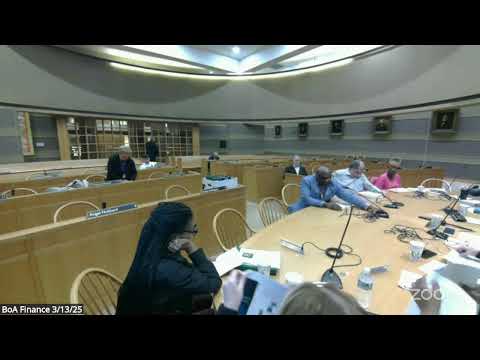
The Finance Committee of the City of New Haven met March 13 for a series of departmental workshops on the mayor’s proposed fiscal 2026 budget, hearing presentations and questions from staff across the mayor’s office, registrar of voters, assessor, Department of Finance, information technology, the Fair Rent Commission and Corporation Counsel. Committee members discussed organizational moves, capital projects and rising workloads but took no formal budget votes; the meeting adjourned by voice vote.
The workshops focused on three broad themes: organizational changes in the mayor’s office and finance department, planned IT and capital spending, and expanding demand for tenant‑protection services. Sean Madison, the mayor’s chief of staff, told the committee the mayor has moved the Office of Labor Relations from Corporation Counsel into the mayor’s office, calling the change “helpful” for centralizing labor decisions and prioritizing workforce issues. Dr. Christy Sampieri, presenting for the Department of Finance, outlined plans to “modernize the city and modernize our financial systems,” including a proposed deputy controller post and a proposed chief data officer to support real‑time reporting and AI analytics.
Why it matters: the proposed new finance roles and IT investments would change how the city manages financial data and payments; changes to office organization affect reporting lines for labor relations; and staff warned that tenant‑protection work and enforcement needs are expanding, which could affect staffing and contractual services.
Finance director presentation and proposed new positions
Dr. Christy Sampieri, representing the Department of Finance, said the departmental budget request includes roughly $220,000 in new recurring personnel costs to fund two proposed positions: a deputy controller (budgeted at about $132,000) and a chief data officer (budgeted at about $90,000). Sampieri said the deputy controller position is in keeping with language in the city charter and would provide continuity, stronger oversight and support for modernization projects. The chief data officer role, she said, would centralize data governance and oversee analytics, forecasting and fraud‑detection tools.
Sampieri said materials and supplies funding in Finance doubled from about $110,000 to $220,000 to cover ongoing software renewals and smaller recurring technology expenditures, while a separate IT capital request totals $5 million, of which about $3.3 million is described as infrastructure spending. Michael Seneo, chief technology officer, told the committee the IT capital work focuses on aging network switches and other infrastructure and that much of the requested capital supports interoperability and cybersecurity projects.
Registrar, clerk and assessor budgets
City Clerk Michael Smart and Registrar office staff summarized operational readiness for the municipal election cycle and equipment changes, including pilot tabulators and increased early‑voting staffing needs. The assessor’s office, presented by Alex Bowen, acting city assessor, described a largely status‑quo operating budget (department total roughly $952,000) while noting a statutory requirement to republish the grand list by April 15 under recent legislation, changes to motor‑vehicle depreciation schedules and a new veterans homestead exemption.
Tenant protection and Fair Rent Commission workload
Voldeliz Bermudez, executive director of the Fair Rent Commission, told the committee the commission’s caseload has increased substantially and described expanding outreach, training and a tenant‑union recognition process. Bermudez said the commission currently records seven registered tenant unions but also referenced 134 registered members in tenant unions and growing demand for materials, supplies and part‑time staffing. She warned the office is seeing more tenant complaints tied to rapid rental increases and said the state attorney general is examining use of artificial‑intelligence tools by some landlords to set rents.
Corporation Counsel and enforcement work
Patricia King, Corporation Counsel, said the office’s budget is effectively status quo after the labor relations unit moved to the mayor’s office. King highlighted that outside‑counsel spending is unpredictable and rising due primarily to multiple‑defendant police litigation and other complex matters. She also noted recent investment in an LCI attorney (legal code/enforcement) who has supported expanded enforcement and liens; counsel corrected an earlier figure, reporting the office has generated 275 liens (the presenter had previously misstated 72), and said liens typically secure longer‑term compliance rather than generating immediate general‑fund revenue.
Technical corrections and next steps
Budget staff and department presenters identified a pair of technical corrections: Ron Gizzi said a personnel roll‑up error in the registrar summary created a misleading $500,000 variance; staff will file a technical amendment. Committee members asked for clarification in budget documents about direct reporting lines for the labor relations director and requested the city mark that reporting relationship in the final book. Presenters repeatedly said full details and final numbers will be available in the full budget book and that some capital and grant‑funding items come from state awards or separate capital appropriations.
Votes at a glance
The committee took no votes on budget items during the workshop. The only formal action recorded in the transcript was a procedural motion at the meeting’s end to adjourn. Alder de Cook moved to adjourn; the motion was seconded, approved by voice vote and the committee adjourned.
Ending note
Committee members were reminded the first of three public budget hearings is scheduled for next Thursday at 6 p.m. in the Aldermanic Chambers; additional departmental workshops and hearings are planned in coming weeks as the committee prepares its recommendations to the full Board of Aldermen.