Get Full Government Meeting Transcripts, Videos, & Alerts Forever!
Get email alerts on the Bystander Cpr topic
No spam. Unsubscribe anytime.
Doctors and EMS urge wider bystander CPR training after New Haven data shows low coverage
Summary
Emergency clinicians told the Public Safety Committee that New Haven's bystander CPR rate is under 10 percent and out-of-hospital cardiac-arrest survival is under 5 percent, both well below national figures. Presenters asked city leaders to help expand free community CPR training and said Good Samaritan laws protect bystanders who intervene.
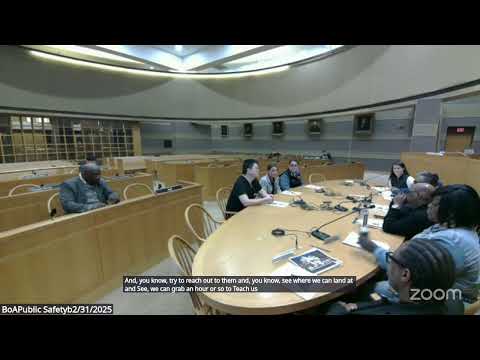
Emergency physicians and paramedics urged wider community CPR training at the New Haven Board of Alders Public Safety Committee meeting on March 31, 2025, after presenters said bystander CPR in New Haven is well below national averages and that survival from out-of-hospital cardiac arrest in the city is lower than comparable national rates.
Dr. David Yang, an emergency physician who said he has spent significant time with ambulance and fire teams, told the committee bystander CPR in New Haven is "less than 10 percent," compared with roughly 40 percent nationally, and said the city's survival rate after out-of-hospital cardiac arrest is under 5 percent compared with a national range of about 8 to 12 percent. "If someone does CPR, a community member that does CPR, it at least doubles the potential of this person surviving that cardiac arrest," Dr. Yang said.
Dr. Yang and colleagues emphasized that early bystander chest compressions and public access to training are the most effective ways to improve survival. They described a local outreach campaign that has included public classes and targeted work in neighborhoods with especially low bystander-CPR rates.
Presenters said the hands-on training program is free and adaptable. Standard classes use a short slide presentation and a hands-on practice session with mannequins; instructors said full sessions typically run about 90 minutes to two hours for a community group, and shorter demonstrations are possible for outreach events. Non-English classes have been offered with translators when needed. Instructors also said they do not charge for the community instruction and they do not require paid Red Cross certification for basic community skill training.
A committee member asked about legal risk for bystanders. The presenters explained that Good Samaritan laws in the United States generally protect people who provide emergency assistance from lawsuits that might arise from complications (for example, a broken rib during chest compressions). The presenters said they include Good Samaritan information in public training messages to reduce hesitation to act.
The presenters asked alder members to help arrange community sessions; staff said they are planning events around Men's Health Awareness Month in June and will coordinate with alder offices to host neighborhood trainings. Dr. Yang noted that a recent local incident in which volunteers provided CPR likely saved a life and used that example to urge broader community participation.
Why this matters: Early bystander CPR substantially increases survival chances after cardiac arrest. Local data presented to the committee show New Haven rates lag regional and national levels, and presenters argued that scaled training and clearer public messaging about legal protections could measurably improve outcomes.