Get Full Government Meeting Transcripts, Videos, & Alerts Forever!
Get email alerts on the Molst Training And Form Revision topic
No spam. Unsubscribe anytime.
MOLST training slides advanced; panel to remove parenthetical “allow natural death” from CPR section
Summary
Connecticut’s MOLST advisory council advanced a narrated training slide package, agreed to invite pediatric expert Dr. Carrie Moss to the education subgroup, and decided to remove a parenthetical phrase in the CPR section of the proposed MOLST form to reduce confusion for providers and families.
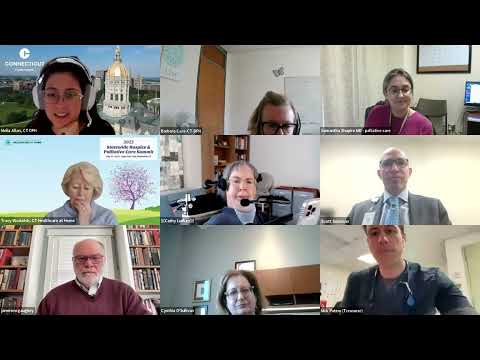
The MOLST Advisory Council, meeting April 1 on the Department of Public Health (DPH) platform, advanced a revised training overview and agreed to refine the medical orders for life-sustaining treatment (MOLST) form language after members said one line risked confusing providers and patients.
The training subcommittee presented a condensed overview slide deck intended to serve as a public-facing introduction and as the preamble for additional modules (EMS, provider training). Cynthia (Cindy) (Training subcommittee member) said the overview is “pretty close to being in its completed stage” and described plans for narrated slide videos to be hosted through CT Train. Melia Allen (Department of Public Health staff) said DPH staff will assist with recording and editing; presenters may record via Teams/Zoom and DPH will splice final videos.
Council members raised a set of content and legal questions before finalizing the deck. Several clinicians urged the slides remain simple and not to over-specify clinical examples. Dr. Scott Sussman (Advisory council member) recommended adding a brief reference that MOLST may be appropriate “for patients of any age,” rather than anchoring the guidance to narrow pediatric examples. Dr. Rich Kamen (Advisory council member) and others supported emphasizing that the overview should include age in eligibility language but avoid clinical checklists that might unduly limit providers’ judgment.
Pediatrics drew special attention. Dr. Carrie Moss, identified in the meeting as a pediatric oncologist and pediatric palliative care clinician, provided a more detailed pediatric slide that the subgroup had condensed for the overview. Barbara Jacobs (Advisory council member) and others said Moss’s experience justified inviting her to the next education subgroup meeting to explain pediatric differences in practice. Jacobs said she would reach out to invite Dr. Moss to the April 8 subcommittee meeting.
The council also discussed the proposed MOLST form text. Dr. Samantha Shapiro (physician) raised a concern that the parenthetical phrase “(allow natural death)” appearing under the CPR/DNR selection could be misleading because patients who choose do-not-attempt-resuscitation may still receive other life-prolonging or disease-directed treatments. Dr. Shapiro said the wording might imply that choosing DNR/DNI forces a comfort-only approach, which is not the intent.
Barbara Jacobs and others agreed the parenthetical created confusion in the provider community. Dr. Rich Kamen supported removing the phrase. Barbara reported the form will be a recommendation to the commissioner and said, to reduce confusion, the council would remove the parenthetical in the CPR box; she recorded the group’s decision to “strike in the second section” the parenthetical “allow natural death.” The council treated this as an editorial change to mitigate provider and patient confusion; it was recorded in the meeting as a consensus direction to remove the line prior to commissioner review.
The training subcommittee also outlined next steps: complete legal sufficiency review for eligibility language (including whether and how to reference pediatric considerations), finalize whether the detailed pediatric language will appear in the overview or be moved to the eligible-provider training deck, prepare narrated and optionally on-camera presentations for CT Train, and present an updated slide deck at the next education subgroup meeting. Cindy said the subgroup will keep edits within public meeting rules and present live revisions where possible to maintain FOIA compliance.
The meeting ended with a procedural motion to approve the March 4 minutes once quorum was present; the motion was introduced by Dr. Rich Kamen and was seconded and approved by the council.
Why it matters: The training materials and final MOLST form language will guide clinicians, EMS providers and families about how MOLST orders are completed and interpreted in acute and end-of-life situations; removing ambiguous phrasing reduces the risk that a DNR/DNI selection will be misunderstood as precluding selective life-prolonging treatments.
The council scheduled the next education subgroup meeting for April 8 at 11 a.m.; Barbara Jacobs said she would invite Dr. Moss to present pediatric context.