Get Full Government Meeting Transcripts, Videos, & Alerts Forever!
Get email alerts on the Immigration Enforcement Resources topic
No spam. Unsubscribe anytime.
Revere Human Rights Commission discusses local immigration enforcement, posts 'know your rights' resources
Summary
At an April meeting, the Revere Human Rights Commission heard accounts of recent immigration enforcement activity, reviewed community legal and support resources and agreed to make translated "know your rights" materials and hotline numbers available on the commission website.
The Revere Human Rights Commission on April discussed recent immigration- and enforcement-related incidents in the city, reviewed community resources and agreed to publish translated "know your rights" materials and hotline contacts on the commission website.
The discussion followed a report from Director of Diversity, Equity and Inclusion Steve Moravito that federal activity tied to an operation originating in Everett included Department of Homeland Security and Alcohol, Tobacco and Firearms involvement and led to hundreds of firearms seized and arrests that touched the Shirley Avenue area in Revere. "There was an incidence on Shirley Ave ... the federal government did AACs and ... they confiscated over a hundred firearms and what originated in Everett, a few of the people who were detained and arrested were in the Shirley Ave. Area," Moravito said.
Attorney Molly McGee, who represents clients in immigration and related matters in Revere, warned the commission that some people are being detained as "collateral" during arrests. "There have been individuals that are identified as collateral damage that are arrested by ICE throughout communities in Massachusetts," McGee said. She urged residents to know basic legal rights and, when possible, to have a contact who can call an attorney if detained.
Commissioners and staff highlighted several concrete resources for residents. Harbor Cove’s crisis line for survivors of domestic violence and related services is (617) 884-9909; an immigration help line mentioned in the meeting is (508) 293-1871. The commission displayed a pocket "know your rights" card available in five languages (English, Arabic, Spanish, Portuguese and Haitian Creole) and said the public library carries printed copies.
Moravito said the Revere Human Rights Commission will put printable, cutout versions and translations of the cards on the HRC web page and provided his contact (smorabito@revere.org) for follow-up. Commissioners and staff also recommended the Massachusetts Immigrant and Refugee Advocacy Coalition (MIRA) website for additional resources; staff asked people to verify information on government or established nonprofit sites to avoid misinformation spread on social media.
Attorney McGee offered practical advice for encounters with enforcement officers: remain calm and respectful, ask whether officers have a warrant and have a designated emergency contact who can reach a lawyer. "When engaging with law enforcement ... we always want to start with being respectful and being cautious," McGee said. She recommended keeping the know-your-rights card with identification or a photo of it on a phone for quick access.
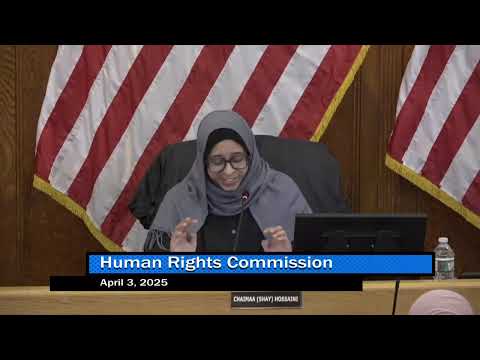
Commissioners emphasized outreach: school staff and community groups have been distributing information and cards, and the commission said it will post resource lists and links to organizations such as MIRA and Food Solutions New England on the HRC site. Chair Shaima Hosseini and Director Moravito said the goal is to make materials accessible and translated so residents can prepare and protect themselves without relying on unverified social media reports.
The meeting closed with an affirmation from commissioners and local speakers that residents facing enforcement action have allies in Revere, and that city offices, attorneys working in the community and local nonprofits are coordinating to get accurate information to affected families.