Get Full Government Meeting Transcripts, Videos, & Alerts Forever!
Get email alerts on the Healthcare Noncompete topic
No spam. Unsubscribe anytime.
Committee advances amended noncompete bill after divided testimony on patient access and competition
Summary
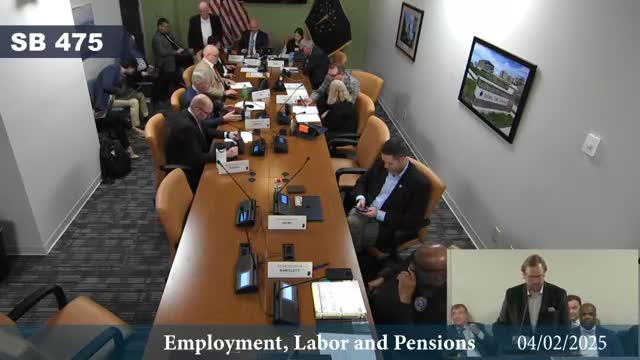
The committee passed an amended version of Senate Bill 475, 8-2. Supporters said banning or narrowing noncompete clauses will improve physician recruitment and patient access; opponents warned of business harms and urged narrower or codified reforms. The final committee amendment limited the scope to hospitals and revised definitions.
The committee voted 8-2 to advance Senate Bill 475 in amended form after several hours of testimony from physician groups, hospital representatives, patient advocates and state officials.
Representative Jared Manning, the bill sponsor, said the measure seeks to prevent anti-competitive noncompete clauses that can "trap" physicians and limit patient access. "In Indiana, patients come first," Manning said in opening remarks, arguing that banning noncompetes would help attract and retain physicians and improve access in underserved areas.
Supporters included leaders of physician groups and statewide medical organizations. Steve Freeland, chief executive of Cancer Care Group, said independent practices cannot outbid large hospital systems for recruiting physicians and described a recent recruitment in which a candidate accepted a higher hospital offer despite signing an agreement with his independent group. "There is no conceivable way I could match that offer," Freeland said, arguing for protections that sustain independent practices.
Dr. William Pond, president of the Indiana State Medical Association, testified that noncompetes reduce competition and can increase costs by forcing health systems to use temporary locum tenens staffing when physicians are forced out of local markets. The ISMA urged a broad prohibition extending protections beyond primary care physicians.
The state—s health secretary, Gloria Sachdev, testified in strong support, describing noncompetes as anti-competitive and citing a 2022 Berkeley report that, she said, found Indiana—s health care market highly consolidated and facing a shortage of primary care physicians. "Health and Human Services ... said that Indiana faces a shortage of 1,180 primary care physicians alone," Sachdev said.
Hospital representatives sought definitional clarity or a narrower scope. Luke McNamee of the Indiana Hospital Association said the association was neutral on the bill as amended and pressed for precise statutory definitions of "noncompete," what counts as a new contract, and limits to clinical practice (as opposed to administrative roles). Several physician-owned practices argued for retaining noncompetes to shield independent groups from hospital recruitment tactics; Justin Harris of Evansville Surgical Associates said, "Without noncompetes, hospitals will surely pick us off."
Business groups cautioned against an absolute ban. David Ober of the Indiana Chamber opposed a blanket prohibition and recommended codifying current case-law standards (duration, geographic scope, reasonableness) rather than a categorical ban.
Committee amendments were discussed and adopted by consent: Amendment 2 narrowed application to hospitals (as presented in committee), and Amendment 3 revised definitions in the bill. Representative Manning and supporters expressed concern about definitional loopholes and said they would continue to work on language as the bill moves forward.
On final vote in committee, the roll call recorded eight votes in favor and two opposed; the transcript shows the committee result recorded as 8-2. The committee passed the bill in amended form to proceed in the legislative process.