Get Full Government Meeting Transcripts, Videos, & Alerts Forever!
Get email alerts on the Statute Of Limitations Sexual Assault topic
No spam. Unsubscribe anytime.
Committee approves measure to remove or extend some sexual-assault time limits after survivor testimony
Summary
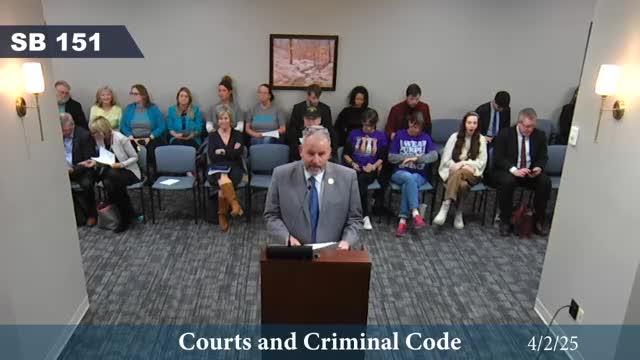
Lawmakers in the Criminal Code Committee passed an amended version of Senate Bill 151, which deletes a proposed laches defense, extends certain discovery-based prosecution windows and removes the five-year limit for some felony 3 sexual-assault prosecutions, after emotional testimony from survivors.
The House Criminal Code Committee approved an amended form of Senate Bill 151 after survivors and advocates gave emotional testimony urging changes to the statute of limitations for sexual-assault charges.
Representative Zachary Zimmerman (sponsor of an amendment) explained the committee’s amendment deletes sections establishing a laches defense and extends the window for prosecutions based on later-discovered DNA evidence, confessions or recordings from five years to 10 years after discovery in certain cases. The amendment also removed several Senate changes to the current statute of limitations.
Several survivors told the committee why they support the change. Carissa Seikman, who testified she was a nationally ranked swimmer in high school, said, “I stand here before you today with a heavy heart,” and described losing evidence, delayed investigations and the lifelong effects of assault. Denise Kimbelick (transcribed), who testified that multiple members of her family were victimized, urged the committee to vote for what speakers called “Sydney’s bill,” referring to a provision to extend the time for felony 3 assault prosecutions and to improve preservation of evidence.
Witnesses described gaps in current law: felony 1 and 2 sexual assaults that involve a deadly weapon already carry no statute of limitations; felony 3 cases currently have a five-year window, which speakers said is often too short for delayed reporting and the time survivors need to come forward. Joel Weneke of the Public Defender Council registered neutral testimony, and institutional witnesses such as a public defender representative and others answered committee questions.
After the testimony and a short committee discussion, the sponsor moved to pass as amended. The committee recorded the vote as passing (13–0). The measure now moves to the House floor or next scheduling step.
Votes at a glance: Senate Bill 151 (as amended) — Motion: “Move to pass as amended.” Outcome: passed by committee (reported 13–0).