Get Full Government Meeting Transcripts, Videos, & Alerts Forever!
Get email alerts on the School Security Nonpublic Schools topic
No spam. Unsubscribe anytime.
Bill to expand nonpublic-school powers draws heated debate over school police and zoning; zoning amendment fails, bill clears committee
Summary
Senators approved a bill expanding services and program access for nonpublic schools but rejected a zoning preemption amendment and engaged in extended debate about whether nonpublic schools should be allowed to form police departments.
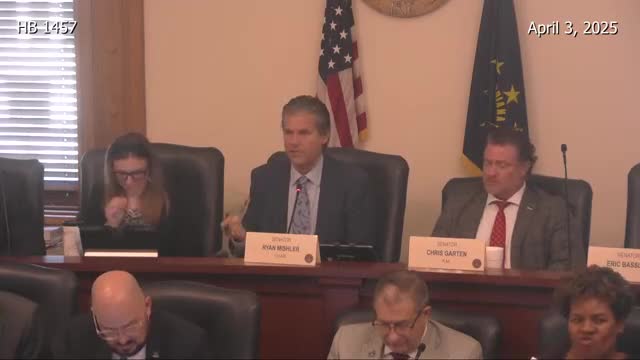
The Senate Appropriations Committee advanced a bill that would give nonpublic schools new authorities but drew hours of debate over two provisions: a change to statewide zoning treatment for schools and new authority for nonpublic schools to establish police departments.
The bill’s sponsor said the measure would allow nonpublic schools access to certain workforce and grant programs, provide an appeals route for scholarship denials and remove barriers local zoning boards might apply to schools. Opponents focused on a provision that, as amended in an earlier committee, would make public, charter and nonpublic schools a permitted use in all zoning districts. Critics said that language could force local zoning boards to approve school locations regardless of siting, safety, environmental or community-planning concerns.
Senator Cadora offered an amendment to remove the statewide zoning preemption and return zoning decisions to local boards; she argued the change was a local-control and safety issue and cited an instance in her district where authorization and public notice raised community concerns. Supporters of the bill and some committee members said the original text had been narrowed from an earlier draft and that zoning controls (setbacks, sign rules, building standards) would still apply; they also said a single case should not prompt a statewide change.
The zoning amendment failed 4–9. After years of discussion about school-site safety and the management of school facilities, committee members also spent extensive time debating another provision that would allow nonpublic schools to organize police departments or otherwise expand formalized school-law-enforcement authority. Several senators raised concerns about funding, liability, accountability and whether existing public safety tools could meet schools’ needs: if schools need security, could they partner with local law enforcement or use other local funding mechanisms rather than form independent police forces?
Multiple senators asked the bill sponsor to remove the new police-department authority on second reading so the committee could study the broader policy (how such departments are funded, training, liability, and oversight). The sponsor agreed to take out the new-authority language on second reading and to continue discussions with interested members. If the sponsor follows through, the change would allow the committee to advance the rest of the bill while preserving time to review the policing question.
After the failed zoning amendment and the sponsor’s commitment to remove or rework the police provision on second reading, the committee approved the bill 9–4.