Get Full Government Meeting Transcripts, Videos, & Alerts Forever!
Get email alerts on the Veteran Services Accreditation topic
No spam. Unsubscribe anytime.
House committee approves bill to standardize accreditation and oversight of county veteran service officers
Summary
The House Veterans Affairs Committee passed an amended version of Senate Bill 433, creating a state-directed accreditation program for county veteran service officers and adding public meeting requirements; proponents said it will raise standards, while some witnesses warned the measure risks reintroducing state supervision over county employees.
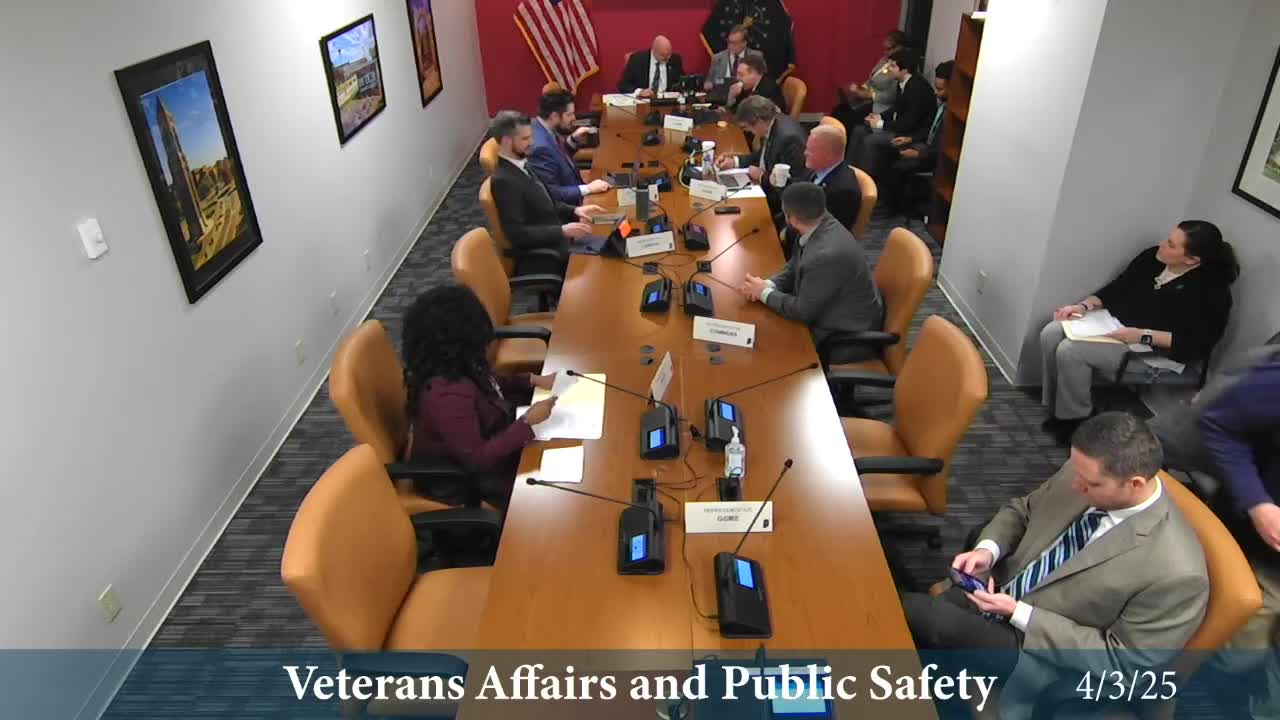
The House Veterans Affairs Committee voted to pass an amended version of Senate Bill 433 on Oct. 12, directing the Indiana Department of Veterans Affairs to create a state accreditation program for county veteran service officers and requiring biannual public progress meetings.
Sponsor Sen. Scott Baldwin told the committee the bill is “aimed at providing support for veterans by making sure that we have a qualified cadre of veteran service officers.” He said the proposal grants the IDVA director authority to oversee training and accreditation of service officers and to supervise administrative and technical activities within the department.
The bill drew support from veterans groups and county service officers who said a consistent accreditation standard would improve service statewide. Judy King of the Veterans of Foreign Wars, Department of Indiana, said the VFW can cross-accredit county officers and “this process only takes about a week.” Alex Dobson, Steuben County veteran service officer and president of the Indiana Veterans Service Officers Association, moved his group's position from neutral to support and said the bill “is a chance for Indiana to rise to the top” on training and standards.
Indiana Department of Veterans Affairs Director Jake Adams, who has served roughly eight weeks in the role, called the measure a “launching pad to reform how we deliver services to veterans in the community,” and said improving connections to benefits and health care reduces risks such as suicide.
Testimony also identified several drafting and implementation concerns. Jim Iley, representing the Military Veterans College of Indiana, said the bill’s language on supervision is “a very dramatic change,” arguing that the measure as written could reimpose day-to-day state supervision over county veteran service officers and risk renewed lawsuits by counties. He also pointed to conflicting accreditation timelines in the draft: a 30-day requirement for orientation and accreditation versus other language allowing a one-year period to obtain accreditation.
Iley said the draft contains a number of unclear compliance provisions, including what would occur if a county declines to comply with new requirements, and noted a conflict with House Bill 1235 on discharge eligibility language; the bill text before the committee references county officer eligibility as “an honorably discharged veteran,” while HB 1235 uses the broader phrase “anything other than a dishonorable discharge.” He urged clearer wording and additional study of staffing and pay: “We lose about 9 to 10 county veteran service officers every year,” he said, and added that counties control pay, which contributes to turnover.
Supporters said those operational concerns can be addressed through the director’s rulemaking and by further work between stakeholders. Sponsor Baldwin told the committee he did not intend to convert county positions into state employees and said the bill is intended to create a consistent accreditation program administered by the IDVA director while leaving hiring and pay to counties.
Committee members took two technical amendments by consent, including one that requires biannual public meetings to allow county commissioners and the public to monitor progress. After discussion, the committee recorded an affirmative vote and passed the bill as amended.
Bill outcome: passed by the committee as amended; committee recorded an affirmative tally and the chair announced "Bill passes as amended." The committee indicated the measure will move forward to subsequent House consideration.
The bill’s next steps include drafting final technical changes to reconcile the 30-day/one-year accreditation timing and clarifying the scope of “supervision” and remedies for noncompliance. Sponsors and IDVA staff said they will work with county service officers and veterans groups to refine language before further floor consideration.