Get Full Government Meeting Transcripts, Videos, & Alerts Forever!
Get email alerts on the Immigration Reporting topic
No spam. Unsubscribe anytime.
Committee advances bill requiring mandatory reporting of individuals not lawfully present; opponents warn of chilling effects
Summary
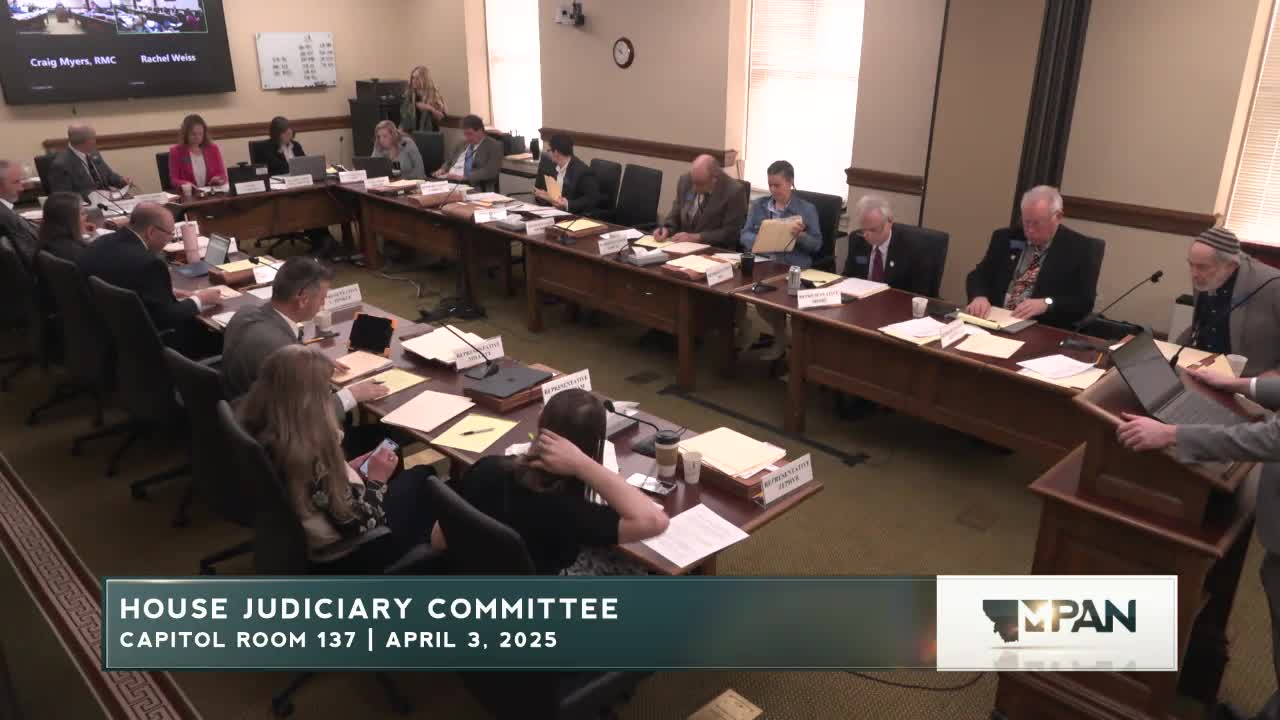
House Bill 9 27, which would make a broad set of professionals mandatory reporters of individuals not lawfully present in the U.S., passed the House Judiciary Committee 12-8 after heated testimony from educators, health-care workers and immigrant-rights advocates who said the measure would undermine trust and service access.
Representative Lucas Schubert, sponsor of House Bill 9 27, told the Judiciary Committee the bill would "require the mandatory reporting of illegal aliens from individuals who currently fall under the mandatory reporting for child abuse and neglect." He said the text largely parallels existing mandatory‑reporting language and argued the measure was needed to address illegal immigration.
Supporters' view: the sponsor and a small number of proponents argued expanding mandatory reporting will improve enforcement and provide a state-level mechanism to flag noncitizen presence. During the hearing Representative Schubert said the Department of Justice would function as an intermediary to collect reports and that he planned to amend reporting to go directly to federal enforcement (ICE) in further action.
Opponents' concerns: testimony opposing HB 9 27 was extensive and came from multiple sectors. Health-care and school‑administration witnesses warned the bill would erode patient and student trust and likely reduce access to care and education. Dr. Elizabeth Kolstad, a licensed psychologist, told the committee she would not serve as an agent of law enforcement: "I am an agent of my clients and my patients. I am not and never will be an agent of the police or of the federal government or ICE."
Other opposition testimony included the Montana Nurses Association, the Montana School Boards Association, child‑welfare and anti‑trafficking advocates, homeless‑service providers and the Montana Catholic Conference. The Montana Department of Justice described the bill as "unnecessary" because the state already coordinates with federal partners and said adding a state reporting role would create operational and fiscal burdens; the DOJ also questioned the proposed $500 appropriation on the fiscal note as insufficient.
Legal and policy issues raised: opponents warned the measure could conflict with federal protections and court precedent. Several witnesses referenced Plyler v. Doe and warned about potential conflicts with FERPA and with processes that allow crime victims to apply for U or T visas. Legal-immigration counsel told the committee that immigration status is complex and nonlegal professionals lack the expertise to make reliable determinations.
Implementation concerns: witnesses pointed out many vulnerable people lack identification even when they are citizens (for example, people experiencing homelessness); mandatory reporting could therefore lead to harmful misreports. School officials and child-care providers said the bill would add administrative burdens to already strained workforces and could push providers out of practice.
Vote and outcome: in executive session Vice Chair Deming moved the committee report the bill do pass. The committee recorded a roll-call vote of 12 yes and 8 no; the clerk announced, "House Bill 9 27 has passed House Judiciary."
Closing: the bill's sponsor said he would seek an amendment to send reports directly to federal authorities instead of the state DOJ. Opponents urged the committee to reject the measure, citing harm to access to care, education and social services and the threat to trafficking‑victim confidentiality. The measure now moves to the House floor, where broader debate and possible amendments are likely.