Get Full Government Meeting Transcripts, Videos, & Alerts Forever!
Get email alerts on the Asbestos Litigation topic
No spam. Unsubscribe anytime.
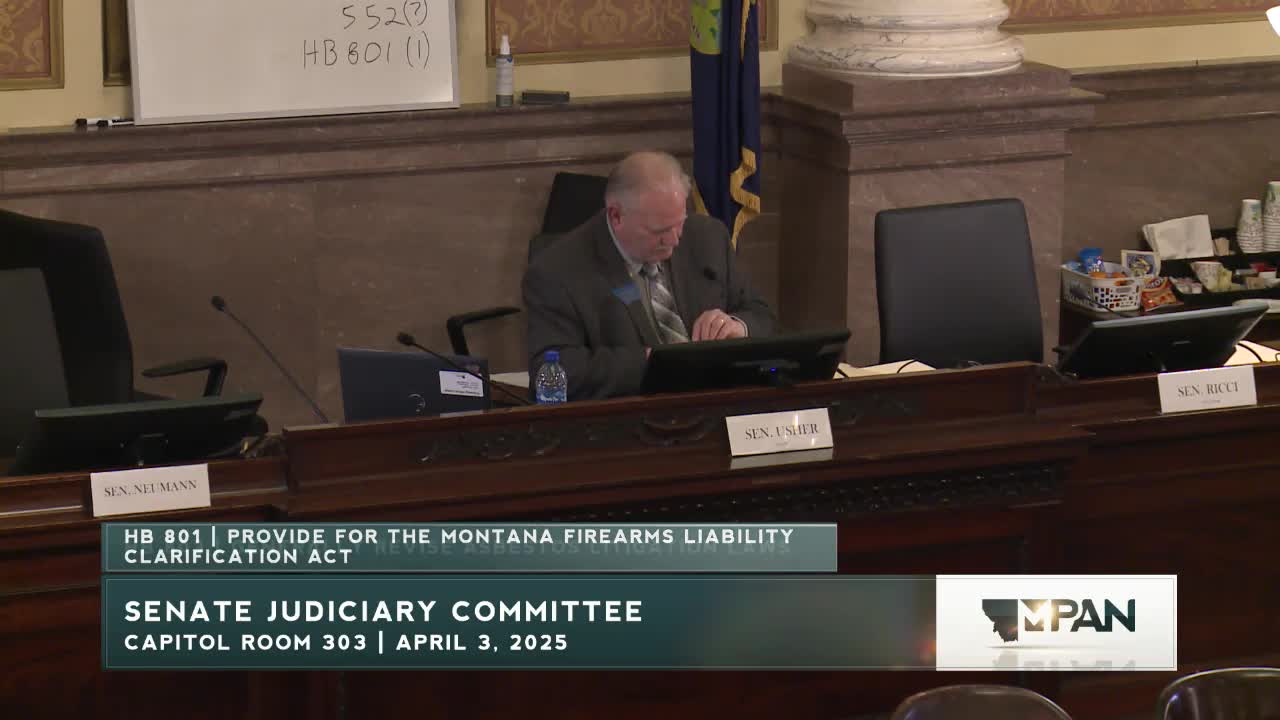
Heated testimony in Montana on HB 803: insurers and industry back asbestos transparency; Libby residents and veterans warn of delays
Summary
Representative Greg Overstreet told the Senate Judiciary Committee House Bill 803 is a two-part package to reduce duplicative asbestos recoveries and require plaintiffs to file bankruptcy-trust claims before or within 30 days of filing a civil tort action.
Representative Greg Overstreet opened the HB 803 hearing by describing the bill as a set of procedural reforms meant to make asbestos litigation “efficient and fair.” He told the Senate Judiciary Committee HB 803 requires plaintiffs to file bankruptcy-trust claims “before or within 30 days of filing a civil suit” and to produce basic information about which defendants plausibly caused asbestos exposure.
“Many manufacturers of asbestos products went bankrupt,” Overstreet said, and the bill’s transparency provisions aim to prevent double recovery and to give juries the full picture of trust claims and tort claims.
Proponents — including the Montana Chamber of Commerce, the U.S. Chamber of Commerce, the American Tort Reform Association, the Montana Petroleum Association and trade groups — argued HB 803 protects solvent defendants from being overnamed and cut legal costs by giving juries full exposure histories up front. Charles Robison of the Montana Chamber pointed the committee to a Department of Justice press release and said the legislation would protect trust funds from duplicative claims. Mark Behrens of the U.S. Chamber said similar laws in other states have not delayed tort cases and can speed trust payments.
Defense-side witnesses described “overnaming” practices elsewhere in the country where plaintiff lawyers list dozens of defendants at filing; proponents said the bill would require a modest “show your work” factual basis early in litigation and would allow many legitimately exposed claimants to be paid sooner through established trust procedures.
Opponents — including attorneys and many witnesses from Libby and other Montana communities — said the bill would impose new deadlines and mandatory disclosures that could harm people with rapidly progressive diseases such as mesothelioma. Roger Sullivan, who represents numerous Libby plaintiffs, said the bill would require plaintiffs to produce detailed, trial-level disclosures up front and could effectively dismiss meritorious claims before discovery can preserve key testimony from rapidly dying plaintiffs. Several Libby residents and veterans described rapid disease onset and told the committee that the procedural hurdles would be “deny, delay until they die.” A representative of the Veterans of Foreign Wars warned the measure could affect veterans still pursuing asbestos-related benefits and civil relief.
Committee members asked detailed questions about timing, trust-payment speed and carve-outs for Libby-related claims. Proponents said trust claims are often faster to process than tort suits — citing an example that a trust with complete paperwork can pay in roughly 90 days — and that HB 803’s requirements are modeled on statutes in other states. Opponents disputed that characterization and emphasized that the WR Grace trust and other trust processes for Libby claims are particularly complex and often unresolved decades after bankruptcy.
The committee took testimony from a long list of stakeholders, and no final committee vote on HB 803 appears in the transcript excerpt. Members discussed a potential amendment to carve out Libby-origin claims; proponents said they could support a Libby carve-out but that the unamended bill is the text under consideration.
Why it matters: HB 803 would change pretrial disclosure and trust-filing timing for asbestos victims and could speed or slow recoveries depending on implementation. The bill pits business groups and insurers seeking litigation efficiency against victims’ attorneys, Libby residents and veterans who say procedural gates would hurt people with short survival windows.
Sources and status: HB 803 was heard in Senate Judiciary with extensive testimony from proponents and opponents. As of the end of the hearing in the supplied transcript, the committee had not completed executive action on HB 803.