Get Full Government Meeting Transcripts, Videos, & Alerts Forever!
Get email alerts on the Water Management topic
No spam. Unsubscribe anytime.
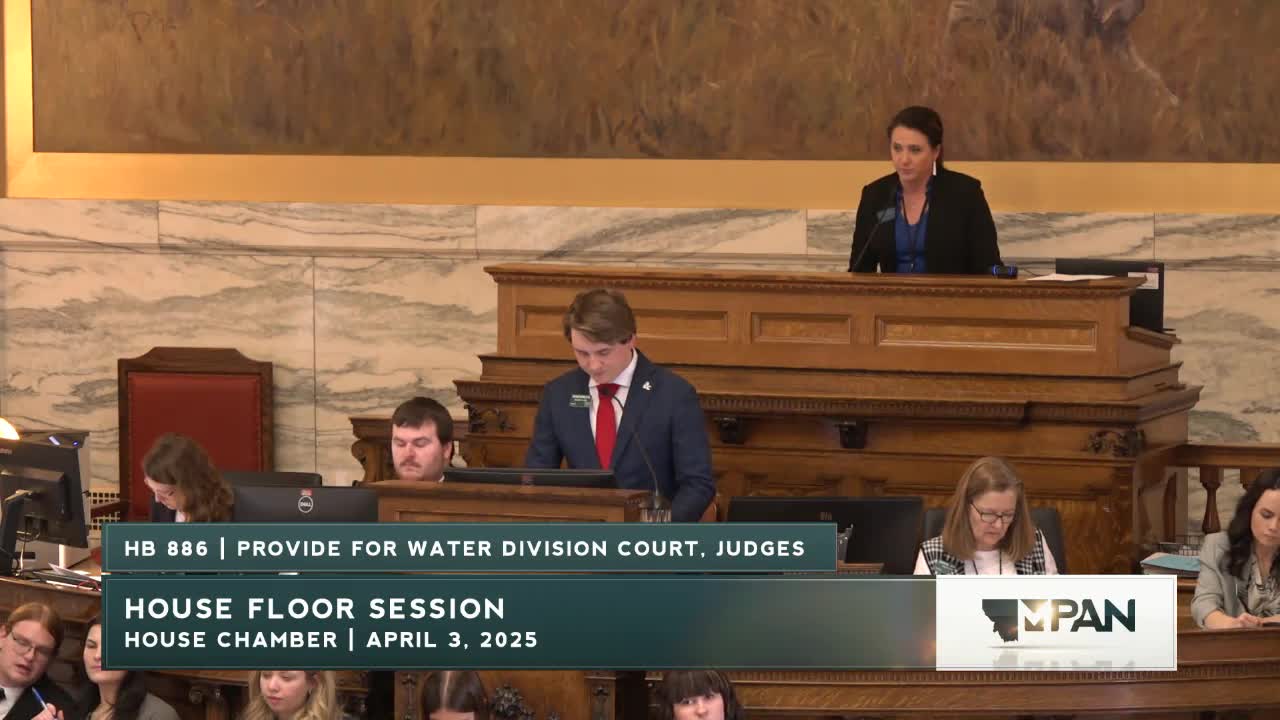
Montana House deadlocks on bill to make water court permanent
Summary
House Bill 886, which would expand and make Montana’s water division court permanent, failed on a 50-50 tie after hours of debate and one amendment passed earlier in the session.
The Montana House of Representatives failed to advance House Bill 886 on a 50–50 tie, rejecting a measure that would have expanded and made permanent a specialized water division court to adjudicate water rights and related enforcement.
Sponsor Representative Brad Walsh, the bill’s primary floor sponsor, told members that “Water is rarely simple nor without controversy,” and said the measure was the product of a multi‑stakeholder review intended to centralize water adjudication and enforcement in a court with specialized expertise. He described provisions that would let the chief justice submit nominees to the governor and create terms for water division judges.
Supporters argued the measure would centralize records, speed administration of final decrees from the long‑running statewide adjudication and provide consistent expertise. Opponents said the water court was intended as a temporary forum to resolve the backlog of pre‑1973 claims and warned the bill would remove water enforcement cases from locally elected district courts and local judges who know their basins.
Representative Mike Regier, opposing the bill, said the water court “was never meant to be permanent” and urged lawmakers to “let it sunset just as the law intended.” Other opponents raised concerns about local control, possible politicization of appointments and whether the statute as written actually required water‑specific expertise.
An amendment offered by Walsh to clean up statutory language and clarify several procedural points passed earlier in the debate, 73–27. After continued floor debate and multiple questions to the sponsor about number and role of judges — the bill would authorize from two up to four water division judges with six‑year terms — the chamber recorded a 50–50 tie on the motion to recommend the bill do pass, and House Bill 886 failed at second reading.
The bill drew extended floor discussion from representatives across rural and agricultural districts who said water administration affects irrigators, municipalities and other water users; supporters pointed to the decades‑long adjudication process and the need to fold post‑1973 claims into a consistent system. With the bill’s failure on second reading, proponents said they may revisit statutory language and funding details in future sessions.
Votes at a glance: the amendment (identifier noted in the record) passed 73–27; the final second‑reading motion failed 50–50.
The House moved on to other bills on the calendar after the outcome was announced.