Get Full Government Meeting Transcripts, Videos, & Alerts Forever!
Get email alerts on the Recreation And Parks topic
No spam. Unsubscribe anytime.
Bill to create Montana shooting‑facilities task force advances after contentious hearing
Summary
HB 899 would establish a task force to develop a framework for state‑supported shooting facilities and improvements; testimony split between industry groups pushing for larger, state‑backed investments and local operators warning against a centralized complex that would compete with local ranges.
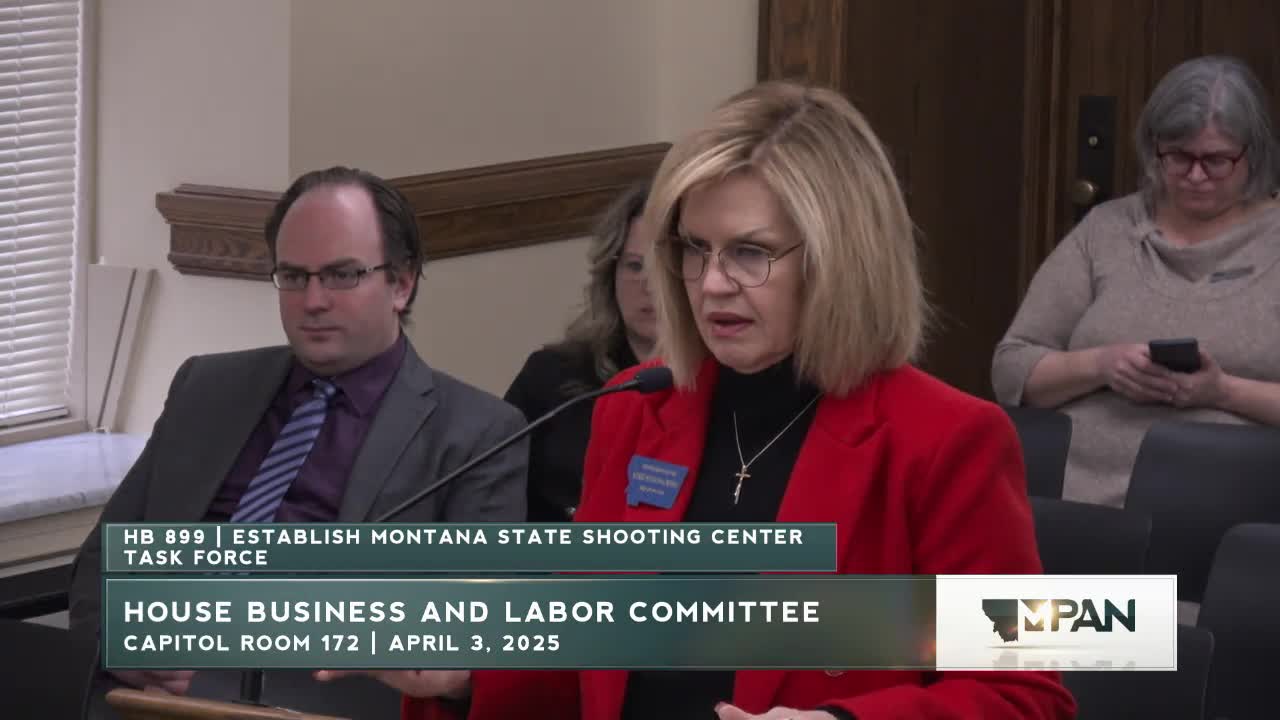
House Bill 899 sought to create a state task force to analyze opportunities for public shooting‑sport facilities and recommend funding mechanisms and governance. Representative Keri Seekins Crow (R‑House District 39) described the bill as a vehicle to plan future public shooting investments, expand access to range infrastructure and unlock federal Pittman‑Robertson (PR) funds and private donations to support projects statewide.
Why it matters: Supporters said improved range infrastructure supports hunting, public safety and local economies and argued that larger or better-distributed facilities could attract competitions and tourism dollars. Opponents — including the Montana Shooting Sports Association, local range operators and nonprofit range managers — warned a centralized state complex could siphon limited resources from successful local range grants and be inaccessible to many Montanans in a geographically large state.
Supporters’ testimony: NSSF (National Shooting Sports Foundation) government-relations director Nefai Cole and other industry witnesses framed the bill as a planning tool that could help Montana capture larger PR-eligible projects and listed potential revenue streams from ongoing excise taxes on firearms and ammunition (Pittman‑Robertson). They cited examples in other states where planning led to large-scale complexes and said Montana should study options and unlock matching federal dollars.
Opponents’ concerns: Gary Marbut (Montana Shooting Sports Association) and other local range operators urged caution. Their testimony emphasized that Montana already operates a shooting range development program that disperses modest grants (currently capped per project) to improve local ranges, and that a state-run, remote complex would not serve the daily needs of most range users. Several opponents highlighted the size and low population density of Montana, arguing that centralized facilities risk being unused by many regions and could divert SRDP funds from local projects.
Amendment and changes: During executive action the committee adopted an amendment to change the bill’s focus from a single “Montana State shooting complex” to “Montana State shooting facilities and improvements” and to move administration to Montana Fish, Wildlife & Parks. The amendment broadened the task force’s charge to consider distributed facilities and upgrades to existing ranges rather than a single centralized complex.
Outcome: The committee approved the bill as amended and moved it to the House floor. The committee vote was recorded on the transcript as passing; the clerk reported a recorded result read as 'motion passes 12 4 8 against' in the audio record. The amendment and the final language make planning for multiple facilities and improvements the task force’s central purpose rather than mandating a single state complex.
What to watch: If the bill proceeds, key decisions will include (a) whether state or federal PR funds can be structured to flow to local entities consistent with federal rules; (b) the task force’s recommendations on prioritized locations, governance, and the mix of public/private financing; and (c) how Fish, Wildlife & Parks would manage allocations alongside its existing shooting‑range programs.