Get Full Government Meeting Transcripts, Videos, & Alerts Forever!
Get email alerts on the Procurement topic
No spam. Unsubscribe anytime.
Lawmakers hear proposal for interim study of state procurement practices
Summary
Representatives and state procurement officials discussed House Joint Resolution 42, a proposal to direct legislative staff or an interim committee to study state procurement practices, transparency, delegated authority and contracts above $25,000 from the past four years.
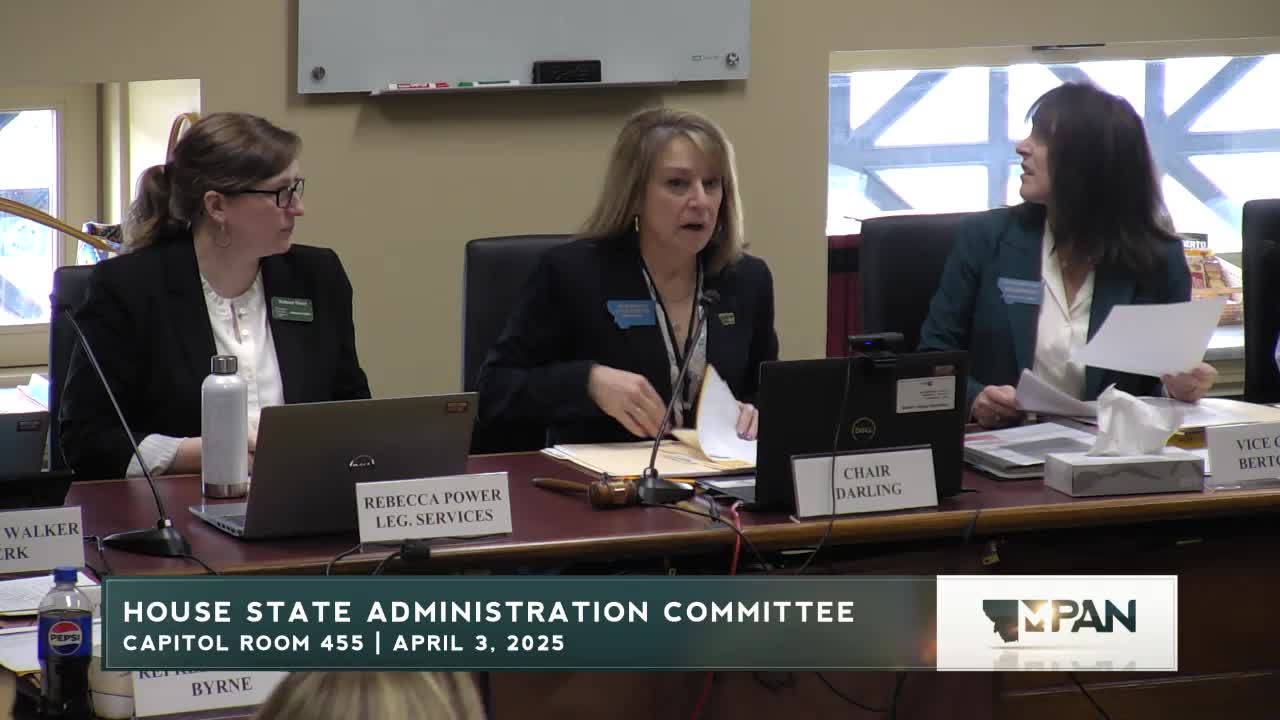
House State Administration members opened a hearing on House Joint Resolution 42 on an interim study of state procurement practices and the Montana Procurement Act. Representative Becky Edwards, sponsor of HJ 42, told the committee the measure would direct legislative counsel to designate an interim committee to review administrative rules, agency policies and procedures used in procurement, identify obstacles agencies face, inventory payments made outside standard procurement, and recommend steps to standardize and centralize contracting.
The resolution would ask the study group to examine procurement items over $25,000 for the past four years and to develop recommendations that might reduce deviations from the Procurement Act. “This bill directs legislative counsel to designate an interim committee to review the administrative rules, policies, and procedures state agencies use during the procurement process,” Representative Becky Edwards said.
Supporters across sectors urged the committee to approve the study. John Metropoulos, a Helena lawyer and long‑time lobbyist, urged a review after what he described as a recent, inadvertent statutory exemption that briefly left a roughly $50 million lottery contract outside the competitive procurement process. “The procurement system run very ably by the Department of Administration … ensures transparency and competitiveness,” Metropoulos said, and he called HJ 42 “illustrative of the need” for a comprehensive examination.
Nonprofit and service providers said procurement clarity affects service delivery. Adam Jespersen of the Montana Nonprofit Association said unclear or inconsistent procurement practices can cause missed opportunities or burdensome reporting for nonprofits. Danny Hess of the Montana Community Action Network said state contracts affected programs that serve “over 70,000 Montanans across the state.” Rhonda Wiggers of NFIB urged steps to make it easier for small businesses to compete for state contracts.
Department of Administration officials answered committee questions about current transparency and enforcement. Director Misty Ann Giles said the Department oversees enterprise contracting and delegates authority to agencies by tiers: Level 1 delegations generally cover contracts under about $100,000 (agencies without dedicated procurement staff), higher delegations up to roughly $200,000 cover agencies with procurement staff and counsel, and “everything above 200,000 … crosses my desk.” Giles said the state maintains an online transparency site and that, in practice, some delegated contracts remain only on agency systems. John Thomas, division administrator for State Procurement Services, said some contract listings and solicitations are posted on the department’s website and on the state’s transparency “checkbook.”
Officials also described compliance reviews and limits. Giles said compliance reviews can be desk audits that range from a month for smaller agencies to months for large departments such as Health and Human Services; agencies that fail reviews enter corrective “get well” plans and the department has authority to revoke procurement delegation. She cautioned the committee that the bill’s scope — examining four years of contracts down to a $25,000 threshold — would produce a very large volume of work: a snapshot showed more than 4,200 contracts in a single year in the $25,000–$150,000 range, and the department’s procurement team of about 12 staff carried out more than 300 contracting actions last year.
Committee members pressed for clarity on study logistics and cost. Representative Bennett asked who would perform in‑depth examinations; Edwards said Legislative Council would determine whether an interim committee or staff resources would be used. Staff explained that interim committees have budgets for study work but that the committee would need to prioritize studies when session ends. Director Giles urged care on scope so the legislature would not be “drowned” by sheer volume and suggested a primer for committee members to understand procurement nuances before reviewing detailed contract files.
The hearing closed with the sponsor asking the committee to pass HJ 42 to bring more transparency and support to state contracting.
Ending: The committee did not take a final vote on HJ 42 in the hearing; the item closed as a presented study request and will require Legislative Council designation and any interim assignment or funding decisions to proceed.