Get Full Government Meeting Transcripts, Videos, & Alerts Forever!
Get email alerts on the Environment:septic Standards topic
No spam. Unsubscribe anytime.
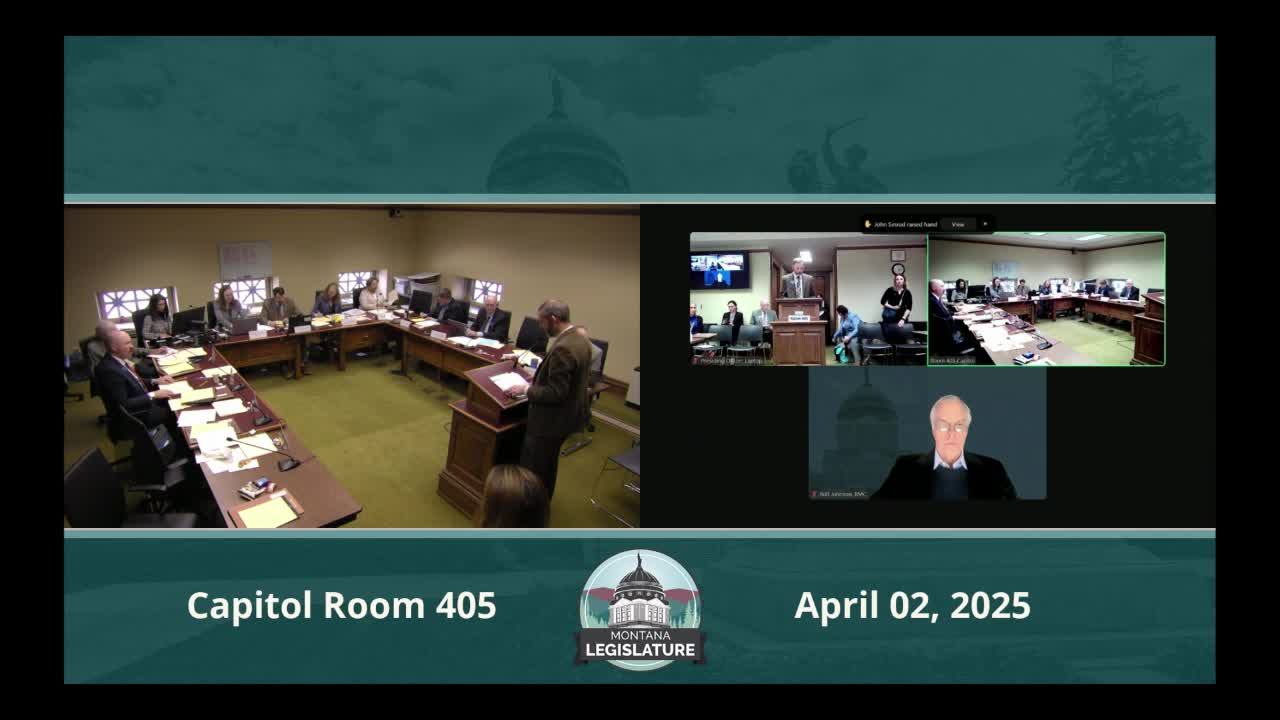
House hearing on HB 658 exposes sharp split on statewide septic standards, transparency and local control
Summary
House Bill 658, which would enshrine statewide septic standards, require written directives from local boards of health, and grandfather non‑failing systems, drew broad, often sharply contrasting testimony from homeowners, engineers and public‑health officials.
Representative Jedidiah Hinkle opened the hearing on House Bill 658, describing it as a measure to establish uniform state septic standards, require written directives from local boards of health for approvals, and to grandfather functioning systems that are not failing.
"House Bill 6 58 is a bill to provide some much needed changes to statutes dealing with septic standards, transparency, and accountability," Representative Jedidiah Hinkle said in opening remarks, noting the bill reflects task‑force standards and that it would require local boards to put directives in writing.
Proponents: consistency and fairness
Multiple proponents described multi‑year permitting delays and inconsistent county practices that they said imposed large costs on homeowners and small businesses. Michael Mulder of Gallatin County described a two‑year permitting timeline for his septic installation and said shifting county requirements roughly doubled the cost of his project. "There needs to be more accountability, more efficient processes, and more transparency," he said, urging passage.
Realtors and engineers argued for state consistency. John Synrude said that equal protection across counties is important and that DEQ standards provide a common baseline. Jeff Larson, a civil engineer with decades of experience, testified that some counties impose requirements that are more stringent than state statute and that the bill would correct inconsistencies.
Opponents: local conditions, water quality and the need for local rules
A long list of county public‑health officers, sanitarians, environmental groups, municipal leaders and county officials strongly opposed HB 658. Missoula Public Health Officer Gina Miller said local authority to adopt more stringent wastewater rules is "critical for environmental health and for property owners" because state rules are minimums and local rules allow protections tailored to local hydrogeology and water‑quality concerns.
"The state rules are minimum standards," Miller said. "County sanitarians live in the communities where these septic systems are installed. We're intimately familiar with the land and ... we can help them identify local soil characteristics or site characteristics ... that will result in a septic system that doesn't work."
Gallatin County representatives, the Montana Environmental Information Center, local public‑health leaders and the Montana League of Cities and Towns warned the bill would constrain counties from responding to nitrate contamination and other local water‑quality problems. Brittney Kron of Gallatin City‑County Health Department said the measure would allow continued use increases on marginal systems and could create problems for financing and real‑estate transfers.
Local officials pointed to Seeley Lake (Missoula County) and mapped nitrate plumes in Gallatin County as examples where county‑level rules and targeted standards were necessary to protect drinking water and surface water. Mayor Russ Nelson of Belgrade showed a county map of nitrate‑impacted areas and said the bill would reduce local tools to manage contamination that already exists.
Sponsor response and possible amendments
Representative Hinkle said he was open to working with local public‑health officials on amendments, and he noted that many small businesses had reported being forced into costly compliance processes that were inconsistent. He urged the committee to consider the bill’s promise of consistent statewide standards and said appeal mechanisms were being discussed elsewhere.
Committee questions addressed monitoring, county inspection capacity and how change‑of‑use determinations are handled between DEQ and local health departments. Witnesses disagreed on whether DEQ or local rules better managed change‑of‑use enforcement: some proponents said DEQ provides consistent guidance; local sanitarians said DEQ rules are designed to work alongside local regulations and that removing local authority would degrade protections.
What the bill would change (per sponsor testimony)
- Codify DEQ task‑force septic standards as statewide minimums. - Require local boards of health to put in writing any directives or conditions required for septic approvals. - Grandfather systems that are not failed or in need of repair so counties cannot force upgrades solely because local standards change.
Outlook
The hearing featured more than a dozen proponents and many organized oppositions, including county public‑health departments, municipal leaders, environmental groups and statewide associations. Several witnesses urged the committee to reject the bill as written; the sponsor indicated willingness to work on amendments addressing change‑of‑use concerns and the local‑state interface before executive action.