Get Full Government Meeting Transcripts, Videos, & Alerts Forever!
Get email alerts on the Voting Access topic
No spam. Unsubscribe anytime.
Committee rejects limited electronic ballot-return option for disabled voters
Summary
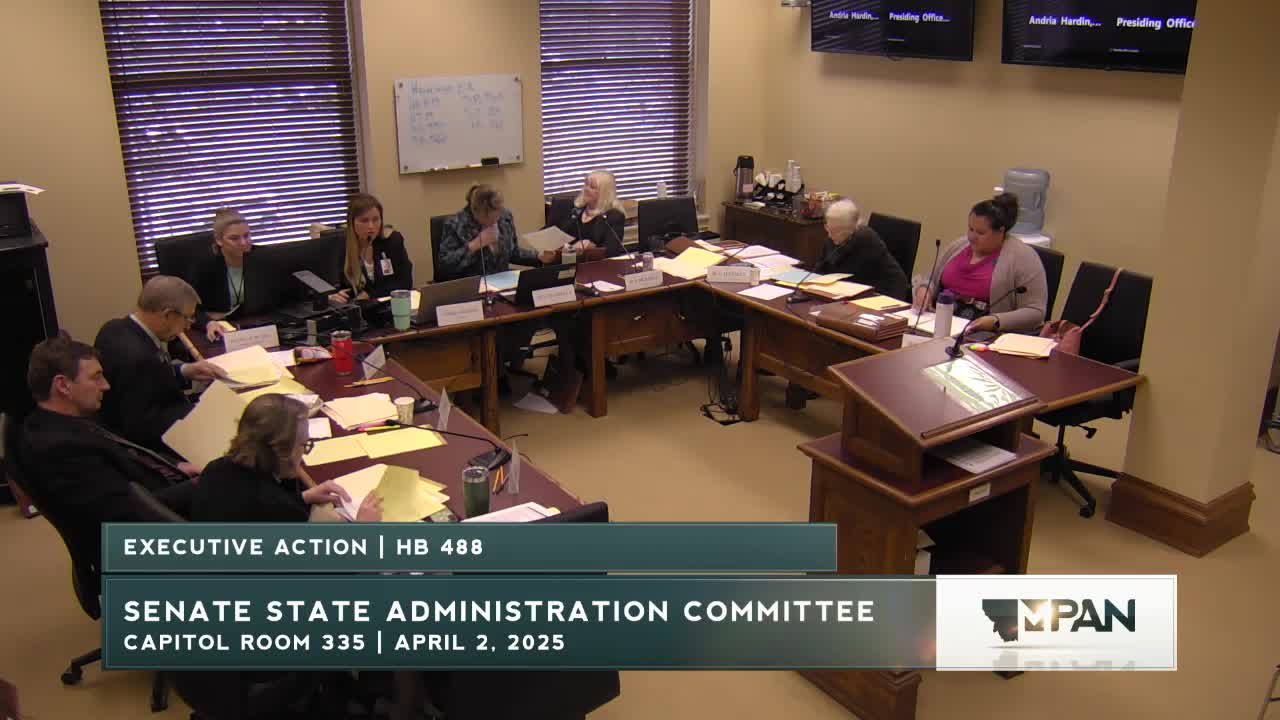
House Bill 488, which would allow certain disabled voters to return a voted ballot using an encrypted electronic transmission system, failed in committee amid security concerns and questions about alternatives already available.
House Bill 488, introduced by Representative Darling and summarized to committee staff by Miss Harden, would permit a disabled elector to return a voted ballot via an encrypted electronic transmission system approved by the Secretary of State under certain conditions and require the Secretary of State to adopt encryption and security standards for such systems.
Miss Harden told the committee, "House bill 488... allows a disabled elector to return a voted ballot using an encrypted electronic transmission system approved by the Secretary of State under certain circumstances," and noted the Secretary of State would be required to adopt standards.
Committee discussion focused on security and anonymity. Several senators expressed support for expanding voting options for disabled Montanans but raised concerns about electronic return as a high-risk practice. Members cited National Institute of Standards and Technology guidance that recommends paper-ballot return while allowing limited use of electronic delivery with controls. Senators asked whether current accessibility tools—such as in-person ballot-marking devices (the autoMARK and newer EBRS systems) or existing absentee processes—already provided reasonable accommodations.
Sponsor and some proponents argued the bill would help voters with visual impairments and others who cannot use current systems without assistance. Opponents and some committee members said safeguards and details about past security incidents needed to be clearer before authorizing an electronic return channel. In roll-call executive action the committee voted 4 in favor and 5 opposed; the bill failed to pass and was then moved to the table without objection.
Votes at a glance: Committee recorded a roll-call tally of 4 yes and 5 no; bill failed and was tabled.