Get Full Government Meeting Transcripts, Videos, & Alerts Forever!
Get email alerts on the Flags And Public Symbolism topic
No spam. Unsubscribe anytime.
Montana committee advances bill to limit political flags on government property
Summary
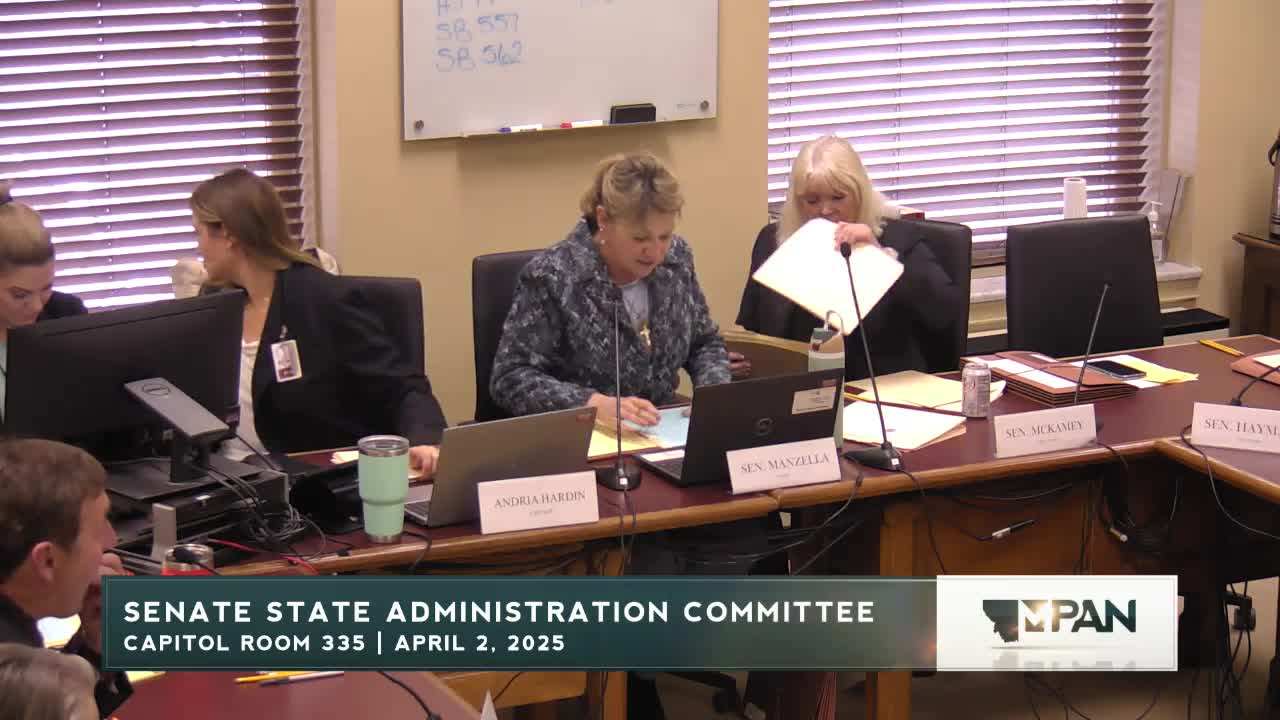
The Senate State Administration Committee voted to pass House Bill 819, which would restrict displays on government property to a defined set of official and historical flags and prohibit displays determined to express a political viewpoint.
The Senate State Administration Committee voted to pass House Bill 819, a measure from Representative Braxton Mitchell that would restrict which flags may be displayed on government-owned property to a defined set of official, military, tribal and historical flags and prohibit flags that the bill says “represent a political viewpoint.”
The bill’s sponsor, Representative Braxton Mitchell (House District 5), told the committee "this bill is not about restricting free speech" but about ensuring "government institutions remain places of unity and not division." He said the proposal would allow the United States flag, the Montana state flag, military flags, law enforcement flags, federally recognized tribal nation flags and historical flags, while excluding displays the government deems political.
Opponents at the hearing warned the language is vague and could exclude flags that communities use to signal safety or belonging. Phoebe Howell testified in opposition and said flags and classroom displays "help students feel safe" and asked whether teachers would have to remove materials that some might deem political. Evan Fritz and Sean Reagor, speaking for themselves and the Montana Gender Alliance respectively, said the rainbow pride flag is often a symbol of inclusion, not partisan politics, and worried the bill would force schools to remove such signals. Patrick Yawake spoke on behalf of several tribal communities and asked whether the bill's list would recognize ceremonial or intertribal flags.
Committee members raised questions about definitions. Sponsor Mitchell said the bill draws language used in other states and that federally recognized tribal flags would be permitted but opponents said the bill could fail to account for the variety of banners used in tribal and cultural ceremonies. Senator McCamey asked whether the flags listed in the bill are already protected; Mitchell replied that municipalities and schools already fly many such flags but that the bill clarifies and standardizes what government entities may display.
During executive action the committee adopted the bill by roll call vote and sent it out of committee. The roll call as recorded in committee proceedings listed nine senators; the tally recorded in committee minutes and announced at the meeting was 5 in favor and 4 opposed.
If enacted, the bill would regulate official displays on property owned or controlled by state and local governments; the text says it does not restrict private citizens’ speech or their ability to display flags in private settings.
The committee record shows testimony came from both local residents and representatives of tribal communities and civil-rights organizations. The bill moves next to the full Senate for consideration.
Votes at a glance: The committee recorded the bill as approved in committee (5–4).