Get Full Government Meeting Transcripts, Videos, & Alerts Forever!
Get email alerts on the International Students Regional Universities topic
No spam. Unsubscribe anytime.
Regional universities back discounted tuition rate to attract students from East Asia; committee hears revenue‑neutral pitch
Summary
Representatives of the state’s regional universities told lawmakers HB 2649 with a dash‑2 amendment would let the four regional universities offer a single discounted nonresident tuition rate for qualifying international programs (initial focus: Taiwan), designed to be revenue neutral and not to circumvent statutory tuition caps.
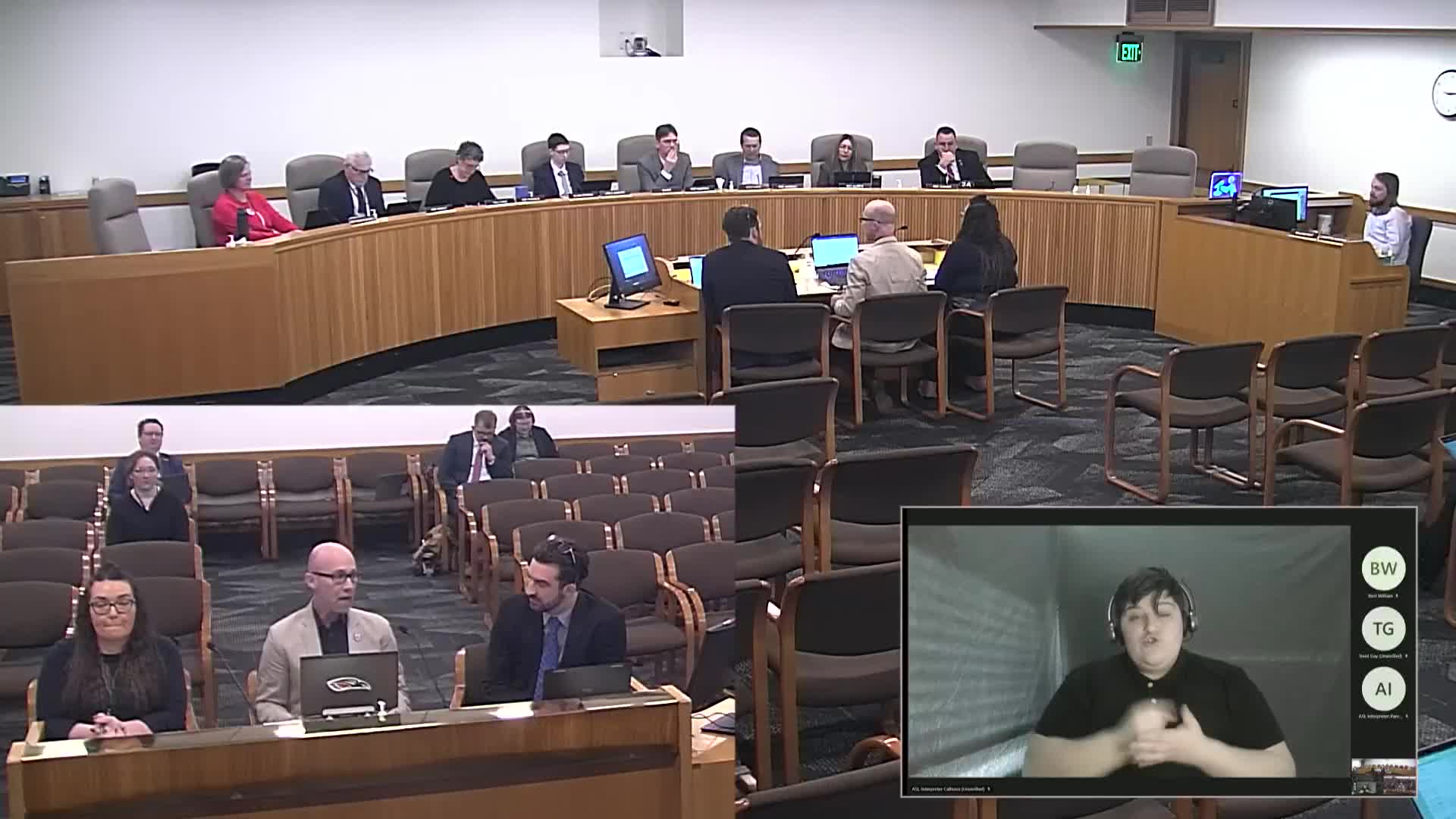
Representatives of Oregon’s regional (often called "tru" or regional universities) told the House Higher Education committee on April 3 that House Bill 2649 would let the four universities offer a discounted, program‑specific tuition rate for qualifying international students enrolled through approved institutional partnerships.
Lede: The bill’s dash‑2 amendment authorizes the governing boards of Eastern Oregon University, Southern Oregon University, Western Oregon University and one other regional institution to set a single, discounted tuition rate for nonresident students participating in designated international programs developed by the institutions’ boards. Presenters said the change is intended to be revenue neutral and not a mechanism to increase standard nonresident undergraduate tuition beyond statutory caps.
Nut graf: Witnesses said the initiative would support recruitment of international students (initial outreach and memorandum‑of‑understanding work has focused on Taiwan), strengthen institutional partnerships with East Asia, and provide cross‑cultural benefits on campus while attempting to avoid new state general fund obligations by using existing tuition mechanisms.
Jennifer Ranstrom Smith testified on behalf of Representative Paul Evans, and Mark Overback, Southern Oregon University government relations director, said the dash‑2 amendment clarifies that the discounted rate is specific to the program and does not authorize unrestricted increases in tuition beyond HEC limits. Overback described the proposal as a way for regional universities to pursue international partnerships and exchange in a revenue‑neutral way. Zach Sermach, who studied in Taiwan, offered testimony on cultural and economic ties and urged support for recruitment and exchange.
Committee members asked why East Asia was singled out; a staff member said the bill’s initial outreach is tied to existing memoranda of understanding and partnerships (Taiwan was the specific MOU referenced), and a committee member requested follow‑up information about the geographic scope. There was no committee vote on the bill during the hearing.