Get Full Government Meeting Transcripts, Videos, & Alerts Forever!
Get email alerts on the Farmworker Housing topic
No spam. Unsubscribe anytime.
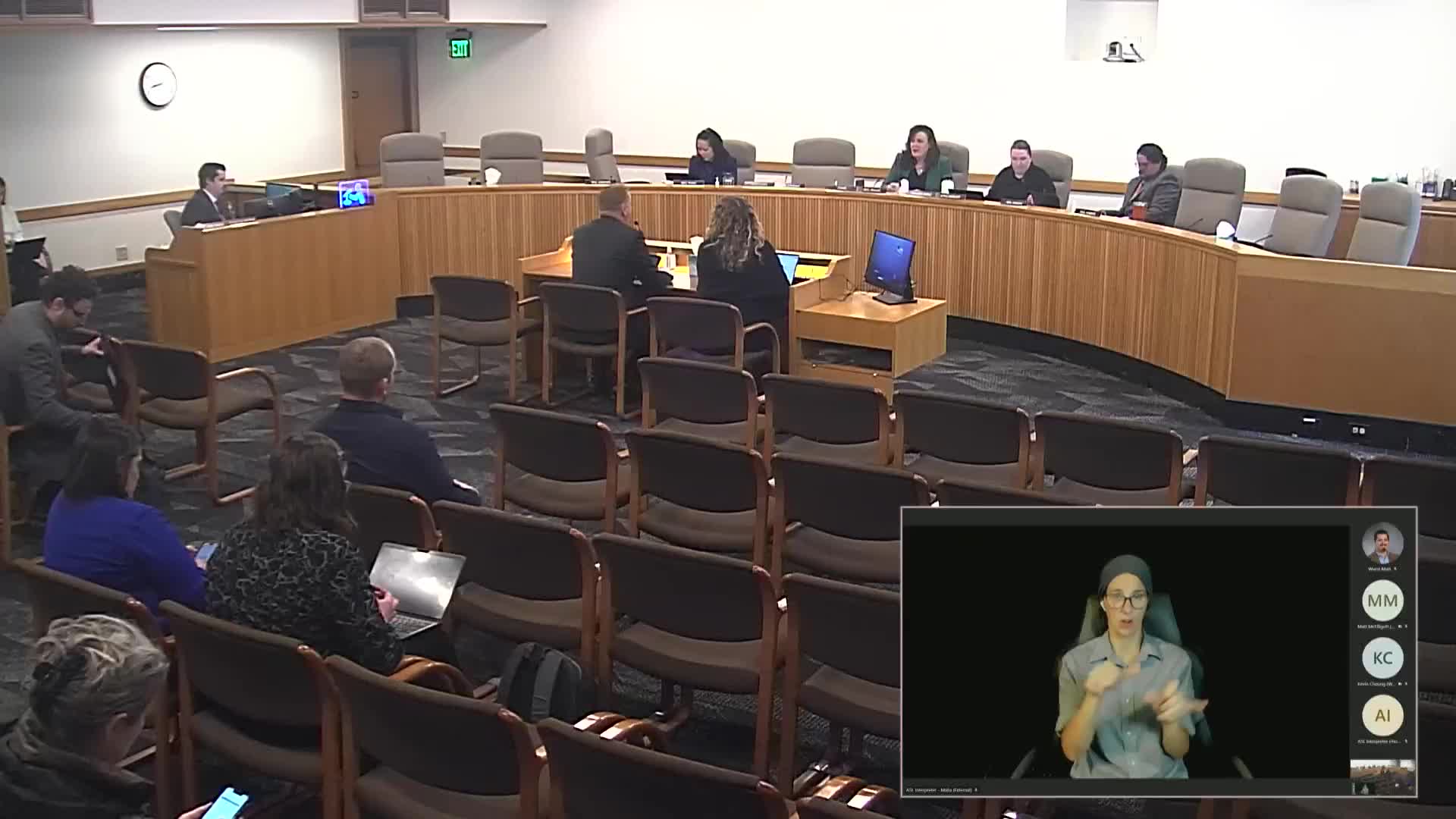
Senate committee hears wide-ranging testimony on bill to limit Oregon OSHA reach into single-family farm housing
Summary
Senate Committee on Labor and Business held a public hearing April 3 on Senate Bill 999, a measure that would narrow the statutory definition of "farmworker camp" to exclude single-family dwellings occupied by a family or five or fewer unrelated individuals and related small-occupancy housing, and thereby limit Oregon OSHA's application of agricultural labor-housing rules to those sites.
Senate Committee on Labor and Business held a public hearing April 3 on Senate Bill 999, a measure that would narrow the statutory definition of "farmworker camp" to exclude single-family dwellings occupied by a family or five or fewer unrelated individuals and related small-occupancy housing, and thereby limit Oregon OSHA's application of agricultural labor-housing rules to those sites.
The debate centered on conflicting legal interpretations of existing law and the practical effects for farmworkers and employers. Proponents, including representatives of dairy and livestock producers and the Oregon Farm Bureau Federation, said recent Oregon OSHA rules are expansive and, as applied, threaten longstanding, year-round housing that employers provide as a workforce benefit. Opponents, including the Oregon Law Center and the Northwest Workers' Justice Project, said narrowing the definition could remove safety and habitability protections for people who live in employer-linked housing.
Supporters said the issue arises from a dispute between Legislative Counsel (LC) and the Department of Justice (DOJ) and from Oregon OSHA's recent rulemaking on agricultural labor housing. Senator Daniel Bonham, who testified in support, described housing in his district that he said is quality, long-term housing provided to workers and their families and said compliance costs under OSHA's rules could cost farms millions. Jenny Dressler of the Oregon Farm Bureau highlighted that many single-family houses are offered as a fringe benefit and that the department's application of the rules to single-family homes created confusion and fear of enforcement.
Opponents raised concerns that exempting single-family dwellings or small-occupancy units from the OSHA framework would leave tenants without clear legal protections. Martha Sarnato of the Oregon Law Center and Kate Sussman of the Northwest Workers' Justice Project said that although some small dwellings are not required to register as farmworker camps, California-style or OSHA-style regulations remain applicable in many circumstances and that landlord–tenant protections often do not apply when housing is provided as a condition of employment. They warned that the use of a dwelling can change over time (for example, a trailer or single-family home becoming housing for unrelated workers), creating a risky gap if those sites are exempted.
Dairy farmer Patrick Frost described his home as permanent, year-round housing tied to his employment and said a prior OSHA decision that limited housing close to animal facilities would have made his housing illegal. He urged the committee to clarify that Oregon OSHA lacks authority to treat permanent single-family employee housing as temporary labor camps. Paloma Sparks of Oregon Business & Industry and Matt McElligott of the Oregon Cattlemen's Association also urged the committee to support the bill, citing the LC opinion and the risk that a broad DOJ/agency interpretation could allow ongoing expansion of OSHA authority.
Committee members asked several clarifying questions about which dwellings are already covered under existing statutes and rules, whether landlord–tenant protections apply, and how the new OSHA rules differ from the prior regulatory regime. Multiple speakers asked the committee to consider a careful work session with stakeholders before any final action. The committee scheduled a possible follow-up work session for April 8 but took no formal action on SB 999 at this hearing.
The hearing produced a clear list of issues the committee flagged for further work: reconciling Legislative Counsel and DOJ interpretations; defining how changes in occupancy (e.g., from family to unrelated occupants) would be detected and enforced; and crafting statutory language that preserves habitability protections while limiting regulatory overreach.
Ending: The committee closed the public hearing with no work session action taken on SB 999 and directed stakeholders and the sponsor, Senator Bonham, to continue negotiations and share any drafted amendments with committee members ahead of the next meeting.