Get Full Government Meeting Transcripts, Videos, & Alerts Forever!
Get email alerts on the Ev Charging topic
No spam. Unsubscribe anytime.
Committee holds ordinance to launch city EV‑charging program after questions on fund, vendors
Summary
The Cleveland City Council utilities committee on April 3 held Ordinance 1329‑2024 after extended debate about how the city will collect and spend revenue from electric‑vehicle charging stations, vendor roles and whether Cleveland Public Power should operate the stations.
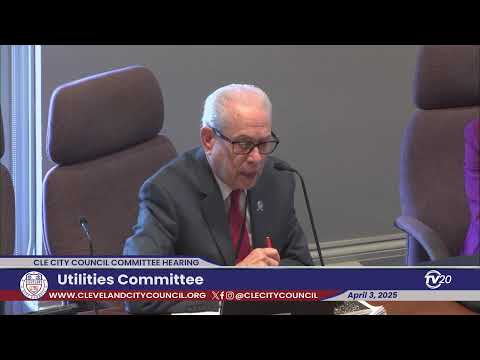
The Cleveland City Council utilities committee held Ordinance 1329‑2024 on Thursday, April 3, an emergency ordinance that would authorize the director of public works, on behalf of the Office of Sustainability, to employ consultants, enter contracts, activate city EV charging stations and charge fees.
Committee members debated how revenue would be handled, which vendors would operate stations and whether Cleveland Public Power should operate municipal chargers, rather than third‑party companies such as ChargePoint. The committee did not vote to approve the ordinance and the matter was held for further review.
The ordinance as amended would authorize the director of public works to enter into standard purchase and requirement contracts under the Cleveland charter and the city’s codified ordinances; permit cooperative purchasing with other agencies under charter section 108(b); and direct that fees be deposited in a special revenue account identified as fund number 10SF980. The amendment instructs the director of finance to certify purchases and indicates the department of public works as the home department for the account.
Anand Natarajan, acting director, mayor of the sustainability, said, “It’s called a special revenue fund,” and added that the fund is intended to remain specific to electric vehicles and that finance would manage source and use accounting. A city official identified in the transcript as “chief” described the sites covered by the ordinance: two 2‑port chargers at Canal Basin (installed but not activated), an installed and activated station at the Frederick Douglass Recreation Center (not yet billed for use), and two additional stations to be installed at Willard Garage and Westside Market through NOACA funding.
Councilmembers pressed staff on who pays operation and maintenance costs and what role a third‑party vendor would have. The committee heard that three of the four stations are grant‑funded and that NOACA selected or provided vendor recommendations for some installs. A city speaker said the vendor collects user fees, pays operating costs and remits the remainder to the city after the vendor’s expenses and profit are taken out.
Councilman Harsh framed the discussion as long‑term infrastructure planning: “it’s the future of the gas station,” and urged the committee to consider municipal control. Councilman Polensic questioned why the program would initially cover only a handful of sites when many city properties could host chargers. Polensic urged simpler internal accounting and greater use of existing departments.
Council members also asked about procurement and permitting timelines. Staff said permits have been pulled by the installer and that installation at Willard Garage and Westside Market is expected in 2025, with work anticipated to begin around May, subject to final design and funding confirmations. Staff said the Canal Basin installation used capital funding (estimated at about $5,000 including electrical work) and that the Frederick Douglass station was purchased with grant dollars; three of the four stations were grant‑funded, while Canal Basin came from the city capital budget.
Committee members raised accountability concerns: which entity has spending authority for fund 10SF980 (staff said the director of public works), whether Board of Control approvals would be required for vendor contracts, whether contracts will include maintenance and replacement obligations, and what limits or caps will exist on spending if a vendor reports losses or equipment failures. Staff said contract terms with vendors will address vendor responsibilities, and Board of Control review will be part of the procurement process.
The committee did not adopt the ordinance at this meeting. A committee member said at least two council members were not comfortable with the proposal and that the measure will be revisited at the next utilities committee hearing. The chair stated, “13 29 20 24 is being held,” by council members Casey and Griffin by departmental request.
Why it matters: How the city structures ownership, operation and revenue for public EV charging will shape where chargers are located, who benefits from them and how quickly Cleveland expands public charging access. The ordinance would create a dedicated account intended for EV‑related capital and repairs, but council members sought clearer contractual protections and stronger assurances about who controls operations and ongoing costs.
Next steps: Staff said they will return with additional details on vendor contracts, rate proposals and access controls; the ordinance will come back to the utilities committee for further consideration.