Get Full Government Meeting Transcripts, Videos, & Alerts Forever!
Get email alerts on the Health Insurance topic
No spam. Unsubscribe anytime.
Committee adopts amendment on bill banning copay accumulators for certain high‑cost drugs
Summary
The Appropriations Committee adopted an amendment to House Bill 1216, which would prohibit insurers from excluding third‑party patient assistance from deductible and out‑of‑pocket calculations for high‑cost, no‑generic prescription drugs; the amendment clarifies effective dates for PERS coverage and is expected to reduce the bill—s fiscal note.
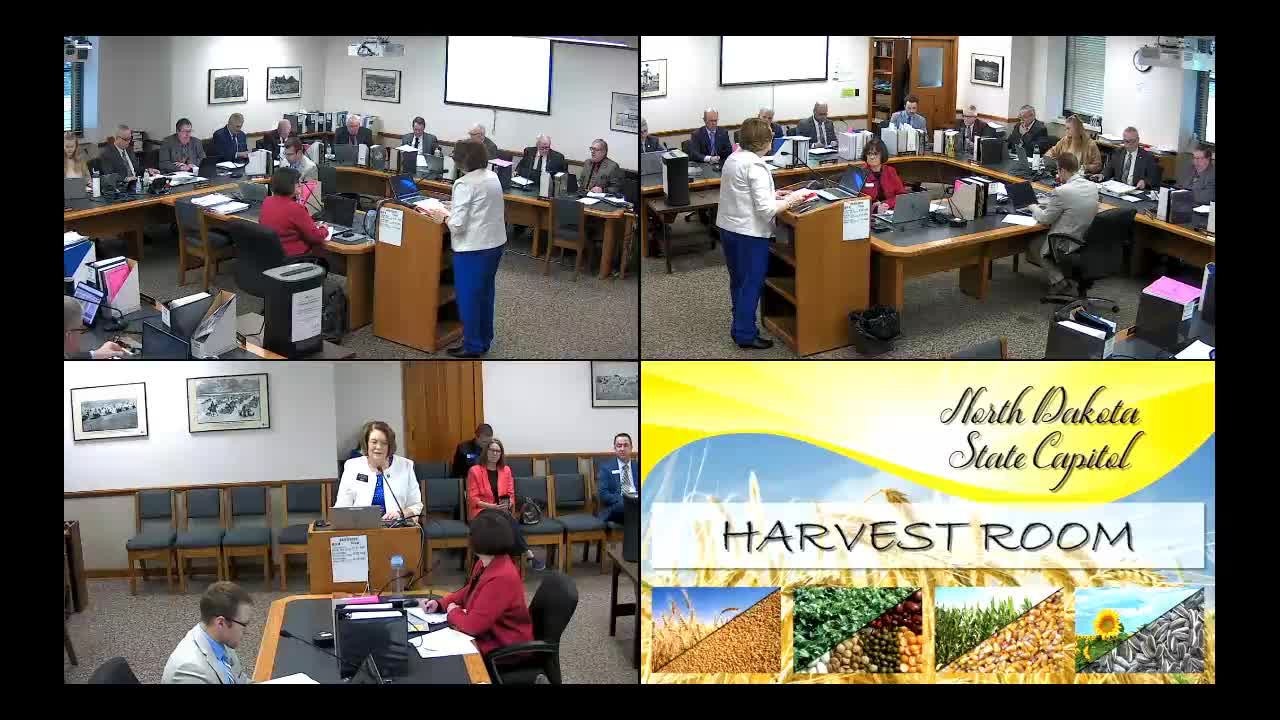
At an Appropriations Committee meeting, members voted to adopt an amendment to House Bill 1216, a proposal that would prevent insurers from using copay accumulator programs to block third‑party payments from counting toward a policyholder—s deductible and out‑of‑pocket maximums.
Representative Karen Karls, the bill—s prime sponsor, said the measure is aimed at patients who rely on manufacturer or nonprofit assistance for high‑cost drugs. "House Bill 12 16 deals with copay accumulators," Karls said. "...for people with rare diseases for whom this bill is targeted, they meet their deductible the first month." She described Trikafta, a cystic fibrosis therapy, as an example of an expensive drug that lacks a generic and can create severe out‑of‑pocket burdens for patients.
The amendment clarifies effective dates. It makes the act effective for most health benefit plans on Aug. 1, 2025, and specifies that the Public Employees Retirement System Uniform Group Insurance Program (PERS) will apply the bill on Jan. 1, 2026, regardless of contract issuance or renewal. The bill expressly excludes plans governed by the Employee Retirement Income Security Act (ERISA).
Rebecca Fricke, identified as executive director of CURS, told the committee the PERS renewal cycle led to a requested adjustment. She said adopting the PERS effective‑date amendment would allow the state—s insurance consultant to issue an updated fiscal analysis and "it would take 6 months off," a change expected to reduce the fiscal note. Committee discussion referenced an existing fiscal estimate and staff stated the full biennial fiscal note would be reduced roughly in proportion to the shortened coverage period.
The committee voted to adopt the amendment. The motion to adopt amendment 25.0068 0.01005 was moved by Senator Mathers and seconded by Senator Cleary; the clerk recorded the vote as "Motion passed, 16." Committee leadership said they would place the bill on the Monday schedule for further work and asked staff to secure an updated fiscal note from Deloitte Consulting after the amendment—s adoption.
No final due‑pass or engrossment vote on the bill was recorded in the meeting transcript; committee members scheduled additional consideration for the following week.