Get Full Government Meeting Transcripts, Videos, & Alerts Forever!
Get email alerts on the Higher Education Policy topic
No spam. Unsubscribe anytime.
Committee amends higher-education bill to soften obligation, then recommends do-not-pass
Summary
The committee amended House Bill 1220 to change a statutory “shall” to “may” for occupational boards recognizing accelerated North Dakota degrees, debated accreditation/portability risks, and voted a do-not-pass recommendation on the amended bill.
The Senate Workforce Development Committee debated House Bill 1220, which addresses accelerated (reduced-credit) baccalaureate degrees and the recognition of such degrees by occupational and professional licensing boards. After extensive testimony from the university system and committee members, the committee amended the bill to replace the word “shall” with “may” in a provision that would compel occupational boards to recognize North Dakota accelerated degrees.
Lisa Johnson, vice chancellor for academic and student affairs for the North Dakota University System, testified the amendment does not change the system’s view but that reduced‑credit degrees raise accreditation and licensure risks. Johnson told the committee that the Higher Learning Commission issued guidance only in September 2024, that institutions must manage accreditation and program-specific licensure risks, and that implementing reduced‑credit degrees would likely take roughly a year for HLC review and initial site visits.
Committee members expressed divided views. Some argued for giving the institutions and the State Board of Higher Education flexibility to experiment with reduced‑credit programs; others, including Senator Axman, said obligating licensing boards to accept a state-designated accelerated degree could jeopardize students’ ability to obtain licensure or reciprocity in other states. Senator Larson moved an amendment (changing “shall” to “may” on page 2, line 9); the motion passed on a roll call.
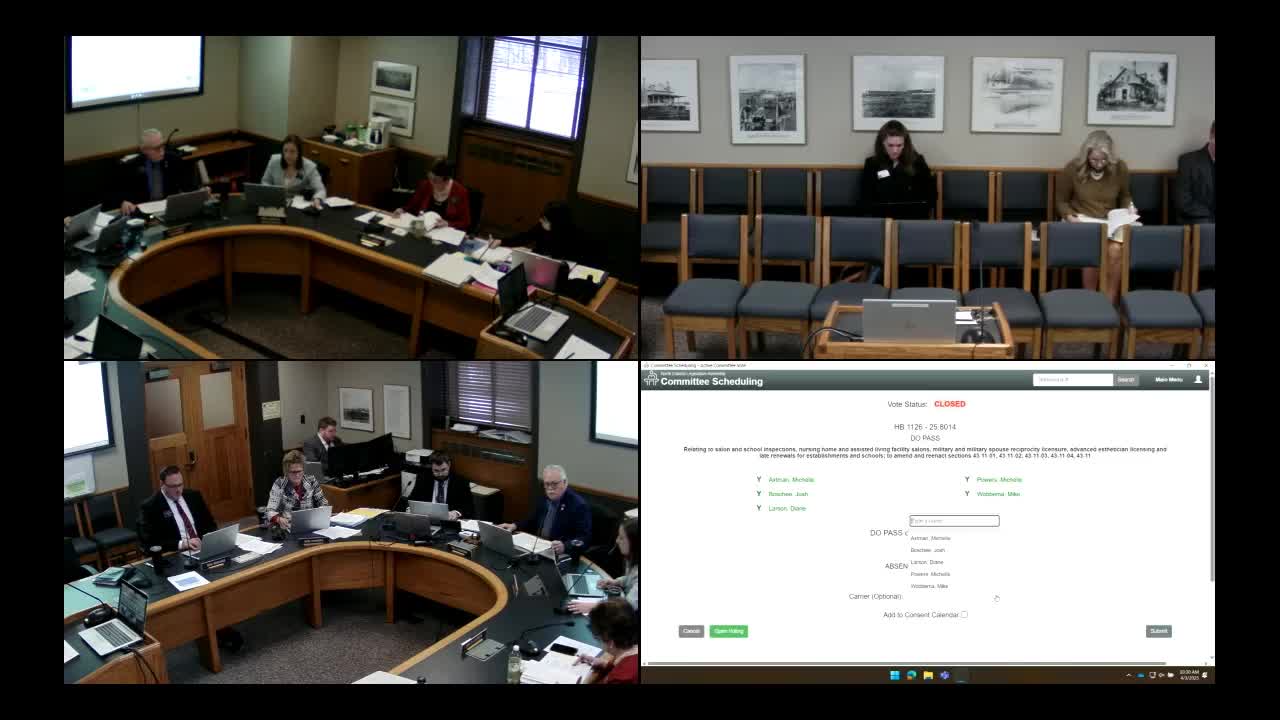
After additional discussion about accreditation, portability, and the potential effects on students and licensure, Senator Powers moved a committee do‑not‑pass recommendation on House Bill 1220 as amended. The clerk recorded the final roll call with four senators voting in favor of do-not-pass and one senator recorded as voting no. Committee members indicated a willingness to allow the university system to continue work on reduced‑credit degrees outside of this statute and to revisit the issue later if necessary.
The committee’s do-not-pass recommendation ends further immediate committee support for the statutory change as proposed; members encouraged continued deliberation among the university system, licensure boards and stakeholders during the interim.