Get Full Government Meeting Transcripts, Videos, & Alerts Forever!
Get email alerts on the School Building Assessment topic
No spam. Unsubscribe anytime.
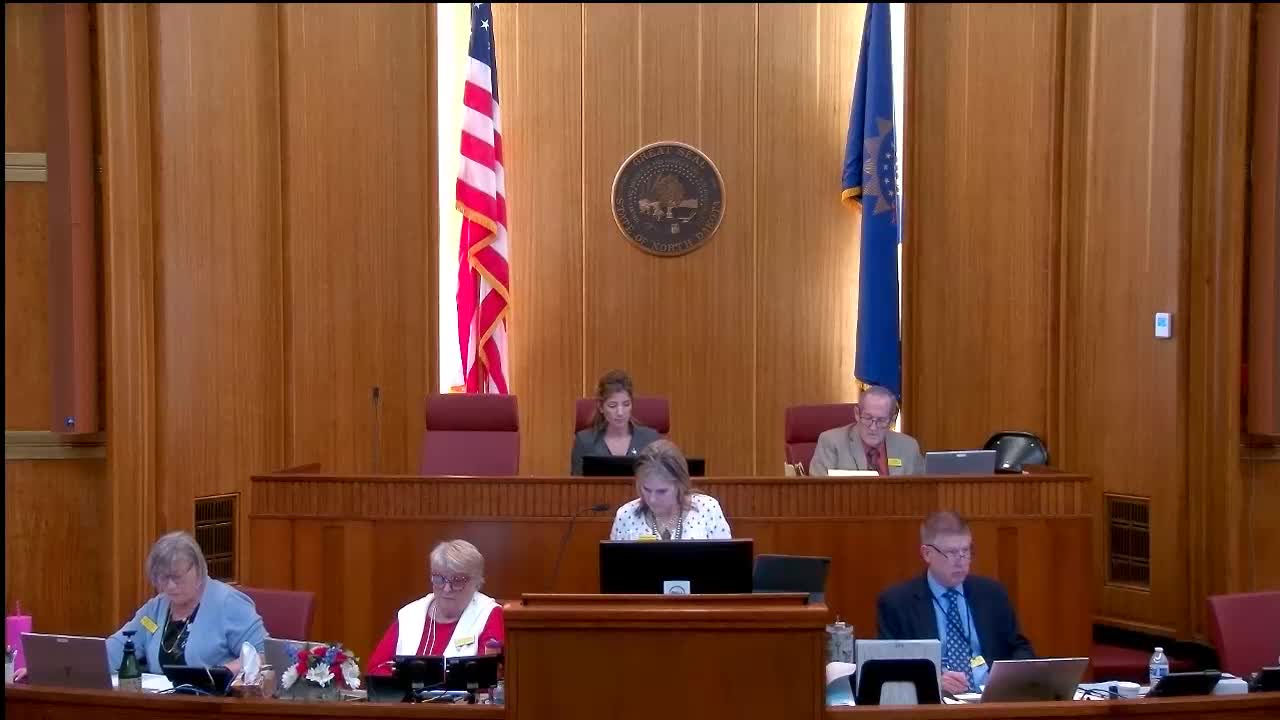
Senate passes measure allowing Superintendent to collect school facility assessments (was amended to be permissive)
Summary
House Bill 1476, as amended by the Senate to change required school building assessments from 'shall' to 'may', passed the Senate 28-19; the amendment removed an unfunded statewide mandate after the House removed a related appropriation.
The North Dakota Senate passed House Bill 1476 on April 3 by a vote of 28-19. The bill, as amended by the Senate Education Committee, directs the Superintendent of Public Instruction to collect assessments of public school buildings statewide but changes mandatory language to permissive language, replacing required assessments with authority for the department to collect data if it chooses.
Senator Gerhardt, reporting the committee’s action, explained that the original committee amendment changed the statute by converting 'shalls' to 'mays' after the House removed a $4 million appropriation that would have funded statewide facility assessments. Committee members said the change avoids an unfunded mandate, permits the State Superintendent to contract professional services if needed, and leaves the decision and timing with the department.
Supporters from rural districts said many small-school facilities face deterioration and that statewide information is necessary to understand where funding might be targeted. Opponents, including several senators on the Education Committee, said facility conditions and decisions about repairs and replacement are best handled locally and cautioned against the state moving toward funding construction or supplanting local control.
The bill’s fiscal note as engrossed indicates no fiscal impact (reflecting the permissive language and removal of the appropriation). The Senate Education Committee reported a unanimous committee amendment to make the assessment permissive and later recommended a do not pass on the bill; despite that committee recommendation the full Senate passed the bill on final reading 28-19.
Floor discussion highlighted divergent views about local control, the value of statewide data to target any future state funding, and concerns over whether assessments would establish state standards that could lead to state-directed repairs or consolidation in the future.