Get Full Government Meeting Transcripts, Videos, & Alerts Forever!
Get email alerts on the Property Taxes topic
No spam. Unsubscribe anytime.
Woodbury County holds public hearing on proposed county levy; board reports reductions from notice
Summary
At a public hearing, Woodbury County staff explained the proposed county tax rates, how state rollbacks and assessments affect taxable values, and available senior and disability credits. Supervisors moved to close the hearing; the board reported lowering the county's proposed levy from the notice but said final levies are set after April 30.
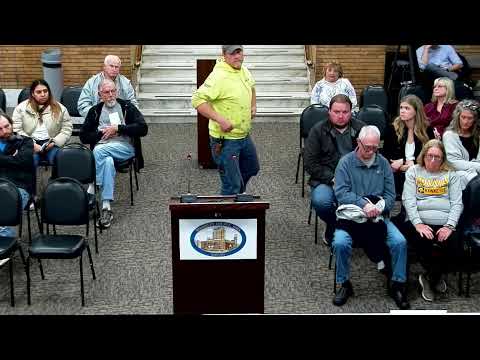
WOODBURY COUNTY, Iowa — Woodbury County staff and elected officials explained a proposed county tax levy, state rollback mechanics and available tax credits at a public hearing before the Woodbury County Board of Supervisors.
County staff told residents the figures on the mailed notice show a maximum levy but that the board had since reduced the county's proposed levy. Staff said the county portion of property taxes is the only levy the Board of Supervisors sets; city, school, township and other taxing authorities set their own levies and are separate from the county's decision.
The hearing focused on three technical points that many residents raised: how assessed values are set, how the state's rollback changes taxable value, and how county levies translate into dollars per $100,000 of assessed value. County staff explained the state-calculated rollback is intended to limit year-to-year statewide increases in taxable value and that the rollback changes independently of the county levy.
Staff gave specific numbers from the notice and the board's subsequent budget adjustments. Using a $100,000 residence as an example, staff said the county portion on last year's values was $330 per $100,000. If the levy had remained unchanged, staff said the county portion this year would have been about $337.29 per $100,000 because the rollback changed from roughly 46% to about 47%. The maximum county levy shown on the mailed notice was 7.38931 (urban), which staff said would raise the county portion to about $350 per $100,000. The board reported reductions after the notice: the county's working levy figure for the urban area was 7.23370, which staff said would result in a county payment of about $343 per $100,000 — roughly $13 more than last year per $100,000.
Staff also described rural-area figures separately. Last year's rural levy was reported as 9.5248; the notice showed a maximum of about 9.8824. The board said it had reduced that working figure to 9.72679, which staff translated to roughly $461 per $100,000 (about $20 more than last year), down from the notice maximum that would have yielded approximately $468 per $100,000.
Multiple residents questioned large percentage increases in their assessed values. County staff and supervisors repeatedly directed those assessment questions to the county assessor's office (for properties outside Sioux City) or the Sioux City assessor (for properties inside Sioux City). The meeting reiterated that assessments (market values) and the assessor's review process are independent of the Board's levy-setting authority. Staff said the assessor's office uses comparable sales and reassessment rules; residents were encouraged to contact Tyler Mogensen for county-assessor matters or Tyler Erickson for Sioux City-assessor matters.
County Treasurer Tina Bertrand described several credits and exemptions that can reduce taxable value for qualifying homeowners. She said an over-65 credit exists and must be applied for; the assessor applies a $6,000 reduction in taxable value for the over-65 credit this year (staff said that figure increased from $3,250 last year). Bertrand also described income-based elderly and disability credits administered by the treasurer's office and noted the treasurer and assessor handle different programs. Staff and the treasurer noted other credits such as the agricultural land credit (applies automatically in many rural parcels), family farm credits and a disabled-veteran exemption.
Several speakers asked whether the county could cap assessment increases or otherwise limit tax increases, citing concerns about affordability for seniors and long-term residents. County officials responded that assessment methodology and statewide rollback rules are set by state law and the assessor's office; the Board can only set the county's levy portion. Staff noted the board had worked to lower its proposed levy since the notices were mailed and said authorities (cities, schools, townships and the county) must file budgets by April 30; levies can be lowered but not increased after those filings.
The public hearing was opened for comments and closed by a formal motion. Supervisor Vintlinger moved to close the public hearing and Supervisor Nelson seconded; the board voted 5-0 to close the hearing.
No county action adopting a final levy was recorded at the hearing. Staff reminded residents that the county would publish its adopted budget and that final consolidated levies are certified after county authorities submit budgets by the April 30 deadline and the auditor and the Department of Management reconcile levies with state figures.
Residents were advised to contact the assessor's office or the treasurer for case-specific questions and to apply for credits before the applicable deadlines.