Get Full Government Meeting Transcripts, Videos, & Alerts Forever!
Get email alerts on the Land Use Subdivision A1 topic
No spam. Unsubscribe anytime.
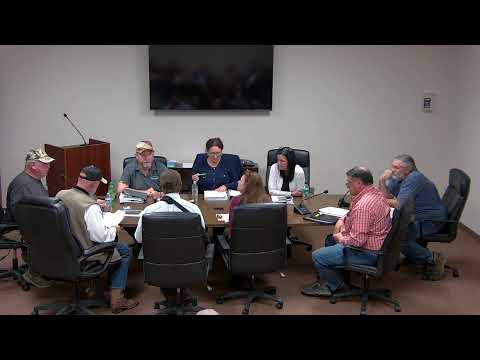
Coffee County planning commission delays vote on A‑1 subdivision amendments after wide public debate on water, fire flow and setbacks
Summary
The Coffee County Planning Commission on Tuesday discussed proposed amendments to major‑subdivision rules in the A‑1 rural district that would tie minimum lot sizes and setbacks to public water availability, fire hydrant proximity and road conditions, but the commission postponed final action until it can review local data.
The Coffee County Planning Commission on Tuesday discussed proposed amendments to major‑subdivision rules in the A‑1 rural district that would tie minimum lot sizes and setbacks to public water availability, fire hydrant proximity and road conditions, but the commission postponed final action until it can review local data.
The discussion centered on three bundles of measures put forward in a draft resolution: (1) water and fire‑flow requirements for smaller lots, (2) road‑frontage and traffic‑study requirements, and (3) setbacks between houses where public fire flow is not available. The commission moved to split the package into separate resolutions for the county commission and delayed a vote on setbacks pending a study of local fire‑spread incidents.
Why it matters: Planning‑commission members and dozens of residents, developers and utility representatives debated who should bear the cost of infrastructure upgrades and how rules should balance public‑safety goals against the ability of small property owners to subdivide land. The outcome will affect future lot sizes, developer obligations and how much municipal or volunteer fire departments must rely on tanker shuttle operations.
Developers, surveyors and utility workers who spoke at the hearing argued that substantial water‑line upsizing is sometimes paid by developers in neighboring counties and that such upgrades enable additional development. Nicholas Northcutt, of Northcutt Surveying, cautioned that the large examples cited by proponents (for example, 400‑ to 600‑home projects in Rutherford County) differ from Coffee County’s typical “major division,” which he said is defined locally as five or more lots.
Several longtime utility workers and residents urged the commission to require larger mains where needed. Randy Harrell, who identified himself as a water‑utility professional with decades of experience, described developers paying “millions” to install large mains in other counties and told the commission, “If you want the water, you’re gonna pay to get it there.” Harrell also warned utilities have statutory maximums set by the Tennessee Department of Environment and Conservation (TDEC) and said those limits can constrain new connections if distribution capacity is not upgraded.
The draft language presented by G. Seagroves (presenter of the draft resolution) would create a three‑tier approach tied to public water and hydrant proximity. As described at the meeting, the proposal allows a major subdivision to use smaller lots — “0.8 acres with 100 lot width,” as stated by the presenter — if public water service exists and a functioning hydrant is within about one mile. If public water exists but no hydrant is within a mile, the presenter said the rules would require a larger lot (he described “an acre” with a stated width in the draft). If no public water or fire flow is available, the draft would require a two‑acre minimum and wider lot width. (The precise draft text will be posted with the commission’s agenda for review.)
Commission and public debate repeatedly returned to the zoning resolution’s existing fire‑flow language. The commission’s codes staff noted the zoning resolution revised in February 2006 already defines “minimum fire flow” as 500 gallons per minute delivered at 20 pounds per square inch residual pressure from a water line 6 inches or greater in diameter; the proposed amendment would add the word “continuous to the point of origin” to clarify connectivity.
Several volunteer fire chiefs and fire‑service advocates urged maintaining the stricter setbacks or fire‑flow requirements to protect firefighters and residents. As one presenter noted, Tennessee ranks high nationally for fire fatalities, and volunteer departments rely on hydrants or tanker shuttles to refill apparatus; larger setbacks and required hydrants or upsized mains can reduce risk.
Other participants pressed for compromise solutions. Sarah Bradley suggested basing lot setbacks or lot‑size reductions on the distance to the nearest hydrant that meets fire‑flow requirements. She also noted that some municipalities have partial reimbursement or cost‑share policies when a later tap is made to a developer‑installed main.
Road and right‑of‑way requirements were also proposed. The draft would allow the county to require dedication or a public‑use easement to achieve a 25‑foot half right‑of‑way from the roadway centerline where current roads lack a 50‑foot right‑of‑way, and would require an independent traffic study for major subdivisions of 15 lots or more.
Commission action and votes at a glance: The commission first agreed to present the draft changes to the county commission as separate resolutions rather than one omnibus motion (motion carried). After extended public comment and internal debate, Commissioner Rodney moved to postpone action on the setback changes until the next meeting and requested a count or study of local incidents in which a house fire spread to a neighboring house separated by 50 feet; the motion to postpone passed. The meeting produced no transmittal to the county commission for final ordinances on this date.
What was not decided: The commission did not adopt the draft text or set a final lot‑size regime, and it did not set who will prepare the requested study. Members indicated the party seeking a change to setbacks should provide the local data; several suggested staff or volunteers could assist. The commission also did not change existing zoning text beyond agreeing to clarify and, if desired later, split the package into discrete resolutions.
Other topics raised: Speakers asked the county to consider underground utilities in new subdivisions (Duck River Electric was cited as saying underground service is possible but more expensive for developers), and some residents urged examining urban growth boundaries (UGBs) and concentrating development along roads where infrastructure already exists.
Looking ahead: Commissioners said the refined draft resolutions and any supporting studies would be posted with the next meeting agenda. The commission set a follow‑up meeting date and adjourned after a final procedural vote.
Votes recorded in this meeting (as described on the record): the agenda was approved at the meeting start (motion and second recorded; unanimous voice vote); a motion to separate the draft items into individual resolutions passed; a motion to postpone action on setbacks until the next meeting and to request local fire‑spread data passed; and a motion to adjourn passed.
Sources and attribution: This article summarizes the public record and statements delivered at the April 2025 Coffee County Planning Commission meeting. Direct quotations in the article come from participants recorded in the meeting transcript, including G. Seagroves (presenter of the draft resolution), Nicholas Northcutt (Northcutt Surveying), Randy Harrell (utility professional), Sarah Bradley (resident), and Mayor Dennis Hunt (chair). Where participants paraphrased draft text, the article uses plain language and notes that final draft language will be provided with the posted agenda prior to any vote.
Ending: The commission postponed final action to allow time for a narrower, data‑driven review; commissioners asked that the refined resolutions and any requested incident data be circulated before the next meeting so members and the public can review proposed changes in detail.