Get Full Government Meeting Transcripts, Videos, & Alerts Forever!
Get email alerts on the Council Appointment topic
No spam. Unsubscribe anytime.
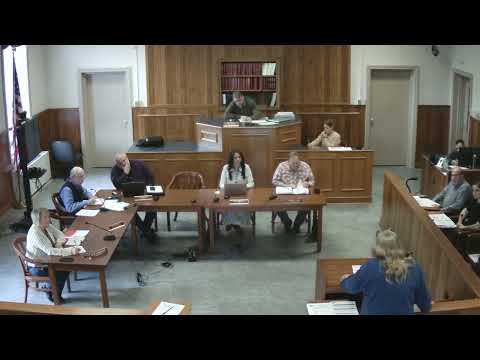
Fostoria City Council appoints Alexander Grine to fill at-large vacancy
Summary
After interviews and an executive session, the Fostoria City Council voted to appoint Alexander Grine to an at-large council seat; Grine will be sworn in before the April 15 meeting, council president said.
The Fostoria City Council this evening appointed Alexander Grine to fill an at-large vacancy after interviewing seven candidates and meeting in executive session.
Council President opened the process by asking each candidate to make brief remarks and answer questions from council members before the council went into executive session to consider personnel matters. After the executive session, council members cast roll-call votes and the president announced that Grine had been selected; council staff said Grine will be sworn in before the next council meeting on April 15.
The council heard opening statements from all seven candidates during a public portion set aside so applicants could see how a council meeting runs. Grine, who described himself as a Fostoria native with a BSBA in transportation logistics from Iowa State University and an MBA from Capital University, said his background in manufacturing operations and data analytics would help the city as it seeks to emerge from fiscal conservatorship. "I bring experience in leadership and finance and want to help the city grow," Grine told council members.
Other applicants who addressed the council were Damien Slay, Deborah Tyson, Elliot Schafer, Ryan Smith, Susan Macias and Michael Spencer. Candidates answered questions on priorities including water quality, parks and youth activities, the landfill, and economic development.
Council members used a roll-call process after the executive session to indicate their preferred candidate. The clerk read each councilperson's selection aloud and the president announced the council's choice. The meeting record notes the council used private deliberations under the statutory executive-session exception for personnel matters before returning to public session to register votes.
The council president said he hoped the appointment would command a clear majority and described a contingency plan if the initial round of votes produced no majority. He also told the new appointee the council would swear him in at the April 15 meeting and that that meeting would serve as a brief orientation to council procedures.
No ordinance, budget or binding policy was adopted as part of the appointment beyond the formal vote to fill the vacancy.