Get Full Government Meeting Transcripts, Videos, & Alerts Forever!
Get email alerts on the Governor Vetoes topic
No spam. Unsubscribe anytime.
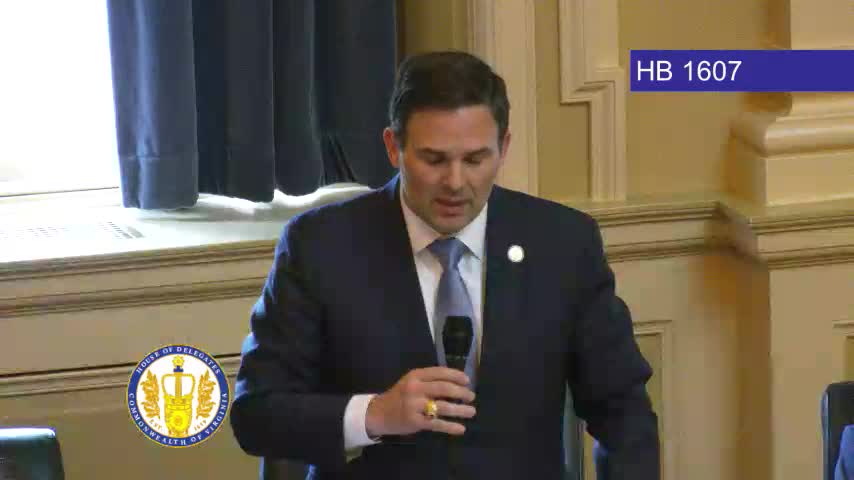
House rejects most override attempts, adopts budget and many governor recommendations during April 2 reconvene session
Summary
At its April 2 reconvene session, the Virginia House of Delegates considered dozens of the governor's vetoes and recommendations. Lawmakers failed to override a series of high-profile vetoes, sustained many of the governor's actions, and approved budget adjustments and blocks of gubernatorial recommendations.
RICHMOND, Va. — The Virginia House of Delegates met April 2 to consider the governor's vetoes and recommendations from the 2025 regular session and on dozens of roll-call votes sustained most of the governor's vetoes while adopting a series of budget amendments and many of the governor's recommended changes.
The reconvene session's clerk told members the governor returned 916 bills: 509 were signed, and 95 were vetoed. Members processed blocks of bills and individual measures across hours of debate, numerous roll calls and several recesses.
Why it matters: The reconvene session is the constitutional moment for the General Assembly to decide whether to override or accept a governor's return of legislation. The outcomes decide whether bills passed in the regular session become law as enacted, are changed according to the governor's recommendations, or fail to become law.
Most override attempts failed
Lawmakers repeatedly moved to override the governor's vetoes on a range of bills and fell short in multiple high-profile cases. Several override motions drew wide floor debate before recorded votes.
- Firearms: Delegate Doug Hill (Delegate from Fairfax) called the weapons at issue —weapons of war— and urged an override, saying, —These firearms were designed for the battlefield, not for our streets.— Opponents including Delegate Tony Freitas (Delegate from Culpeper) framed the vote as a Second Amendment issue and said many covered weapons were not what veterans carried in combat. The House recorded a 50-46 vote on the motion to override the governor's veto of House Bill 607; the clerk announced —The governor's veto is sustained.—
- Voter-roll protections: Supporters argued the governor's action to remove voters close to an election was wrong. Delegate Doug Henson (Delegate from Prince William) said the bill would stop removals within 90 days of an election. The House voted 50-46; the governor's veto of House Bill 1657 was sustained.
- Electric-vehicle infrastructure: Delegate Solomon (Delegate from Fairfax) argued the bill would extend EV charging into rural communities. The override motion for House Bill 1791 drew a 51-45 recorded vote; the governor's veto was sustained.
- Intimate-partner firearms: Supporters framed House Bill 1869 as closing a loophole on firearm access after assault and battery convictions against partners. The House vote on the override attempt was 50-46; the governor's veto was sustained.
- Campus safety: Supporters of House Bill 1876 said the measure would help colleges keep guns off campus after high-profile campus shootings. The override motion failed on a 50-46 vote; the veto was sustained.
- Minimum wage and labor measures: Attempts to override vetoes on proposals to raise the minimum wage and to establish paid family and medical leave also failed on recorded votes (minimum wage override attempt returned a 50-46 tally; paid-family-leave override vote was 50-46 and the vetos were sustained).
Many governor recommendations and budget items adopted
Alongside failed override attempts, the House adopted a broad set of the governor's recommendations and budget adjustments.
- Budget: Lawmakers adopted a block of governor-recommended amendments to the biennial budget (HB 1,600) by voice/roll call; the clerk recorded the block vote as Ayes 95, Nos 0. Separate contested line-item questions were addressed on the floor; the clerk and presiding officer cited prior case law in ruling some proposed line-item vetoes out of order.
- Governor's recommendations: The House also adopted multiple governor recommendations and technical amendments on dozens of bills by recorded and unanimous votes, including a block of governor recommendations the clerk reported as Ayes 96, Nos 0 on an uncontested package.
What lawmakers said
Speakers on both sides framed votes through policy and political lenses. Delegate Doug Hill (Delegate from Fairfax) argued for stricter gun limits as safety measures; Delegate Tony Freitas (Delegate from Culpeper) countered that the bills would impinge constitutional rights and would not reflect battlefield equipment. On voting rights, Delegate Henson (Prince William) framed his override as protecting the right to vote after last year's near-election purges. Delegate Solomon (Fairfax) pressed for EV charger access in rural communities; opponents described fiscal or policy concerns.
The session also included lengthy budget debate and technical points about whether specific line-item vetoes could be struck without reverting prior enacted law; the presiding officer referenced court precedents when ruling some attempts out of order.
Votes at a glance (selected roll calls recorded on the floor)
- HB 607 (assault firearms restrictions) — motion to override governor's veto failed; recorded vote Ayes 50, Noes 46; outcome: governor's veto sustained. - HB 1657 (voter-registration review / 90-day quiet period) — motion to override failed; Ayes 50, Noes 46; veto sustained. - HB 1791 (electric-vehicle charging program and fund) — motion to override failed; Ayes 51, Noes 45; veto sustained. - HB 1869 (firearm possession after intimate-partner assault/battery) — motion to override failed; Ayes 50, Noes 46; veto sustained. - HB 1876 (guns/explosives on Capitol Square and certain public campuses) — motion to override failed; Ayes 50, Noes 46; veto sustained. - HB 1928 (minimum wage increase) — motion to override failed; Ayes 50, Noes 46; veto sustained. - HB 2056 (in-person absentee satellite office hours) — motion to override failed; Ayes 50, Noes 44; veto sustained. - HB 2466 (Hampton Roads corridor / coastal resilience funding) — motion to override failed; recorded Ayes 54, Noes 39; veto sustained. - HB 2531 (paid family and medical leave) — motion to override failed; Ayes 50, Noes 46; veto sustained. - HB 1600 (biennial budget) — block of 41 governor budget recommendations adopted in a block; recorded Ayes 95, Nos 0; other budget amendments later taken up and a package of remaining amendments were passed by the House in block votes.
Procedure and next steps
The House repeatedly paused for procedural rulings, recesses and points of order as it moved through three categories: (1) bills vetoed by the governor; (2) the budget and line-item vetoes/recommendations; and (3) governor recommendations on bills. The presiding officer and clerk guided members through severing amendments and blocks and read votes for the official record. The session will be followed by communications to the Senate and continued consideration of the governor's recommendations as required.
The transcript of the session shows sustained debate on the scope of local authority, public-safety provisions, election procedures and budget mechanics. Several measures remain subject to the governor's recommendations that the House adopted; others will not become law unless an override succeeds in a later action.
Ending
The reconvene session ended after scores of roll-call votes and legislative action: the House sustained many of the governor's vetoes, approved wide-ranging budget adjustments, and accepted numerous governor-recommended technical amendments and reforms. Lawmakers and staff will move to finalize enrolled language, transmit actions to the Senate or to the governor as required, and record final enrollments in the legislative information systems.