Get Full Government Meeting Transcripts, Videos, & Alerts Forever!
Get email alerts on the Medicaid Managed Care topic
No spam. Unsubscribe anytime.
Senate adopts tighter rules for Medicaid managed‑care contractors and adds ambulance reimbursement change
Summary
The Legislature advanced LB380, tightening oversight and audit rules for Medicaid managed‑care organizations and, by floor amendment, opened the way for a federal supplemental reimbursement program for ambulance services.
The Legislature advanced LB380, a Health and Human Services priority that updates statutes governing Medicaid managed‑care organizations (MCOs) and imposes new transparency, audit and network adequacy requirements.
Senator Megan Ferguson, sponsor of LB380, said the bill responds to provider complaints about unpredictable audits and a lack of transparency in MCO contracts and utilization review. “LB380 provides updated guardrails in our Medicaid program so that our expectations are clear to both the department and the managed care organizations,” Ferguson said.
Key provisions adopted in committee amendment AM 7‑28 require: clear written justification and notice for program‑integrity audits; limiting audit lookback periods to three years from the date of payment; making utilization‑review policies available to the public; protecting providers from certain post‑service rescissions except for fraud or contract violation; and requiring parity reporting for mental‑health and substance‑use disorder services.
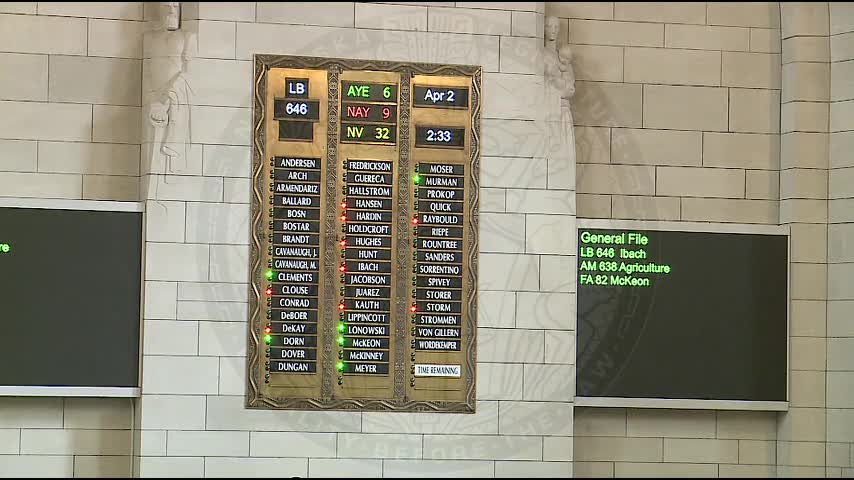
On the floor, Senators adopted AM 8‑14 (attached to LB380) offered by Senator Bostar to tie LB610 to LB380. LB610 would allow the state to seek a federal Ground Emergency Medical Transportation (GEMT) supplemental payment program for ALS ambulance providers — a change intended to make more federal reimbursement available to public and volunteer ambulance services. The floor adopted AM 8‑14 (26 ayes, no nays). LB380 advanced to Enrollment and Review initial on a voice/recorded vote (32 ayes, no nays recorded).
The bill package also included LB381 (an audit‑process companion package), which was folded into the committee amendment. The sponsor said the changes are intended to protect providers — particularly solo behavioral‑health providers — from lengthy audits and steep clawbacks that some described in committee testimony as financially damaging.
Ending: Supporters said they achieved a bipartisan compromise with the department and the attorney general’s office; the bill now proceeds to the next stage with a committee‑negotiated amendment in place.