Get Full Government Meeting Transcripts, Videos, & Alerts Forever!
Get email alerts on the Livestock Branding topic
No spam. Unsubscribe anytime.
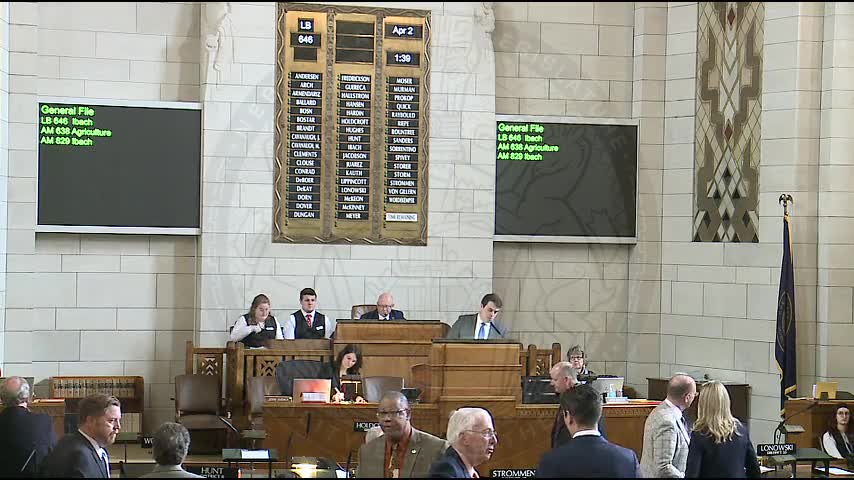
Nebraska Legislature advances overhaul of brand-inspection funding after hours of debate
Summary
After several hours of floor debate, the Legislature advanced LB646, a bill that restructures the Nebraska Brand Committee’s fee system and inspection authority. Lawmakers voiced concerns about disease traceability, dairy exemptions and shifts in fee burden; an amendment to postpone the bill failed, while other amendments were adopted.
The Nebraska Legislature advanced LB646, a beef-industry bill that would modernize fee structures and inspection rules for the Nebraska Brand Committee, after extensive floor debate and multiple amendments.
Supporters argued the measure updates how the committee is funded and how inspections are administered; opponents and some stakeholders said the changes risked creating inspection gaps and shifting costs onto cow‑calf producers. Senator Storer offered an amendment to postpone work and send the issue back to stakeholders; that amendment failed on the floor.
The bill’s author, Senator Iba, said the measure aims to update a long‑standing system while preserving enforcement and oversight. “I think we can come up with a solution. I think we can come up with a compromise, and I think we can move this bill forward,” Iba said in closing remarks on the floor.
Senator Storer, who offered AM 8‑10 to delay the bill and convene stakeholders, framed her motion as a pause to avoid unintended consequences. “This bill . . . as currently amended is not prepared to move forward,” Storer said, pointing to what she described as technical holes in the amendment text related to inspections, affiliated feed yards, and health‑paper review.
Discussion highlights included: whether dairies that bring heifers to Nebraska for development should be fully exempt from brand inspections (members worried that removing brand‑inspector oversight would reduce third‑party review of cattle health papers); how to define and regulate “affiliated” feed yards; and a projected revenue impact if large feedlots are moved from a per‑head fee to a flat fee. Legislators cited committee history, past fee reductions (inspection fees were previously reduced to $0.85 per head and later raised to $1.00), and an estimate given on the floor that fee changes could conservatively reduce committee revenue by “well over $1,200,000.”
Floor action on related items: the body adopted AM 8‑29 (31 ayes, 2 nays), rejected AM 8‑10 (the Storer postponement amendment) after roll‑call votes, adopted the committee amendment AM 6‑38 (26 ayes, 3 nays), and then advanced LB646 to Enrollment and Review initial (26 ayes, 2 nays). Several requested amendments were withdrawn during floor consideration.
The bill now moves to the next stage of the legislative process; senators who expressed technical concerns said they intended to continue negotiations between general and select file on fee structure and inspection definitions.
Ending: Sponsors and critics said they will continue work on definitions and fee language before select file. The Legislature’s action advances LB646 while leaving open further floor amendments to address the technical concerns raised on the record.