Get Full Government Meeting Transcripts, Videos, & Alerts Forever!
Get email alerts on the Economic Development topic
No spam. Unsubscribe anytime.
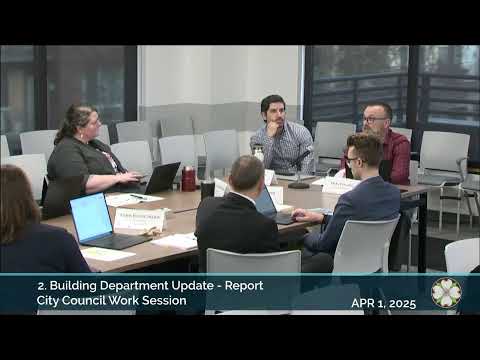
Milwaukie council reviews draft economic development action plan, sets quarterly check‑ins and public reporting
Summary
City staff presented a draft three‑year economic development action plan and a set of proposed metrics — including dollars invested, commercial vacancy, foot traffic and neighborhood access — and the council agreed to quarterly 90‑minute work‑session check‑ins and to publish progress online.
At a Milwaukie City Council work session, staff presented a draft economic development goal action plan that lays out near‑term (2025), mid‑term (2026) and year‑three (2027) priorities, proposed metrics for measuring progress, and a schedule for quarterly check‑ins and public reporting.
City Manager Joseph Rillios told the council that “Milwaukie is seeing a resurgence of economic development activity in its downtown and business districts” and framed the action plan as a way to focus anticipated investments from the city’s urban renewal area (URA) and construction excise tax funds between 2025 and 2027.
The draft lays out a set of accomplishments staff would like to see by 2027: a revitalized Main Street and downtown, new investment in industrial areas, at least one enhanced neighborhood hub, strengthened city–business partnerships, and capital improvements to support business districts. Staff recommended treating the document as a living action plan to be updated and published on the city website each quarter, with an annual review of accomplishments. The council signaled support for that approach and for continuing 90‑minute quarterly work sessions focused on the economic development goal.
On performance measurement, staff proposed a mix of “success” metrics and market indicators. Proposed success metrics included dollars invested in direct support for local businesses (for example, business improvement grants), progress on the URA five‑year action plan (staff said the plan lists about 14 projects and that about four or five have been completed so far), and the number of business‑related meetings attended or convened by the city. Market indicators suggested for monitoring included commercial vacancy rates (office/retail/industrial), available commercial square footage, and average price per square foot.
Councilors discussed measurement details and scope. Several members asked that the plan separate attending external partner meetings from convening city‑led business tables; staff agreed to split those trackers. Councilors also asked staff to include retail explicitly (in addition to office and industrial) and expressed interest in tracking total businesses registered in the city while recognizing the need to distinguish property managers and home‑based registrations from bricks‑and‑mortar commercial activity.
Equity and neighborhood access were raised repeatedly. Councilors urged that investment and grant reporting be disaggregated by ownership and that measures show access to commercial activity across neighborhoods (for example, percent of households within a walkable distance of commercial nodes). Staff said some grant programs already collect demographic information and that collecting additional demographic data through business registration renewals is something to explore.
Councilors and staff discussed more experimental or data‑intensive measures, including pedestrian counts and vehicle traffic and the possibility of using mobile‑device analytics to estimate foot traffic. Staff noted such services exist and had been discussed as a possible data source.
Implementation partners listed in the draft include the chamber of commerce, regional business associations referenced during the discussion (participants also named organizations such as TIE and the Small Business Development Center), the community college, and local workforce and incubation partners. Councilors asked staff to prioritize partners and to be mindful of staff capacity when scheduling data‑collection work.
On timing and next steps, staff said they would refine the draft based on council feedback, return for a quarterly check‑in, and publish the plan and quarterly updates on the city website so progress is visible to the public. The council did not take a formal vote at the session; members generally indicated support for the living‑document approach and quarterly reporting.
Staff also introduced Sierra Williams, the new economic development coordinator. Williams, who recently worked in private‑sector consulting and holds a master’s degree in urban planning, said she is “extremely excited to be here” and will support the plan’s implementation and the city’s data work.
The council asked that staff return with a cleaned‑up draft that (1) separates metrics the city will track from market indicators it will monitor, (2) disambiguates attendance at partners’ meetings versus city‑convened meetings, and (3) explores options for collecting and reporting ownership and demographic data for grant recipients and business registrants.
Ending: Staff said a revised action plan will be returned at the next quarterly work session for council review and to support public posting of quarterly progress updates.