Get Full Government Meeting Transcripts, Videos, & Alerts Forever!
Get email alerts on the Public Access topic
No spam. Unsubscribe anytime.
Harbor plan committee pushes firmer public‑access enforcement language, debates signage, easements and harbor walk
Summary
The Harbor Plan Update Committee on March 31 debated how strongly the draft harbor plan should push for enforcement and practical maintenance of public access to waterfront areas on Nantucket.
The Harbor Plan Update Committee on March 31 debated how strongly the draft harbor plan should push for enforcement and practical maintenance of public access to waterfront areas on Nantucket.
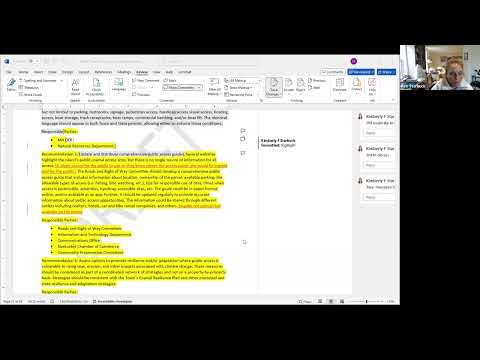
Committee members pressed staff to remove vague wording such as “support” and replace it with stronger language that commits the town to ensure enforcement of existing laws and permits. “I don’t like the word ‘support,’” Chair Linda Williams said during discussion; “ensure enforcement regarding existing laws” was offered repeatedly as an alternative. Members said weak wording left the town without leverage to correct blocked or poorly maintained public access points.
Why it matters: many of the committee’s public‑access recommendations are intended to protect places where residents and visitors reach the water. Committee members said the plan will have limited effect if it lacks enforceable language, and they raised repeated concerns about staffing, budgets and legal authority for enforcement.
Key points from the discussion - Wording change: Several committee members agreed to replace “support” and remove the word “efforts” where it weakens the commitment; the group settled on language such as “ensure enforcement regarding existing laws, regulations and rules for public access,” after debate on phrasing. Linda Williams led the objection to vague language, calling for clearer, stronger verbs. - Chapter 91 and local enforcement: The committee repeatedly referenced Massachusetts Chapter 91 licenses and their public‑access conditions. Members discussed the difficulty of relying on limited state enforcement staff and explored the option of “paralleling” Chapter 91 license conditions in local permits so the town can enforce equivalent requirements through its own permitting processes. Jeff (staff) noted he will provide an updated list of responsible parties for implementation items. - Marking and preserving public ways: Members described a longrunning roads and right‑of‑way effort that identified and marked public ways with granite posts. One participant noted “there are 34 of them” already marked, but that signage and vegetation management remain ongoing tasks; Tracy McDonald was thanked for assistance resolving property line questions. - Signage and maintenance: The committee discussed the need for a coordinated maintenance program for Chapter 91 signs and other markers, noting that signs are often removed or obscured over time. Kristen (staff) pointed to existing recommendations addressing signage and confirmed the topic appears elsewhere in the draft plan. - Mapping and digital access: Members weighed keeping printed public‑access guides versus moving to online/mobile formats, acknowledging that digital tools age faster but recognizing that not everyone has smartphone access. A hybrid approach (limited print + digital) was discussed. - Harbor walk and waterfront improvements: Committee members reviewed prior drawings and public interest in a raised harbor walk; participants said the idea has public support but would present permitting and implementation challenges because of required permits and multiple landowners. - Potential new launch sites and easements: The draft plan text suggests pursuing public access easements when opportunities arise, including “such as new launch sites.” Members clarified that select board acceptance of easements is required for any town acquisition and that responsible parties should include the select board, town counsel and advisory bodies such as the Harbor/Shellfish Advisory Board.
What the committee did and directed - The group agreed in principle to replace vague phrasing (for example, “support” and “efforts”) with stronger wording such as “ensure enforcement” where the plan addresses compliance and signage. Staff were asked to update draft language accordingly. (Discussion/direction only; no formal vote on the plan text was recorded.) - Jeff (staff) said he will circulate an updated list of responsible parties to be incorporated into the recommendations. - The committee agreed to keep historical or technical background (for example, a 1980 study referenced by members) as appendices where appropriate rather than embedding long lists of site‑level improvements in the main plan text.
Background and context Committee members repeatedly returned to enforcement capacity as the central limitation: state agencies and the town both have limited staff to review and enforce Chapter 91 license conditions, they said, so the draft plan must identify feasible local mechanisms. Several participants noted past local initiatives that marked public ways with granite posts and the ongoing need to maintain markers and vegetation clearance. The group emphasized that public access policy must make clear which actions are aspirational, which are regulatory, and which require additional municipal authority or staffing.
What’s next Staff will revise draft wording to strengthen enforcement language and will update the responsible‑party list; the committee will continue review of public‑access recommendations at future meetings. The committee scheduled its next meeting for April 14.