Get Full Government Meeting Transcripts, Videos, & Alerts Forever!
Get email alerts on the Housing Revenue topic
No spam. Unsubscribe anytime.
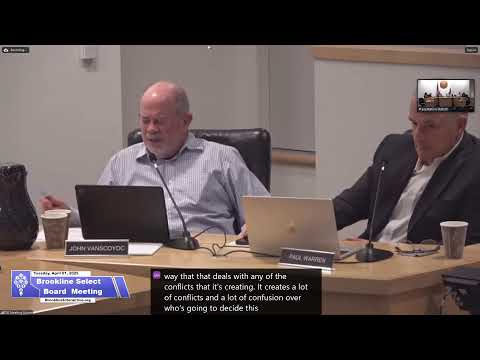
Select Board debates possible Massachusetts home‑rule transfer tax petition; members worry about earmarking and senior exemptions
Summary
Petitioners asked Brookline to support a state home‑rule petition authorizing local real‑estate transfer taxes dedicated to affordable housing. Board members praised potential revenue but raised concerns about restricting proceeds to a single use and about protecting seniors who rely on sale proceeds.
A petition before the Select Board on April 1 would ask the state legislature to permit Brookline to adopt a local real‑estate transfer tax and direct revenue to the town’s Affordable Housing Trust. Petition sponsors said even modest transfer fees could raise millions for deed‑restricted housing.
Supporters described the mechanism as one way to generate recurring revenue for affordable housing without an immediate tax increase on wage earners. One sponsor estimated the first‑year yield could be several million dollars depending on the rate chosen and local real‑estate activity.
Several board members voiced support for the goal of producing funds for housing but expressed unease about committing all proceeds to a single purpose. Select Board member John Rice (commenting in discussion) and others suggested the board consider either directing a share to general municipal needs (including schools) or creating exemptions to protect seniors and other sellers who rely on sale proceeds for retirement and housing transitions.
Town staff said the petition's enabling legislation would allow the town to craft exemptions (for example, state circuit‑breaker protections or tailored local exemptions) and that the Select Board could ask the moderator to accept an amendment at Town Meeting to change revenue allocation if members wanted a different split.
The board did not take a final vote on the petition at the meeting and asked for further staff analysis and time to consult the moderator and other stakeholders before deciding whether to put the question on the Town Meeting warrant.
Why it matters: A local transfer tax could be a sizable new revenue source for Brookline — potentially affecting housing finance, school and municipal budgeting, and property transactions. How revenue is allocated (single purpose vs. shared) and whether sale‑proceeds exemptions protect vulnerable sellers are central policy considerations.
Next steps: Staff will prepare additional analysis and options, and the board indicated it would discuss possible language changes and moderator guidance before deciding whether to support a home‑rule petition.
Sources and attribution: Comments summarized from the Select Board meeting transcript, including Select Board members and staff.