
ACSD1 technology staff propose device buyback to reduce e‑waste, expand access and offset repair costs
Get AI-powered insights, summaries, and transcripts
Sign Up Free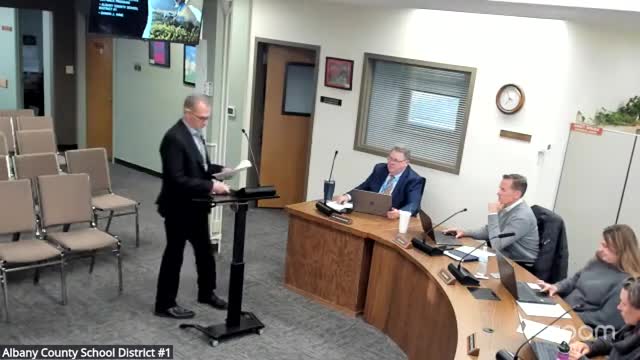
Summary
District technology staff proposed a device buyback program for Chromebooks and other assets that would permit staff, students and community members to buy decommissioned devices sold as‑is, generate modest revenue to supplement repair budgets, and begin with pilots for seniors before expanding to ninth graders.
Albany County School District #1 technology staff outlined a proposed device buyback program during a board work session, proposing that the district sell decommissioned Chromebooks and other tech assets to students, staff and the public to extend device lifecycles, reduce e‑waste and generate modest revenue for repairs.
Mr. Heim, identified in the transcript as the presenter for the technology item, described a two‑track approach: (1) usable devices nearing the end of district support would be offered for sale to students, staff and families at a modest, condition‑based price and (2) inoperable or end‑of‑life devices would be sold as e‑waste lots to the public or to an external vendor.
Mr. Heim said devices sold under the program would be removed from the district's management systems (Google admin console/PowerSchool) and sold "as is" with no district warranty or support. He said eligible devices would be priced based on condition, original cost and fair market value, and that limits on the number of devices a single buyer could acquire would prevent bulk purchases intended for resale.
The presenter estimated per‑device prices "in the tens of dollars" (roughly $20–$40 depending on model and condition). He projected that combining Chromebook and other equipment sales could bring approximately $15,000–$18,000 into a fund to supplement the district's annual Chromebook repair spending, which he said is currently about $30,000 per year. He also noted that roughly 20 percent of district devices may be reaching the end of vendor support and will not accept a Windows 11 update scheduled for October; those devices would be candidates for e‑waste pickup even if still usable at home.
Mr. Heim proposed staged implementation: a pilot offering graduating seniors the opportunity to purchase their district‑issued Chromebook, followed by a later expansion to incoming ninth graders once inventory and long‑term device tracking are refined. He said the district's incident IQ asset system would be used to identify eligible units, and that serial numbers could be removed remotely from district management so buyers would own the device outright. He cited the district's goal of setting a predictable refresh cycle (new devices for fifth and ninth graders) so students and families could plan.
Trustees asked about privacy, eligibility and pricing. Mr. Heim said devices purchased by graduating seniors would be removed from district accounts and that the district would disable the student's district account at graduation, preventing further district tracking or access to district apps. Trustee Nate Martin asked whether e‑waste lots would be open to the public; Mr. Heim said e‑waste material would be available to everyone, while operable Chromebooks and laptops would initially be targeted to students and staff (the policy could be amended if the board wished).
Trustees discussed options to make purchase prices more affordable for households receiving free or reduced‑price meals; Mr. Heim said the typical per‑unit price would be low and that families who decline to purchase would receive a new district‑assigned device in ninth grade under the planned refresh cycle. Board members suggested possible incentives to encourage purchases (for example, a one‑year support window or a protective case) so incoming ninth graders would have a reason to retain and maintain older devices rather than request a fresh district machine.
Mr. Heim said the district would set up online request forms, designated pickup dates, a secure payment process through the district's finance office, a public listing of available devices (similar to university surplus processes), and an FAQ describing terms (sold as is, no warranty). He also noted the district might pilot sales of e‑waste lots and evaluate vendor options for unsold material.
The presenter recommended drafting a formal policy and bringing it to the board for review; trustees expressed general support for developing a policy, and staff said they would return with a written policy and logistics for distribution. No formal board approval occurred during the work session.