Get Full Government Meeting Transcripts, Videos, & Alerts Forever!
Get email alerts on the State Tax Policy topic
No spam. Unsubscribe anytime.
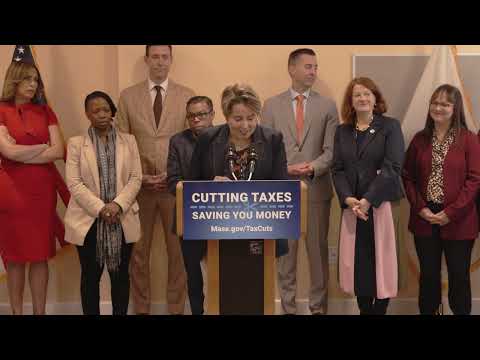
Governor Healy visits Lynn senior center to promote state tax cuts for seniors and families
Summary
Governor Healy visited the Lynn Senior Center to describe recent Massachusetts tax cuts aimed at seniors, families and small businesses, urged residents to file to claim credits at mass.gov/taxcuts, and highlighted local assistance including free tax-preparation sites and state filing tools.
Governor Healy visited the Lynn Senior Center on Tuesday to highlight recent state tax cuts she said will deliver relief to seniors, families with children and other taxpayers across Massachusetts and to urge residents to file to claim the credits. “We cut state taxes for the first time in over 20 years,” Healy said, adding that the administration has already returned “hundreds of millions of dollars back to people” and that more refunds are coming this year.
The governor’s visit paired praise for the Lynn Senior Center’s staff and volunteers with a rundown of the tax changes the administration has sponsored. Healy described a doubled senior tax credit known as the “senior circuit breaker,” raised child and family tax credits, expansions to the earned-income credit, an estate-tax change and a new low-income MBTA fare discount. “If you are 65 or older, you can get a tax credit to help with your housing costs,” Healy said. “When we took office, the maximum amount that you could get was $1,200…So we doubled it. And this year, with inflation, you can get over $2,700 back.”
Why this matters: officials said the credits are targeted to reduce local cost-of-living pressures. The governor characterized the expanded child and family tax credit as now worth $440 per child or dependent, with no cap, calling it “the largest child tax credit in the entire country” for state-level policy. Under Healy’s description, a household with two children would get $880 and a household with three children would get $1,320 in state child tax credits.
Local officials and senior-center staff joined the governor. Megan Best, identified in remarks as an elder-services director and member of the Massachusetts Grandparent Commission, said the credits are “critical for families’ financial security” and described grandparents raising grandchildren in Lynn who are already using the benefits. Best said, “For the two vulnerable populations that are near and dear to my heart, children and seniors, I thank the Haley Driscoll team for its commitment to ensuring that Massachusetts families have the resources they need.”
Residents and service providers in the audience asked about how to claim benefits and where to get help. Luis Arevalo of Greater Boston Legal Services told the gathering, “There are free tax preparation sites, all over Massachusetts,” and urged attendees that resources and websites can be shared after the event. Mariah Eastman, taxpayer advocate for the Massachusetts Department of Revenue, said the department offers free filing tools and participates in the federal direct-file program. “We have free filing options. There’s mass tax connect where taxpayers can file in Massachusetts for free,” Eastman said.
Healy also used the visit to criticize recent federal cuts, saying actions from the Trump administration that reduce education and health funding stand in contrast to the state’s priorities. Locally, she credited state policies she described as increasing housing production in gateway cities like Lynn by 600% over 18 months and noted state steps to make school meals free and expand college affordability and health services.
The governor closed by reminding residents to use the state website to claim credits and file: “Please visit mass.gov/taxcuts and take advantage of the ways to get more money back for your families.” No formal votes or official council actions were recorded during the appearance; the event was a policy announcement and outreach visit with a question-and-answer period for attendees seeking filing assistance and program information.