Get Full Government Meeting Transcripts, Videos, & Alerts Forever!
Get email alerts on the Indigenous Storytelling topic
No spam. Unsubscribe anytime.
Indigenous storytellers stress cultural preservation, warn against misappropriation
Summary
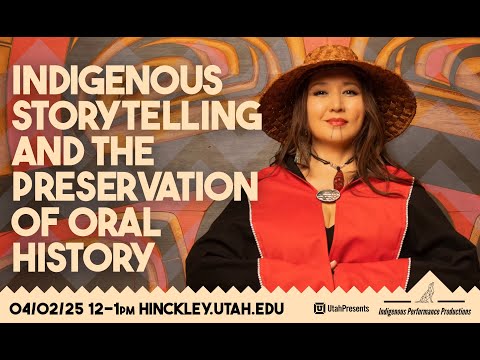
At a Hinckley Forum at the University of Utah, producer and activist Andre Bouchard urged care in adapting oral histories, described touring and documentary projects to preserve Indigenous stories, and warned of the threat posed by misappropriation and unvetted use of cultural material.
Andre Bouchard, a producer and activist of Kootenai, Ojibwe, Pend Oreille and Flathead Salish descent, told a Hinckley Institute forum at the University of Utah that Indigenous storytelling is central to cultural survival and warned against misuse of oral histories and artistic work.
"There are stories that really happened," Bouchard said, opening a presentation that traced his work from early self-produced performances to large-scale touring projects. He said storytelling ‘‘is an act of becoming’’ and described both practical steps his organizations take and broader risks facing Indigenous creators.
Bouchard described Indigenous Performance, a nonprofit he founded in 2019, and earlier organizations that supplied touring, management and production for Native artists. He said the group runs multi-year projects that aim to return documentary shorts to tribal cultural centers and museums and — ultimately, if funding allows — to deliver stories through a location-based app. "The documentary shorts will live with the tribal cultural centers or museums, for the most part," he said, adding that the project life cycle is often about three years and that financing remains a major hurdle.
On craft and ethics, Bouchard stressed the need to obtain elders' blessings and cultural permissions when presenting traditional stories. "There's a lot to be said about getting permission, particularly within traditional spheres," he said, and added that he generally favors contemporary stories when the traditional protocols are not in place. He also said he is "scared to death about misappropriation," naming artificial intelligence and unconsented reuse of cultural material as specific concerns.
Bouchard argued that a growing body of Native-led film, television and theater is expanding representation. He cited works such as Reservation Dogs and Rutherford Falls as examples of Indigenous-led visibility on national platforms and discussed genres — including horror and comedy — as "elegant vehicles" for conveying complex cultural themes without relying on trauma-only narratives.
Moderator Kayola Kinghorn, a writing and rhetoric Ph.D. student, asked how playwrights balance preserving authenticity with adapting oral histories for broader audiences. "How do you navigate the challenge of ensuring oral histories remain authentic?" she asked. Bouchard replied that context, purpose and community consent determine when a story should be shared and that powwows and many Indigenous spaces are often welcoming while still governed by specific protocols.
Bouchard also noted demographic shifts he said are visible in official counts: he referenced the 2020 U.S. Census and said the number of people self-identifying as American Indian or Native American rose markedly from earlier counts — an observation he urged audiences to consider when thinking about identity and representation.
The session included audience questions about local venues and partnerships; Bouchard pointed to repeated collaborations in Washington state and Utah, named the Cache Valley Center for the Arts in Logan as a local partner for the production he discussed, and said invitations exist for future sites including Washington, D.C., and islands in Hawaii, subject to cultural blessings and funding.
The forum closed with Bouchard describing the practical work of sustaining Indigenous arts: touring, grant writing, educational residencies, and returning materials to community institutions. He said projects aim to ensure stories are accessible to those communities first and to build longer-term economic opportunities for Indigenous creators.