Get Full Government Meeting Transcripts, Videos, & Alerts Forever!
Get email alerts on the Heritage Tourism topic
No spam. Unsubscribe anytime.
Southern Maryland National Heritage Area highlights tourism, seeks community input on management plan
Summary
Lucille Walker, executive director of the Southern Maryland National Heritage Area, briefed the St. Mary's County Historic Preservation Commission on the area’s national designation, economic potential from heritage tourism, outreach projects and the community-driven management plan ahead of Maryland commemorations.
Lucille Walker, executive director of the Southern Maryland National Heritage Area, told the St. Mary's County Historic Preservation Commission that the region’s recent designation by Congress and its combination of national and state heritage status create opportunities for tourism, education and preservation projects across Calvert, Charles, St. Mary’s and southern Prince George’s counties.
Walker emphasized the area’s historical significance and its attractions — including Mallows Bay, national trails, sites tied to early religious freedom, and networked stories of the Piscataway and descendants of enslaved people — as central to a strategy that pairs heritage interpretation with local economic development. “Heritage brings history from the past into where we are and keeps it moving forward,” Walker said.
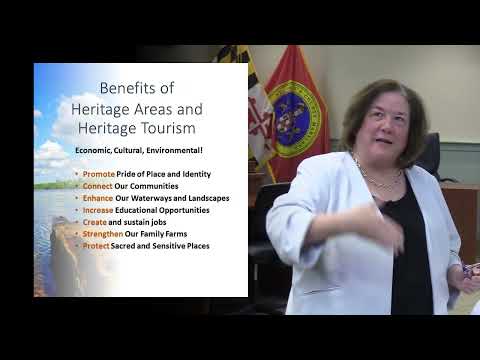
Why it matters: the Southern Maryland National Heritage Area, one of 62 nationally designated heritage areas, draws federal funding routed through the National Park Service and can leverage state resources from the Maryland Heritage Areas Program. Walker said those funding streams, paired with private and local partnerships, support interpretive work, product development and community-based projects that can increase visitor spending and create jobs.
Walker described several ongoing and planned initiatives: a film project titled Grandma’s Hands produced with Quiet Stories and picked up by Maryland Public Television (a half-hour version already aired; Walker said the full version will air April 13), a new interactive website at destinationsouthernmaryland.com, a regional brochure and an exchange of community events that aims to inform a required management plan. She said the group launched publicly after congressional designation in February 2022 and that the heritage area’s designation process took two years — far faster than the typical 10–20 years for similar designations.
Walker cited statewide figures from a 2019 impact study used by Maryland’s heritage-area programs, saying heritage areas return roughly $7 for every $1 invested and noting statewide impacts including an annual economic figure reported in the study and 33,815 jobs supported; she did not provide a precise statewide tax-revenue number from that study in the commission presentation. She framed heritage tourism as attracting visitors who stay longer and spend more locally, and she highlighted product development work intended to create jobs and support farms through agritourism.
Walker also outlined commemorations and larger planning tied to future anniversaries, including the state’s 250th and a 400th commemoration of Maryland’s founding. She said a commission formed by Senator Bailey and Delegate Crosby is moving work on the 400th forward and described the anniversary as a potential catalyst for legacy projects across the state and region, while noting the need to consider that celebrations will be experienced differently across communities.
On governance and next steps, Walker said the heritage area is forming a nonprofit and is in a community-driven process to write its management plan; she emphasized that the plan and the area’s vision are being developed with input from local partners, museums, tourism offices and community members rather than imposed by staff. She described outreach events and smaller community meetings already underway and called for ongoing partnerships to support interpretation, preservation and education.
The presentation included references to a UNESCO slave-route remembrance site and to Mallows Bay as the first national marine sanctuary located on a river; Walker said those features, along with other local sites and stories, are central to the region’s national significance.
No formal action or vote was recorded in the transcript excerpt provided. The presentation closed with Walker urging continued community engagement as the management plan and nonprofit structure are finalized.